Show notes
- Stanley Kubrick’s Boxes
- BBC – A Life of Grime (1999)
- Website: Overcome Compulsive Hoarding
- Become a Dehoarding Darling
- Submit a topic for the podcast to cover
- Questions to ask when dehoarding: https://www.overcomecompulsivehoarding.co.uk/podquestions
- Twitter: @ThatHoarder
- Mastodon: @ThatHoarder@mastodon.online
- TikTok: @thathoarderoch https://www.tiktok.com/@thathoarderoch
- Facebook: Overcome Compulsive Hoarding with That Hoarder
- Pinterest: That Hoarder
- YouTube: Overcome Compulsive Hoarding with That Hoarder
- Reddit: Overcome Compulsive Hoarding with That Hoarder subreddit
- Help out: Support this project
- Sponsor the podcast
Subscribe
- Apple Podcasts / iTunes
- Spotify
- Google Podcasts
- Audible
- RSS
- Podcast Addict
- iHeartRadio
- Stitcher
- Pocket Casts
- Player FM
- Podbean
- Castbox
- Amazon Music
- TuneIn and Alexa
- Podcast Republic
- Deezer
- Pandora
- Podchaser
- Podcast Index
- Castro
- Goodpods
- Listen Notes
- pod.link
Audio credits
- Intro and outro music: grapelemon
- Ding dong: MatthewWong
- Hallelujah chorus: deleted_user_2906614
- Transition whoosh: Vilkas_Sound
- Piano Playing Classical Music: IESP
- Uh oh: stib
- Angels: pycckuu20032003
Transcript
Welcome to the Overcome Compulsive Hoarding with That Hoarder podcast. I am drowning in stuff and trying to find a way out. Listen as I explore the issues and delve deep, as somebody profoundly affected by hoarding disorder. Find out more, including links to subscribe to the podcast and all my social media, at overcomecompulsivehoarding.co.uk. Finally, I am not a doctor, I’m just a hoarder doing her best, so do seek professional support if and when you need it.
Hey, how are you? I’m having… I’m sore today. I’m having a bit of a bad pain day with endometriosis, but the sun is shining and after what’s felt like a very long winter, that is really welcome.
I am recording on a Friday, which is never a good sign because it means I have to record and edit and transcribe and upload on all on the same day. However, it is Good Friday, so it’s a bank holiday, so I am at least not at work as well, which is good.
So swings and roundabouts.
And today I am doing something a bit different. I have been looking into hoarders from history and I’m going to talk about 14 hoarders from history, including a US president, numerous artists, film director, fashion designer.
It’s really interesting to look back at how this isn’t a modern, or it’s not exclusively a modern malady. I’m also going to share a success and a weird dilemma of the week. I am going to talk about a listener’s secret and I have a great top tip for you at the end.
So, my success of the week.
You will know that I had to develop a whole system in my kitchen because I couldn’t access the cupboards very well. I had a real vicious circle problem going on where my kitchen cupboards got full, surprise, surprise. And so I stopped unpacking my food shopping.
And so just bags of food shopping filled up the kitchen.
And then because there was no system, I kept rebuying things I didn’t need because I didn’t know if I had them because I couldn’t just look in the cupboard to see whether I had them.
And so bags and bags and bags and bags, most of which had two or three things in, built up and it was chaos.
And then I came up with a better system, which was to divide up my food, go through every one of those bags and divide it all up. So I had like a bag of tinned food and a bag of sweets and chocolate and biscuits and a bag of rice and pasta, that kind of thing.
So I had a system so that I could at least know what I had and know how to find it. And that worked, but it still relied on me, on me using bags and not the cupboards. And I developed kind of almost a mental block about the cupboards.
I could get to them by this stage, although it was difficult because there were bags everywhere. I could get to them, but I wasn’t doing anything about it.
Anyway, finally, finally, finally, I am in my kitchen cupboards.
I went through, I threw out the out-of-date stuff because for me, that’s an easy decision. I don’t eat out-of-date food. And so that could all go.
And now my cupboards are taking shape. The appropriate bags are being decanted into the cupboards. So I have a cupboard of tins that I think is going to be over full, but then other cupboards are looking a bit more reasonable.
So that is my honestly massive success of the week. It’s a task I’ve been putting off for a very long time. And I’m there. I have working kitchen cupboards – in progress. But if I want a tin of beans, I go to the cupboard now, not a bag. And that is a win.
My weird dilemma of the week. I’ve talked before about kitchen gadgets, how I love them and I buy them and I use them for three months and then never use them again. Hashtag, I still haven’t bought an air fryer. Yeah.
But there’s one kitchen gadget. Well, there’s a couple of kitchen gadgets that don’t quite fit that pattern. Obviously, the kettle. I use the kettle daily.
That’s an electric kettle for American listeners. And just a kettle to people everywhere else around the world.
But also I have a random kitchen gadget that, strictly speaking, is unnecessary, but that I have had for years and use regularly. And that is an egg boiler.
Now, of course, I could boil eggs in a saucepan of water. But there’s something just really simple about this thing.
You put your eggs in it, you measure out a certain amount of water depending on how many eggs you have, and then it just boils them.
There’s minimal washing up afterwards, but also you just always get a perfect boiled egg. And I really enjoy a boiled egg.
So even though it’s strictly speaking, it’s not a 100% necessary kitchen gadget, it is one that I use and have used for a really long time. So I don’t give myself a hard time for owning that particular kitchen gadget.
But when I was sorting through the cupboards and clearing out, I was coming across mugs that I don’t particularly use, that kind of thing. I came across this thing and I knew instantly what it was.
And it was an extra attachment for my egg boiler, in which you could use the same setup to poach eggs rather than boil them.
Now, I have never used this attachment because I do not like poached eggs.
And yet it has been in my cupboard for years. I’ve had that thing for at least 10 years. And so the egg poaching attachment has been hanging around my kitchen for 10 years.
And I repeat, I don’t like poached eggs. I don’t like them. That’s why I’ve never used it. I don’t know why I don’t like them. It doesn’t matter why I don’t like them. I don’t like them.
And so I thought, well, what do I do with the egg poaching attachment? And found myself in a weird dilemma moment.
I wanted to find an excuse to keep it. And I kept thinking, well, what if I… the usual, what if I need it? Like, why would I need a thing to make some food I don’t like?
But then that bit of my brain goes, well, what if you start liking poached eggs?
And the truth is, I will never know if I start liking poached eggs because I will never try one to find out.
And I really wanted an excuse to keep this thing. And I didn’t know why.
And you’ll be glad to know that the egg poaching attachment went in the bin. There was no way to recycle it. And you can’t send an egg poaching attachment to a charity shop if you’re not sending the machine it’s used with.
So eventually, after an embarrassing amount of inner dialogue about it, the egg poaching attachment is in the bin.
So that was my weird dilemma this week.
So 14 people, from a US president onwards, who hoarded stuff.
I am not saying they all hoarding disorder. I can’t diagnose anybody, especially not based on reading, you know, biographies about them on the internet. I am not a clinician. And some of them, I would say, probably didn’t have full-on hoarding disorder.
However, it seems safe to say that to some degree, they all hoarded stuff.
The stuff differed. Some people hoarded a bit of everything. Some people hoarded very specific things.
And also the level of how organised that stuff was differs. But that is also true in people with hoarding disorder. For some people, it’s a big pile of a bit of everything. For others, everything is in boxes and labelled and both of those can be the case with hoarding disorder.
But also, the more of these people I studied, the more it struck me that there’s something about the perceived importance of that stuff based on who the person was who was hoarding it.
And that just got me wondering, and I don’t particularly have answers to this, but I would appreciate your thoughts, especially after you’ve listened to the whole thing. About is a film director’s stuff more important than a secretary’s stuff? Is a famous artist’s pile of stuff more significant than an unknown artist’s pile of stuff?
If we perceive that to be the case, why do we think that? Because it’s easy to say, oh, such and such was famous and artistic, therefore the things they kept in boxes and boxes and boxes and boxes are clearly significant.
But what if that same person had never become famous but had stored exactly the same things?
Why would that be less significant and less important?
I do not know, and yet it seems to be the case. It’s certainly what we as a society do.
So the earliest reference to hoarding I could find is apparently in Dante’s Inferno, which is a 14th century poem.
You may well have heard of it, but basically the Inferno is a portrayal of hell and hell has nine circles and each of those is worse than the last. And in the fourth circle of hell, hoarders were condemned and were doomed to battle with wasters by crashing heavy stones against each other, symbolising their attachment to physical wealth.
So I guess the fact that that was written in the 14th century shows that this is not a brand new problem.
Thomas Jefferson
And the fact that the first person I’m going to cover – I’m covering them all in chronological order, so I’m starting with the earliest – was born in 1743 and that was a somewhat famous guy called Thomas Jefferson.
Thomas Jefferson was born in Virginia, was one of the Founding Fathers of America and was the third president of the United States.
He had a massive book collection, massive. He had a massive book collection, massive.
So his first book collection included books he inherited from his father and that were given to him by other people. But in 1770, his childhood home burnt to the ground, including his book collection.
And in fact, when he wrote about the fire, one of the first things he talked about was about losing his huge book collection.
And he reacted to this by, over the next 10 years, collecting thousands of books.
By 1814, he had almost 6,500 volumes of books and he organised them into three categories, each related to the human mind.
So his books were categorised into memory, reason, and imagination, which is a really interesting way to approach literature.
As somebody who struggles with categorisation, if it’s something like that that’s quite esoteric, I think I would struggle even more. Is this book about memory? Is it about reason? Or is it about imagination? I have no idea.
But then in 1814, the British, sorry about this, burnt the nation’s capital and the Library of Congress and when the library burnt, Thomas Jefferson’s six and a half thousand books was then the largest collection of books in the country.
And he offered the library his collection to replace all of the books burnt by my country people. It was a long time ago, I wasn’t involved.
Anyway, the Library of Congress agreed and bought almost six and a half thousand, 6,487 books from him for $23,950 in 1815, to give their collection a start.
Which is, you know, unusual for a hoarder. If he… again as I said, I’m not, I do not know whether these people would have been diagnosable hoarders. But if he was, it would be unusual to collect all of that stuff and then offer to sell it all.
So that’s just something to bear in mind. However, he did then, something that is more characteristic of hoarding, he did then start immediately rebuilding his own personal library. He wrote in a letter, I cannot live without books.
And when he died 10 years after that, he had 2,000 volumes of books. So he hadn’t fully replaced his, the collection he, so he hadn’t fully replaced the collection he sold. But you know, it’s a lot of books.
And then there was another fire after he died, in 1851 on Christmas Eve at the Library of Congress that destroyed two thirds of the books that had come from Jefferson.
So it was a bad time for fires. Sorry, that’s a weird conclusion to draw from that whole thing.
But yes, interesting that this guy who even as somebody who’s never been to America, obviously I’ve heard of Thomas Jefferson. I did not know that he was so obsessive about having so many books in his possession.
Ida Mayfield Wood
The next person I am talking about was born in 1838 and was a woman called Ida Mayfield Wood.
Now she was born in England and emigrated to the United States, settling in Massachusetts.
She was born Ellen Walsh and changed her name basically to get a rich husband, to pretend she was related to some very rich people.
She moved to New York and became a socialite and interestingly was living in New York at the same time as the Collyer brothers, who I will of course get on to later, probably the most famous hoarders in the Western world I would say.
She married a man called Benjamin Wood, who was rich but bad with money. He gambled in particular.
Ida made her agree to give her half of anything he won when gambling but did not agree to pay half of his losses. So she did better out of his gambling than he did because any winnings she got half of and then he had to account for all the losses.
He was a newspaper owner but when he died, she for a while was the editor and publisher of the newspaper which she sold in 1901 for somewhere between $250,000 and $300,000, which is the equivalent today of eight or nine million dollars.
And so when her husband died she, Ida and her sister Mary lived together and then in 1907 she and her sister moved into a hotel room.
Ida closed her bank account taking out nearly one million dollars, which is equivalent to like 22 million dollars today. Imagine!
So Ida and Mary were living in a hotel room. They shared it for 24 years until Mary died.
It was a two-room suite at the Herald Square Hotel, room 552 and they became recluses.
Reading up on all of these different people, all of these different hoarders through time, there were two words that came up repeatedly: one of them was recluse and the other one was eccentric. Share on XAnd they became recluses. Now having spent a week, well more than a week, reading up on all of these different people, all of these different hoarders through time, there were two words that came up repeatedly and one of them was recluse and the other one was eccentric.
So make of those what you will!
When they were living in the Herald Square Hotel they, even maids were not allowed into the hotel rooms that they were living in. Staff were not allowed in. They had very little contact with anybody.
And it was only in 1931 when Mary became really ill that Ida was in a position where she had to call for help.
And this is when, from Ida’s point of view, everything went wrong because not only did her sister die but also other people became aware of how she was living.
She was living, it is described as in squalor and also people discovered just how much money Ida had.
So when hotel staff finally got into the room to try and summon help for Mary, there were years’ worth of newspapers, boxes, stacks of wrapping paper, pots and pans and indeed in the pots and pans was basically that million dollars in cash.
There was a diamond necklace, she even had ten thousand dollars in cash around her waist, Ida.
Because Ida and Mary had always paid the hotel bill in cash, nobody had been that bothered about the fact that people weren’t allowed into the room. You know, they just got on with it.
But now, the world was a bit aware of what was going on in there.
And because they were now also aware that she was very rich, people started trying to get their hands on that money.
Ida was declared incompetent in September 1931 so that other people could take control of her wealth. And various of her relatives were fighting with lawyers to et that role.
She was moved one floor down to two other rooms, which she didn’t want to do. And because she was declared incapable of looking after herself, the room, the original room was cleared out by family members and by the hotel.
Hundreds of thousands of dollars in cash were found, gowns and jewels, a letter from Charles Dickens to Benjamin, her husband.
And she eventually died in 1932 of bronchial pneumonia. And bearing in mind that people were aware of how rich she was, there was a big fight over her estate and her fortune.
And just… okay, I’m going to tell you how many people were fighting over her estate. But before I tell you, just have a think how many that might be. Would it be 20 people wanting that money? Would it be 200 people?
No, I can tell you. 1,103 people claimed to be entitled to her fortune.
Ultimately, it was dispersed to 10 people who were proven to be relatives in Ireland, England and America.
So that is the quite difficult story of Ida Mayfield Wood.
William Randolph Hearst
And so Ida Mayfield Wood briefly edited and published a newspaper. And our next person, born in 1863, was a huge newspaper publisher.
This is a guy called William Randolph Hearst, who made millions of dollars. He was also a politician and a businessman.
In 1887, his father, who was wealthy, Senator George Hearst, gave William control of the San Francisco Examiner, as you do.
And then William moved to New York City, acquired the New York Journal. He over time bought more and more newspapers and ultimately owned almost 30 newspapers in major American cities.
And he was a very political man. So they were all… not purely to share his political views, because he was also making a lot of money from them. But he did enjoy that element of it as well.
He also bought various magazines and created what became the largest newspaper and magazine business anywhere.
He was a Democrat, twice elected to the US House of Representatives. He tried to stand for president and for mayor of New York and governor of New York and didn’t have any wins in those.
And then, despite having been a Democrat, he somehow became a Nazi Party supporter. When Hitler rose to power, he required that his journalists wrote favourably of Nazi Germany. And he even allowed German Nazis to publish articles in his papers.
So that’s quite a swing from apparently not just a Democrat, but apparently quite on the left of the Democrats, to far right, which is always disturbing.
Anyway, he made a lot of money through his publications and with that money bought a lot of stuff.
He collected art, for instance. At one point in the 20s and 30s, his collection of art made up, and this is mind blowing, made up 25% of the global art market.
So of all the art on the market, William Randolph Hearst owned a quarter of it.
But he also collected all kinds of other stuff, musical instruments, lanterns, door knockers, warming pans, furniture, antiques… He bought a Spanish monastery and tried to ship it to the United States, but it didn’t make it. It was quarantined in Europe, which is very COVID, isn’t it? But obviously quite a bit before that.
And so this strikes me as interesting because we kind of think as a society that an art collection is very worthy. It is a very sensible thing to invest your money in. It is an acceptable thing to have a lot of, I think, for a lot of people.
And so if he was just collecting art, probably nobody would have particularly noted that. But the fact that he is also amassing vast numbers of everyday items makes it lean more towards a hoarding categorisation, doesn’t it?
And also, relatable to a lot of hoarders just on a different scale.
Many of the things he bought went straight into storage, which I guess is the modern-day equivalent of something arriving from Amazon and just not opening the box.
Most of us don’t have the resources to be able to purchase monasteries and put our art collection into storage, but it feels kind of equivalent.
And he was also, because he was acquiring so much stuff, he went from very rich to in a lot of debt.
And in the late 30s, he had to sell a lot of his stuff, which I wish there was a real description somewhere of how he reacted to that. I think that would be really telling.
So half of his stuff was sold to other collectors, was sold to museums, and his former home, which is now a state historical site in California, has on display some of the things he kept.
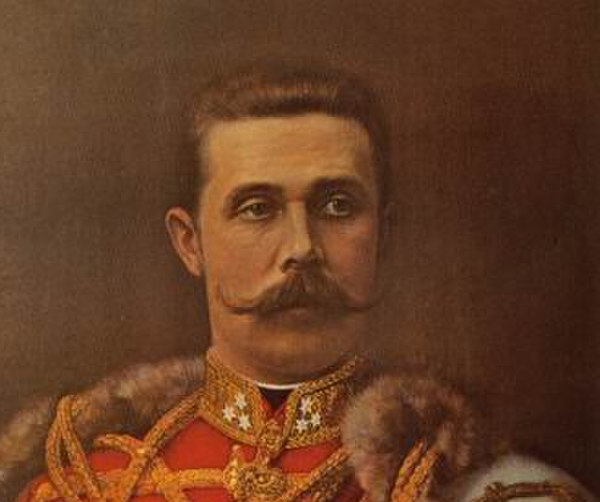
Archduke Franz Ferdinand
Born in 1863 is a guy that anybody who was taught in school about what was the trigger for World War One will be familiar with.
That is Archduke Franz Ferdinand. He was born in Austria and his assassination is said to have been the kind of final straw that led to the First World War.
But it turns out there are some kind of fascinating and disturbing things that nobody at school told me when they were talking about Archduke Franz Ferdinand.
One person described him as radiating an aura of strangeness. And to be honest, I suspect that I too radiate an aura of strangeness, but I hope I do so in a more endearing way than this guy seems to have done. Share on XSo one person described him as radiating an aura of strangeness. And to be honest, I suspect that I too radiate an aura of strangeness, but I hope that I do so in a more endearing way than this guy seems to have done.
He is known to have killed 274,899 animals. And the reason that is a precise number rather than, yeah, I’ve killed about 300,000. The reason we know it’s 274,899 is because he wrote it all down.
He wrote about every animal he killed in very well-ordered records.
He, as you’ve probably guessed, was a hunter, a very keen hunter. And he took a world tour in 1893 to go hunting in India, in North America, in Australia, other parts of Asia.
He hunted monkeys, birds, elephants, tigers. He was apparently a very good shot, which fits the 275,000 number clearly.
And in one day that he, I expect, was very proud of himself for, he shot 2,140 animals in one day.
So because he was such a keen killer of animals, he had a massive collection of hunting trophies. To the degree that one person said that if you visited his home, you had to seriously take care that you weren’t impaled by antlers of the various animal heads on the walls.
There were a hundred thousand hunting trophies in his estate in the Czech Republic. I mean, a hundred thousand hunting trophies. I don’t understand hunting for sport. I understand hunting for food. I don’t understand hunting animals for sport, especially things like elephants and monkeys and tigers.
But I certainly don’t understand then displaying the head of the animal for all to see. It seems it’s so far from the kind of things that I would consider to be something to show off about.
He used an elephant foot as an ashtray, an elephant foot as a waste paper basket. So that’s on top of the antlers and heads on the walls.
I’ve been to many a stately home. When I was a child, that was one of my parents’ favourite activities. We would go and visit some old house. And I appreciate that people in countries that don’t have as much documented history as we do here, that’s quite a fascinating thing. But honestly, as a child, it was always quite a boring thing to do.
But I’ve been in that kind of old house that has the odd deer head on the wall. And even as a small child, it struck me as a strange thing. But the thought of using an elephant’s foot as an ashtray just seems so disrespectful as well.
It’s not even showing it off. It’s just putting out your cigarettes in it.
Anyway, in 1913, Franz Ferdinand shot a rare white stag. And it’s important that that was in 1913, if you know that the First World War broke out in 1914.
Because it was widely believed at the time that if you killed a rare white stag, you or a member of your family would die within a year. And that, I mean, this is a legend rather than definite history.
But quite interesting that indeed, things went very wrong for him.
So that was Franz Ferdinand and his many, many dead animals.
Do you want to be a Dehoarding Darling? You can be now at https://www.overcomecompulsivehoarding.co.uk/darling
If you love the podcast and want a bit extra, you can finally sign up to be a Dehoarding Darling.
Members will get an exclusive monthly post with an additional top tip, some podcasts and music recommendations and a personal update from me about how things are going.
Find out the full details at https://www.overcomecompulsivehoarding.co.uk/darling
Homer and Langley Collyer
So the next two hoarders I’m talking about are the very famous ones I mentioned earlier, Homer and Langley Collyer, who were born in 1881 and 1885.
They lived in New York. And their case not only became infamous, but also is credited as being the start of the time when psychologists really started looking at hoarding beyond the concept of hoarding money, which is apparently where the focus had been before that.
After the Collyer brothers’ case became so famous, that’s when psychologists started saying, OK, maybe this is a domestic thing. Maybe we need to look at this differently.
I'm going to tell you a bit about them as people, because you probably know some of the more lurid stuff Share on XSo I’m going to tell you a bit about them as people, because you probably know some of the more lurid stuff. I’m trying with all of these to avoid the more lurid stuff and look more at their lives and who they were.
Because if you’re listening to this, you’re either a hoarder or you know and love a hoarder or you work with hoarders or you’re just interested in hoarding. And for any of those categories of people, it’s important always to humanise people, especially when you’re talking about a condition with such stigma and shame associated with it as hoarding.
It’s easier to go, oh yeah, the Collyer brothers, I remember how they died. Or oh yeah, the Collyer brothers, I’ve seen photos of what their home looked like.
And that is obviously important and relevant, but also that they were two human men who were clearly struggling with the world. That is also important.
So these were two very accomplished men. Homer got a law degree at Columbia University. Langley studied engineering at Columbia University. Their father was very wealthy. He was a gynecologist. So they did not have any money troubles.
They lived with their parents until their mother died. I couldn’t find when their father died, but I assume that was before the mother, because it was after their parents’ death that they started interacting less with society.
Again, that word recluses.
They did continue socialising for the first few years after their mother’s death. Homer was a practicing lawyer. Langley sold pianos. They taught at Sunday school.
But then Homer lost his eyesight in 1933 and Langley stopped working in order to care for his brother. And it was that point really when it looks like they started to back away from society and become loners, basically.
So because Homer had gone blind, Langley didn’t want him to miss out on the news and so started collecting newspapers so that if Homer’s eyesight came back, he would be able to read them.
Now, spoiler, Homer’s eyesight did not come back and the newspapers did stay.
So Langley was a bit of an inventor. I mean, he had an engineering degree. He invented something to vacuum the inside of a piano, which I guess if you’re a piano dealer, you know whether that’s needed or not. I wouldn’t have thought of it. But he knows his pianos.
But as well as being a bit of an inventor, he was also caring for Homer. He said that he fed and bathed him. He read to him and played the piano for him.
But he also took it upon himself to cure his brother through diet and rest.
Now, this diet that Langley seems to have invented meant that every week Homer had to eat 100 oranges. That’s a lot of oranges. And peanut butter and black bread. And said it was going to cure him. And then Homer became paralysed because of inflammatory rheumatism.
But because both of them distrusted doctors, he didn’t get any kind of medical attention. They thought that doctors would leave him worse, leave him permanently blind and give him medication that would kill him.
Now, these are sons of a doctor, but they used that as reason to mistrust the doctors. Langley told a reporter, “We have a medical library of 15000 books in the house. We decided we would not call in any doctors. You see, we knew too much about medicine”.
Fifteen thousand books. It’s a lot of books. Thomas Jefferson would have been jealous.
So by the 1930s, the home they lived in in Harlem was in disrepair. Their phone was disconnected. They didn’t get it reconnected because they said there’s nobody we speak to. We don’t need a phone.
But then they stopped paying their bills. And so the electricity was turned off. The water was turned off. The gas was turned off. And Langley was trying to generate electricity with a car engine for a while. He would also go to a water pump in a park to get water.
And Langley, as he was doing all the care and because Homer was blind and now paralysed and also prescribed rest by Langley, Langley was the one who would actually leave the house and go to the shop and that kind of thing.
And so neighbours and local shopkeepers said that he was polite, but crazy. Soft spoken, very private, very polite, but that he was dishevelled and his clothes were kind of tattered.
And Homer had. Virtually never left the house since going blind and. Langley was very, very protective of him, wouldn’t let anyone in to see him or speak to him, to the degree that when he saw neighbours kind of trying to look through their windows, through their windows, through the neighbouring windows, Langley bought that house so that nobody could look into their windows through the neighbours’ windows.
And they kept people out to the degree that there was a small fire in the home at one point and firefighters came and put out the fire, but Langley still refused to let them any further into the house.
And while all of this is going on in the Collyer brothers’ home, things are getting very full with 15,000 books and lots and lots and lots of newspapers. Harlem was also changing from a place that they had been very comfortable in to a place that they began perceiving as very, very dangerous.
So this contributed to the isolation. Langley would only go out food shopping at midnight, but also he would pick up trash that he found on his outings. So stuff he found on the road, he would then bring back home.
So what they were collecting, as well as newspapers and books, included furniture and musical instruments, an early X-ray machine, a horse’s jawbone.
And because of their growing fear about the people around them in Harlem, they also set up booby traps within their home to prevent intruders from coming in.
They got behind on the payments for their home and the Bowery Savings Bank started proceedings to evict them and sent a clean-up crew to the home.
Langley screamed and shouted at the people who came to the home.
The neighbours called the police and when the police were trying to force their way in, they were prevented by floor-to-ceiling stuff.
They found they eventually got in, found Langley. He was in the home in what is described as a clearing he had made in the middle of all the stuff.
Langley didn’t say anything. He wrote out a check for $6,700, which is the equivalent now of over a hundred thousand pounds, which paid off the mortgage in one fell swoop.
He sent everybody away and carried on only coming out at night, not just now to shop and collect things, but also to file criminal complaints where he felt somebody had intruded upon them.
But by this stage, rumours were starting to to go around the neighbourhood that the Collyer brothers lived in an unusual way. And people started to gather around and try and peek their way in. People would throw rocks at the windows, so they boarded the windows up. They wired the doors shut and the booby traps continued.
It got to the point where the house was a maze with tunnels and tripwires and the brothers themselves, Homer and Langley, lived in little clearings or nests that they created amongst all of the stuff that reached the ceiling.
And then in 1947, the police got an anonymous call saying that there was a dead body in the Collyer house.
So they arrived with the fire department and broke in and dug, dug – that’s not good, is it, in a home?
And after five hours of digging, they found the body of Homer Collyer in an alcove. Now, Homer, as you know now, was the one who was blind and paralysed.
And after an autopsy was carried out, it was concluded that Homer had died of starvation and heart disease.
And so at this stage, they’d found Homer. They didn’t know where Langley was.
And so it was believed that Langley had been the anonymous tip off. It was Langley who’d called the police and then he’d fled. Somebody said he had gone on a bus to Atlantic City.
So there was a manhunt set up. And there were reports of sightings of Langley in nine states.
But nobody could find him. Nobody could identify what had happened or where he’d gone.
And the police carried on searching the house as this was going on. Tonnes of stuff were removed by the police and by workmen.
As well as all the stuff I’ve mentioned already, there were baby carriages, guns, chandeliers, the folding top of a horse-drawn carriage, all kinds of stuff, photos of pin-up girls and. And human organs pickled in jars, 14 pianos, bugles, banjos, accordions.
By this stage, 2000 people were outside watching the clean-up effort from outside, which is humiliating and embarrassing and yeah, pretty awful.
And three weeks after Homer’s body was found. The police came across Langley’s body.
Now, considering this was three weeks of digging. Langley’s body was found just 10 feet away from where Homer’s body had been found.
And he had been crushed under a lot of stuff and it is thought that as Langley was crawling through this tunnel to take food to Homer, he had tripped off one of his own booby traps and was crushed by the stuff that landed on top of him.
And he asphyxiated. That is how he died.
Now, the house, as you can imagine, was not in a great state and was deemed unsafe.
And so after it had been emptied, the house was destroyed and a park was put in its place, which is really nice. I like the thought that a place of such difficulty and trauma was replaced by a place that other people can enjoy and spend time in in a pleasant way, I feel like it cancels out some of the negative vibes.
The stuff that could be sold was sold. A lot of the stuff obviously was just thrown away. And the estate was ultimately valued at ninety one thousand dollars, which now would be over a million dollars.
And lots of people, a bit like with Ida earlier, a lot of people suddenly declared that they were relatives of the Collyer brothers in order to get a share of this estate. And ultimately, the New York County Court decided that when that the estate could be split between 23 of those people.
So that is the story of the Collyer brothers, and I hope a slightly different version of it to what we normally hear, which is a lot more sensationalist. I mean, it is all quite sensational as stories go, but they were… One was very scared, one or they were probably both very scared, one was very ill, the other became a full-time carer. They were so isolated and they were afraid in their home. And it got out of control and it all just sounds pretty awful and tragic.
Edith Bouvier Beale and Edith Ewing Bouvier
Our next hoarders from history are two women called Edith, called Edith Bouvier Beale and Edith Ewing Bouvier.
They were mother and daughter and born in 1895 and 1917 respectively.
They also lived in New York. Now, as well as there being a theme of eccentric and a theme of people being loners or disappearing from society, there is also a disproportionate number of people in New York, and I do not know why that is, whether it’s just that there are a lot of people in New York and so it’s just proportional… I do not know.
But they were known as Little Edie and Big Edie. But also they were the cousins of Jackie Onassis. Jackie Kennedy Onassis is the important, well not the important bit of the name, but the more famous bit of the name.
They lived in East Hampton in New York in a place called the Grey Gardens Estate.
Now you may have heard of, well, two films called Grey Gardens and they are indeed about Little Edie and Big Edie.
So Big Edie was abandoned by her husband. Her husband left her without any money. Little Edie had wanted to become an actress but hadn’t made it and so moved back in with her mother.
And they lived in a 28-room mansion. And of those 28 rooms, they lived in just three because the other 25 were so full of stuff and animals.
The dining room was mostly stacks of food cans. There were lots of cats and possums and raccoons.
Now I don’t know how easy it is to live with possums and raccoons. I don’t think they’re that domesticated. Maybe that’s why they needed rooms of their own.
Obviously it is not fair or humane or acceptable to have hundreds of any animal in your home.
And on top of that, there were piles and piles and piles and rooms and rooms and rooms of trash.
In 1971, the Suffolk County Health Department got into the home and said this is unacceptable. They violated codes.
And they were at risk of being evicted. So the media, because in particular of their connection to Jackie Kennedy Onassis, but also just two women living in a very, very, very big home, the media were quite keen on this story, that there were two recluses facing eviction and they started publishing photos of the women, their home and the stuff.
And they, because they were related to Jackie Onassis, she felt really guilty, but also embarrassed. So she sent $32,000 to her cousins to help them to get out of this situation.
And a documentary was made called Grey Gardens that premiered in 1975. And this made them famous. There was also another film starring Drew Barrymore in 2009 called Grey Gardens.
And so people started to become aware of the backstory of these two women. And what had led their life to the point where they were at threat of eviction because of the state of their home.
And after Big Edie died, Little Edie sold the house, which must have been worth something as a 28-room mansion. And started performing in New York City. She was great.
And because she was able to sell the house and move on, it could suggest that it was her mother who was at core a hoarder and that she was less so.
But all these years later, it’s just impossible to know.
Alexander Kennedy Miller
Our next hoarder was born in 1906, and this is a man called Alexander Kennedy Miller. He was born in New Jersey, moved to Vermont. He was the only child of a stockbroker in New York who was very wealthy.
We have lots of children of wealthy people in these stories, don’t we? I guess in particular, in the days before fast fashion and fast buying everything in plastic from China, you probably had to be wealthy to some degree to amass a lot of stuff.
Now, he had a real thing for these vintage cars called Stutz. He bought his first one while he was still in school, and then over the years, bought more from bankruptcy auctions, and he also bought from the military, he bought some autogyros, and I had to look those up, and they’re a kind of plane.
And he set up a business with the autogyros and also mending cars.
He wanted to fly in the US Air Force in World War II, but he was too old. So he joined the Royal Canadian Air Force. He became a captain, he taught, and he salvaged damaged aircraft. Some of those he bought himself and sold.
And in 1946, he retired from the Air Force and moved into a large farm with his wife in East Orange, Vermont.
Now, this was an old house with no central heating, the plumbing was very old, and there was limited electricity.
And this is where his propensity for collecting things was able to really flourish.
He bought lots of gold bars and silver bars and coins. And these autogyros that he bought, he started taking them apart and storing the pieces there.
As part of his property, there were lots of like sheds and barns, and there was an old schoolhouse where he stored the autogyro parts.
In the sheds and barns, many of which he built himself out of scrap wood and scavenged nails, he would keep his numerous Stutz cars.
And local people knew that he had a couple of these cars, and he was known also to other collectors of Stutz cars. But nobody other than he and probably his wife had a full picture of just how many of them he owned.
And the farmhouse and property became generally… was in disrepair over time. And he was very frugal. He did not want to spend any money. So despite having all of these vintage collectible cars, he generally drove a battered old Beetle.
Now, I’m a fan of a Beetle – in the Volkswagen sense. And you know, when his battered old Beetle broke down for good, it would live then on his farm, unused, and he would get a new one. Well, a new old one, I suspect.
And he was so frugal and tight with his money that his neighbours actually thought they were very, very poor and would sometimes offer them money.
It was only after he died in 1999 that people realised just how much stuff he had accumulated.
He had, it turned out, 50 of these vintage cars. He had thousands and thousands and thousands of spare parts.
And lots of money, like an obscene amount of money. There was a million dollars of gold bullion. There were $200,000 in stocks and shares. There was $60,000 of silver.
And ultimately, Christie’s Auction House had a three-day auction to, to auction off the estate of the Millers. And with all the vintage luxury cars, a lot of music boxes, typewriters, all kinds of mini collections, it took three days to auction them off. And the ultimate worth of the people who came across so poor that their neighbours offered them charity was $2.2 million in 1996.
And I did an episode on money hoarding and hoarding money and how, this is not a deliberate pun, but how they are two sides of the same coin. Because I had always thought, surely on an individual level, hoarding money is just saving and that’s a good thing.
But what I learned researching that episode was it’s about saving to the degree that you won’t spend even when you desperately need to.
So people who need surgery in America and have to pay for it, and they won’t because that would involve spending some of their savings, that kind of thing.
And this sounds like that.
I don’t know whether he refused to spend on things he desperately needed, but he certainly sounds like he refused to spend when he could have done so quite easily.
Edmund Trebis
Now, our next hoarder was born in 1918. And this is a man called Edmund Trebis.
He was born near Gdansk in what is now Poland. And just after the Second World War, he moved to England.
When Hitler invaded Poland in 1939, Trebis was conscripted into the German army, but he was captured and served with the Allied forces after that.
So afterwards moved to England, married Josefa Noga in 1949. They had five children.
He had always been a collector and was known in his local area to walk around with a handcart that he was just full of things he’d found and acquired.
He would carefully sort them at home into piles.
He had a particular love for Elvis Presley, so managed in particular to get hold of and store an awful lot of Elvis Presley stuff.
But it wasn’t just Elvis Presley stuff. He would go through his neighbours’ rubbish bins to collect anything that he thought he could salvage. He had motorbikes, freezers. He had a mortuary table. I don’t know when that would come in handy.
He was also really bad tempered. And in ‘99, he was featured in a documentary called A Life of Grime. That was when people watched him and being British, the viewers enjoyed how kind of sarcastic and snarky he was.
On this documentary, which was a BBC documentary, he was faced with workers from his local council trying to clear his house and Edmund just arguing with them constantly.
He couldn’t cope with them trying to clear his house.
He was always in trouble from then with his local council because it wasn’t just that his house was full of rubbish, but also the area around it was full of rubbish.
So his neighbours were complaining. He lived in a tiny bit of his house because everything else was so full because he just couldn’t / wouldn’t throw anything away.
He was eventually moved into a nursing home where he died at 83, at which point, and this is an indication that he was quite prized by viewers, the BBC put an hour-long tribute on TV in memory of Edmund Trebis.
Bettina Grossman
Our next hoarder from history is a woman born in 1927 called Bettina Grossman and she was, guess where? New York.
And Bettina is one of several examples in these stories of artists hoarding stuff.
She had been broke, moved back to New York after living away and moved into Hotel Chelsea in Manhattan, which was known at the time for being a place for artists and musicians.
She lived in a room there that was where she lived and where she created art.
And she created art prolifically. She was creating and creating and creating.
Her hotel room, which I think I say room, I suspect it’s more of a suite apartment situation, became so full that she got a lawn chair and would sleep in the hotel hallway.
And it’s really telling. And I think all of us who hoard need to really just think for a moment about how clearly that is an example of somebody’s stuff taking precedence over their own comfort.
And anybody who hoards has that to some degree. But the idea that you would move out of your own room to sleep because the stuff being there was more important than you being there.
And we may not be in that precise position, but it does make you think about all the ways that our hoards are prioritised over ourselves.
So do just think about that for a minute.
Anyway, because Bettina was such a prolific creator of art, and was running out of space, she then would hang her art in the hallways of the hotel, which is one way to get it viewed.
But in 2011, the hotel were renovating and demanded that they all were taken down.
She was described as eccentric and a recluse. So we have lots of buzzwords here, including New York, artist, eccentric and recluse.
She stopped leaving her hotel room unless she could possibly avoid it.
And two documentaries were made about Bettina. One was called Girl with the Black Balloon, and the other was called Bettina. And they describe how she used this hotel room as a storage space, as a studio, and as a home.
And in both of them, it’s really interesting, the camera crew tried to help her organise her stuff, put things on shelves, that kind of thing.
But any space that was created was just quickly filled up again, which is a story we’re all familiar with.
And by 2006, the Chelsea Hotel tried to evict her because of the way she was living, because of the state of the place. But the court refused to allow that to happen, and she stayed there until she died.
Stanley Kubrick
Now, our next hoarder from history was born in 1928.
He was a New York guy. And this is Stanley Kubrick, famous film director.
And this is the one that really got me thinking about whose stuff is important and why we consider it so.
Like, if I died tomorrow, my family wouldn’t call a documentary filmmaker in to look through and document my stuff. But I watched a full film about when Stanley Kubrick’s family called in a documentary filmmaker to make a film about his stuff.
It’s very interesting. It’s called Stanley Kubrick’s Boxes, and I will link to it in the show notes. It is by Jon Ronson, who at the time was becoming known as an interesting voice but is now quite well known.
So he was born in Manhattan, and his family were Jewish immigrants. And I mention that because there is a theme of… well, not often, but I keep hearing and keep talking with guests and reading about a theme of migration and hoarding.
And when people move across the world, there can be a different meaning to holding onto stuff. And so that’s why I mentioned that.
But as a kid, he was smart, but was not doing great at school. Ultimately, his dad introduced him to chess, which he fell in love with. And he also became fascinated by photography when he got a camera for his 13th birthday.
So after leaving school, he got a job as an apprentice photographer. And at this point, he started watching a lot of films. He was going to the cinema a lot and started making his own documentaries.
And after several failed marriages and quite disillusioned with Hollywood, Stanley Kubrick moved to England, where he stayed for the rest of his life.
Now, if the name’s familiar, but you’re not quite sure who he is, he made films like 2001, A Space Odyssey. He made A Clockwork Orange, Eyes Wide Shut, The Shining.
You would certainly know his work, even if you don’t know his name.
He is considered to be one of the greatest filmmakers of all time. And he made a lot of different kinds of films, different genres, and was very detail-oriented. Every tiny detail had to be perfect.
And what’s interesting is that apparently, way before he died, people knew that he was keeping a lot of stuff. A reporter in ‘97 wrote that it was
“Good news that Kubrick is a hoarder because there’s an extensive archive of material at his home. When that is eventually opened, we may get close to understanding the tangled brain which brought to life The Clockwork Orange, Droogs and Jack Torrance.”
So in nine years after his death, his widow asked Jon Ronson, the documentary maker, to sort through thousands of boxes left behind by Stanley Kubrick.
Now all of these boxes were labelled, they were very organised, and they contained items from across his career.
Things like thousands of photographs of different London doorways to find the perfect doorway for one scene of a film. There were letters which were labelled as either fan letters or negative letters or cranks. And all kinds of notes and newspaper clippings.
And I am not a film geek, but I would imagine if you were a film geek, this would be of incalculable value, these kinds of details that just give an insight into Kubrick’s process and how he worked. How meticulous he was.
Jon Ronson said that the boxes showed the rhythm of his genius.
And as well as all the boxes, documenting so much of his career, he also kept so many books that he had one room full of nothing but books about Napoleon.
He also, when he became something of a recluse, there’s that word again, one place that he would continue to go was a particular stationery shop called Rymans, which nowadays is a big chain. But sounds like it was a different kind of stationery shop in those days.
But he went there so often, that he often joked he was going to open a stationery nostalgia museum.
Now the thing about whether he was a recluse or not is challenged by some of the people who knew him who say that it wasn’t that he never saw anybody. It was just that they would go to him, he wouldn’t go out and about so much, they would visit his home. And so it looked like he was a recluse because he wasn’t especially going places. But he wasn’t.
So whether that is an accurate label or not, is contested.
But the documentary is interesting. And also didn’t ask questions that I wanted it to ask from my perspective, which was: if your average hoarder, who wasn’t a famous film director, collected this amount of stuff, and stored it and labelled it meticulously, why is that less fascinating than a famous filmmaker’s?
Obviously, it didn’t ask that question. That wasn’t what it was about.
But I do think it’s a valid question.
Andy Warhol
Now, born in 1928, was a very famous artists called Andy Warhol, who was born and raised in Pittsburgh and moved to – guess where – New York.
He became famous in the 60s. You will know Him for free for paintings of Campbell’s Soup cans for pop art, famous kind of Marilyn Monroe portrayals and through his life, he made and kept what he called time capsules of his life.
Now, this is a bit similar to what we were just talking about with Stanley Kubrick, but rather than these being all related to his career, they were filled with all kinds of randomness, including magazines, letters, stamps, watches, toys, photographs, old Campbell’s Soup cans.
And, again, why is that automatically more interesting, because he’s a famous artist?
I do not know. I mean, it is more interesting, but I don’t know why or if that’s fair.
He considered his time capsules of random stuff to be a work of art. An art historian said,
“These odd desperate objects have a kind of curious poetry.”
Now. Let’s give you an idea of the scale. These collections of stuff filled his four-story home and a nearby storage unit.
The extent of this was not discovered until Warhol died.
The Andy Warhol Museum in Pittsburgh in took in 641 boxes of his stuff, which turned out to contain everything from 19th century paintings to pizza dough, supermarket flyers, aeroplane menus and his wigs, which apparently he valued very protectively.
There was a mummified ancient Egyptian human foot in one of them. And he also had over 1200 books.
So the Andy Warhol Museum sold tickets to witness the opening of these boxes; one person paid $30,000, to be allowed to open the final box.
A lot of which would be considered to be trash. If it wasn’t Andy Warhol who had kept hold of it.
And again, why is that the case?
A Newsweek observer called the opening of the boxes, “the biggest garage sale ever”. And she said, with dismay,
“Jewellery was found in cookie tins. A Picasso was stuck in a closet. Another closet was stuffed to the top with stunning Navajo blankets. And all of it added up to tell-tale signs of Worhol’s collecting mania.”
And so, again, it was neatly packed in boxes. Doesn’t it still count as hoarding?
Even if, because he was a famous artist, it’s called art. I could declare my kitchen cupboards to be art. Maybe people would be more forgiving if I did.
Karl Lagerfeld
And our 14th and final hoarder was born in 1933, a man called Karl Lagerfeld, who was born in Hamburg in Germany.
He was one of the most famous, impressive fashion designers in the world. Well, I say he was born in 1933. Apparently he never revealed his actual birthday, but it is believed that he was born in 1933.
His fashion designs were bold, he was constantly reinventing. And he ultimately died in 2019 in Paris.
Now, he was an avid collector of books, hundreds of thousands of books. He opened a photo studio in ‘99 conjoining it to a bookshop called 7L. A year later he also became a book publisher with Edition 7L. So not only did he collect books, avidly, but he sold and published books, publishing those specialising in visual themes and photography.
It is put down to his thirst for learning, knowledge and cultural awareness.
He was internationally famous by the 80s which was long before he opened the studio and bookshop and publishing company.
He had about 300,000 books in his in his own personal library, and these were famously stacked horizontally rather than vertically, apparently so that you didn’t have to turn his head when he wanted to read the titles.
And there were so many of them that you had ladders and steps throughout his home so that he could access all of the books.
There were also rumours that he had a storage facility under his tennis court to keep more books.
And he told some designers in 2015,
“Today, I only collect books. There is nothing left for something else. If you go to my house, I’ll have you walk around the books.”
And I’ve looked at photos of Karl Lagerfeld’s home, including the books, and they show that it is otherwise very, very neat.
I think you can’t call it minimalist because the backdrop of the books makes it not so but this wasn’t a hoarded house that had piles of stuff everywhere.
I think it’s definitely arguable that he was a book collector with the financial resources to store them in a way that looks socially acceptable rather than in bin bags, or in piles.
Animals that hoard
Now as well, just a very quick addition, as well as those 14 hoarders from history. I also find myself reading about animals that are hoarders. And obviously, the reasoning may be different to humans.
But the Natural History Museum says that there are creatures that hoard, collect and decorate their homes. The reasoning can be to seduce a mate or it can be as a form of self-defence.
And these include the lacewing larvae, the satin bowerbird, the bone house wasp, the caterpillar of the Gumleaf skeletoniser moth, which is already quite a badass name, but known colloquially as the Mad Hatterpillar, which is great. And also the decorator crab.
So it’s not just us.
So tell me what you think about those 14 arguably hoarders from history.
And particularly, tell me what you think about this thing of where a line is between a collection and a hoard. Or where a line is between eccentric and crazy, or where a line is between art and stuff.
Because I’m trying to work it out and I do not know the answer.
So, as you know, my hoarding is a massive secret in my life. And I’m always fascinated by the secrets we keep around hoarding.
It may be a secret that you’re a hoarder altogether. Or it may be that you’re open to some people about hoarding but there are still things you hold back.
And so I sometimes ask listeners to tell me their hoarding secrets. They can do so using a form that means that I know nothing about who sends it. All I get is… there is a question on the form, what is your hoarding secret? And all I see is when it was sent and what the person says.
And I am so appreciative when people send them in, because I’m always explicit about this is specifically to talk about on the podcast.
And so the fact that people do so and are willing to be open, even anonymously, is brave and impressive, and I appreciate it.
And I haven’t done one of these for a while, but I’ve got a few lined up. And so I’m going to read one of them today. And so this person said:
“Like a lot of people, I think, my secret is that I am a hoarder at all! I downplay my compulsive acquiring and the emotional turmoil I go through when I get rid of stuff, make jokes to friends, pretend I’m just materialistic or shop too much online — but that it’s mostly okay. It’s been years, I’ve had jobs and been unemployed, and my stuff is like another person I’m in a long-term (toxic) relationship with. Or a hobby I never asked for. Even when making progress, it is there, it takes up space in my brain. It could be worse but it could be better. I dream of being free.”
So firstly, thank you for sharing your secret. I am in a very similar position. I’m very open on this podcast. But other than, but yeah, people in my real life as a whole do not know that I live like this.
My counsellor knows. I think my best friend knows, but we’ve never talked about it directly. But really, it’s a massive secret. It’s a massive secret.
And so I get it. And it sounds also like you’re in a similar position to me in that you’re in a place where you just want to be rid of this now, whether that’s the stuff or the thinking that gets us into the stuff.
I dream of being free as well. I dream of being free. And yet, this stuff holds us down and it holds us back.
And so I’m really glad you’re listening. Because hopefully, between us, we can work our way through it. That’s all we’re trying to do.
And we can get there I have to believe we can get there. And I’m so glad you wrote in. It will definitely not be just you and me who do not admit to this in our real life.
And I’m so glad you were able to admit to it to me.
So, if you are listening and want to send your secret you can do so at overcomecompulsivehoarding.co.uk/secret
In just one second, I’ll give you my top tip of the week. In the meantime, please do subscribe to the podcast, review it (five stars would be amazing!) and share it with your friends or anyone who might be interested, or who might benefit from it. It all really helps.
To find more ways to support the website, the podcast, and my overall dehoarding project, go to overcomecompulsivehoarding.co.uk/support
Now, back to your top tip.
Now my top tip this week is something I find so helpful. And that is a sleep timer.
Now, I will explain.
So often, well, nearly always I have podcasts playing in the background. Whether I’m working, tidying, pottering around, driving, there’s usually a podcast or music playing.
I like that! I like having an accompaniment to my life. I don’t like sitting in silence.
And there are so many good podcasts and so much good music that I feel like my ears need to be drinking that in.
But then sometimes that can become a thing that paralyses me a bit. Because I need to take some rubbish bags out but the podcast’s just too interesting. Or this song’s just too good.
Or like earlier, I needed to record this podcast, but I was listening to another podcast that was really interesting. And I wasn’t quite able to turn it off for a while.
And what I’ve been finding lately that is really helpful: When I can’t turn it off, whether that’s music or podcasts, or you know, could be an audiobook, could be anything.
What I can do, even if I can’t for whatever reason, hit pause. What I can do is set a sleep timer for five minutes. I think because… Well, I don’t know why.
And then what happens is that five minutes later it fades out and there’s silence and somehow I can start, whether that’s taking things out whether that’s hitting record or opening the audio file to edit.
I don’t know why when I can’t press pause, I can just delay pausing, but I can.
And so if you find yourself in a similar bind, have a think about the sleep timer, because there’s something a bit more passive.
You’re not quite telling it to stop. But in five minutes, it just will stop.
It’s a life hack. It may be niche, but could be worth a try.
Okay, thank you for listening. And I will speak to you next time.
Thank you for listening to the Overcome Compulsive Hoarding podcast. You can find more online at overcomecompulsivehoarding.co.uk
You can find me on Twitter @ThatHoarder. And on Facebook at Overcome Compulsive Hoarding with That Hoarder.
To find out more about how you can support this podcast and the overall project, go to overcomecompulsivehoarding.co.uk/support and do subscribe to this podcast, so you make sure you don’t miss any future episodes.