Show notes
- One Oxfam shop has received so many donations of 50 Shades of Grey that they’ve managed to build a fort
- Oxfam charity shop given so many copies of Fifty Shades of Grey it turned them into a fort
- Spam Filter for Your Brain Podcast from the Self-Care School
- Website: Overcome Compulsive Hoarding
- Become a Dehoarding Darling
- Submit a topic for the podcast to cover
- Questions to ask when dehoarding: https://www.overcomecompulsivehoarding.co.uk/podquestions
- Instagram: @thathoarderpodcast
- Twitter: @ThatHoarder
- Mastodon: @ThatHoarder@mastodon.online
- TikTok: @thathoarderoch https://www.tiktok.com/@thathoarderoch
- Facebook: Overcome Compulsive Hoarding with That Hoarder
- Pinterest: That Hoarder
- YouTube: Overcome Compulsive Hoarding with That Hoarder
- Reddit: Overcome Compulsive Hoarding with That Hoarder subreddit
- Help out: Support this project
- Sponsor the podcast
Subscribe to the podcast
Transcript
You are listening to That Hoarder: Overcome Compulsive Hoarding.
I’m a hoarder who needed an outlet to talk about this unusual and isolating mental illness. And because my hoarding is secret, I started this podcast to talk about it.
Subscribe to the podcast and find my social media links, episode transcripts, and every link that I mention at overcomecompulsivehoarding.co.uk.
Finally, I am not a doctor. I’m just a hoarder doing her best. So do seek professional support if and when you need it.
Hey. How are you?
In today’s episode, I’m going to start with a mini bit of housekeeping, and then I am going to tell you a useless thing I found this week.
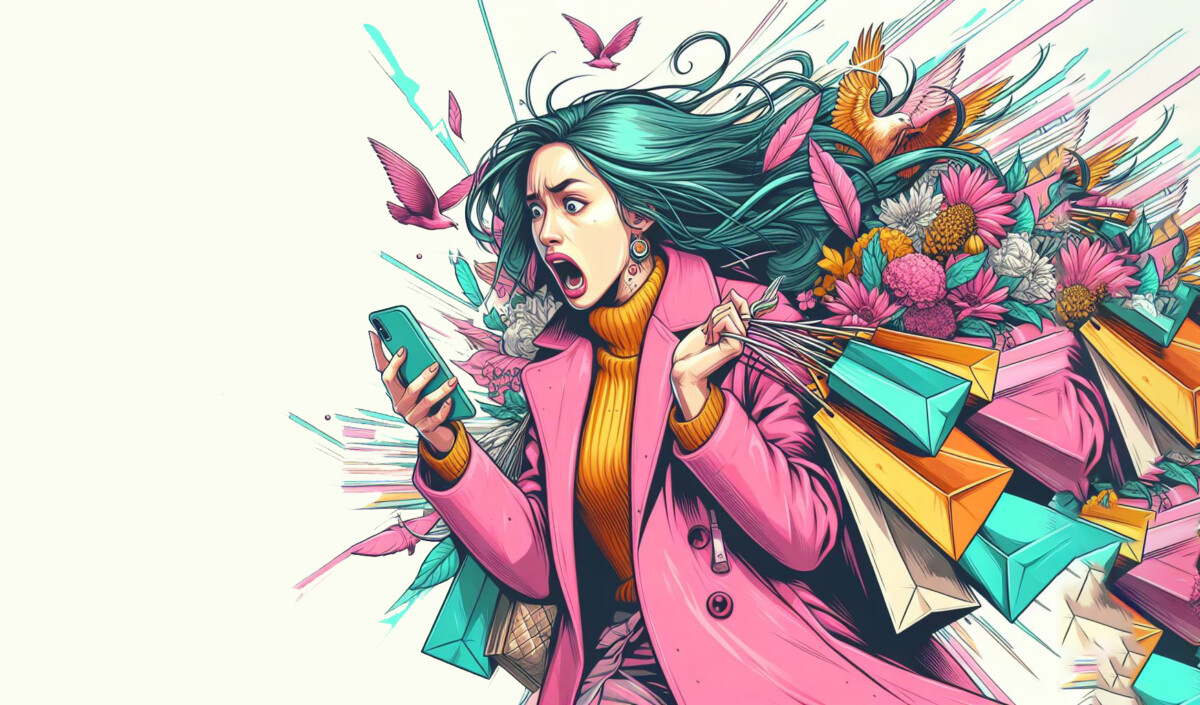
Then I’m going to talk about micro trends. What they are, why they’re a bad idea, especially for hoarders.
And then I have a shout out for another podcast.
Let’s start with some housekeeping.
As I mentioned last week, the first Dehoarding Accountability Zoom session went really well, And so I booked some more in and for different times of day to suit different continents, basically.
By the time this goes out, the second one will have happened. It has not happened at time of recording, but on Friday morning UK time, which will be Friday evening Australia and New Zealand time, and different times everywhere in between, will be number 2.
So I’m really looking forward to that.
If you would like to join in a Dehoarding Accountability Zoom session, you can do that. Just go to overcomecompulsivehoarding.co.uk/ticket.
I’ve got a few there ready to book into. Some are evening UK time, which tends to be afternoon North American time, evening European, and Africa time. I think. I’m really bad at time zones.
And there are some that are morning UK time, which are probably not great for North America, but a lot more friendly for continents to the east of the UK as opposed to continents to the west.
So if you would like to join in on a future one, you don’t have to worry about everybody seeing your hoard.
You can keep the camera off if you prefer. I keep my camera off. You can change your name in Zoom so that everybody doesn’t know who you are, if you feel safer using a different name.
I do that as well.
And it’s just a nice atmosphere to have a chat as we dehoard together. And we set a little goal at the start, which we come up with ourselves. There’s no point me setting you a goal. I don’t know what your home is like. I don’t know the kind of speed you’re going to be able to work at. I don’t know what you want, crucially.
There’s no point somebody else setting a goal if that isn’t something that interests you.
So you set your own goal. We dehoard and chat. We have a break in the middle. We do more dehoarding and chatting, and then we check-in again at the end with how we’ve done.
So, yeah, I’d love to see you at a future one. If you would like to go to overcomecompulsivehoarding.co.uk/ticket.
It’s time for the pointless thing I found this week.
So this thing I found this week, it’s not the first time I’ve found one of these, which I’m a bit ashamed of, but it was pointless, definitely useless, definitely a waste of a small amount of space, but it all adds up.
And that was a box of medication that was not only out of date, but that I don’t take any more anyway.
So these were tablets that I used to take. Haven’t taken them for a long while. I switched to something different.
So as soon as I stopped taking them, they were no use to me. But no longer taking them and with a 2016 use-by date was really unnecessary to have kept it this long.
It was pointless on both of those grounds. Taking out of date medication is just risky. And that’s if I even took it any more, which I don’t.
So that is now gone. It is teeny bit of space I’ve clawed back, but every little helps. As a large supermarket chain’s advertising tells us in the UK, every little helps.
Trends and fashions come and go.
They always have.
To some degree, I think they evolve naturally. People have always wanted to maybe personalise an outfit or express themselves or wear something in a different way to the way their parents’ generation wore it.
So we often think of trends and fashions in terms of clothing, but they’re really wide ranging. But just look at the way cars are designed, they’re quite a different shape now compared to 10 years ago, compared to 10 years before that, compared to 10 years before that.
And while I do think there is this natural element to the evolution of trends and fashions because we want to look a bit different or we want to hitch our skirts up a bit shorter when we’re a teenager or we realise that our granny got the same scarf as us, and we have to wear it a bit differently.
But as well as that being a somewhat human natural process, they are also really fuelled and pushed and created and employed by corporations that want to keep us spending.
They want us to keep acquiring.
Because if we are happy with the same pair of jeans and T shirt that we were happy with 3 years ago or 10 years ago, we wouldn’t buy their stuff. We’d buy one pair of jeans and 3 T shirts, and that would cover us.
So the marketing we see and the social pressure to have the newest, newest, newest, latest style is always present.
And as well as conventional mass marketing advertising that has been around for a long time, we also most of us spend at least some time on social media. And whether you follow fashion accounts on Instagram, or whether you follow get ready with me accounts on TikTok, or follow style accounts on Facebook, we see new trends even if we don’t pick up whatever the glossy magazine that talks about fashion trends is currently – I say currently because they’re affected by trends as well.
The cycle that trends and fashions are going through is shorter than ever Share on XBut especially in this kind of TikTok age, trends are moving faster than ever.
And that is creating micro trends, where a thing might be all over your Instagram feed or your favourite influencers are all wearing this new dress, and it’s the latest must-have accessory or way to decorate your home or things to wear, but it will be replaced by something else that is the latest must-have thing in anything from a few weeks to a couple of months.
It’s the same trend cycle as always, but faster and faster than it’s ever been before.
The cycle that trends and fashions are going through is shorter than ever.
And if you’re susceptible to this kind of influence, with this volume of must-haves, you’ll be drowning in bits and bobs within months.
Because if you’re constantly acquiring and failing to get rid of things, you will end up with a massive accumulation of clutter on top of what may already be an accumulation of clutter over years.
But the thing is, it’s easy to justify buying into these microtrends because often, it’s something small. It costs a few pounds. It doesn’t take up much space.
And so it’s easy to go, oh, it’s £3, and what harm can that do?
But all those pounds and all that space is still pounds, and it’s still space.
Every euro you spend on a necklace is a euro you don’t have to go on holiday with. Every dollar you spend on a $3 Temu you dress is a dollar you don’t have when the electricity bill is higher than you were expecting. And I don’t know if this is the case internationally, but here, electricity bills seem to always be higher than we’re expecting.
And that necklace, that dress, those socks, those shoes, that poster, that door hanging, it’s a small pile at first.
But add that small pile to the boxes that you also can’t get rid of, the packaging that you really struggle to get rid of, and the pre-existing piles of clothes that don’t fit, and books, and kitchen stuff, and everything else that you’ve already got taking over your home. And it’s more crap you lose control of.
You lose control more and more and more of your home, and it’s all stuff that you can buy in a couple of clicks and then might sit in your home for years not being used.
You barely remember owning it.
And then you’ve still got to then make a decision about it at some point and then do something with it, whether that’s donate it or probably not sell it, let’s face it, or just throw it away.
And the more we give in and follow these trends… and I say we because I am not immune. I wish I was. I wish I was coming to you saying, I’m going to tell you how not to follow micro trends, and I can tell you this with authority because I never do.
No.
I’m talking about this because I’m as susceptible as anybody.
But the more we give in and follow them, the more the companies adapt by producing fast, cheap, plasticky stuff that isn’t even designed to last. It won’t last in any useful form. It will last usually in the environment for several centuries, but it won’t be usable for a long period of time because it it’s not being built to be.
But we buy it, so they produce it. So we buy more, so they produce more.
And the companies aren’t just following demand. The companies like Shein, like Temu, like all of those are creating, or at the very least fuelling, social media trends and then cashing in on the very trends that they created or fuelled in the first place.
It’s very cynical, really.
They ship some freebies to influencers. The influencers wear those freebies on their social media accounts.
We go, wow. She looks amazing in that. I should get one of those.
Or we go, wow. She’s so cool, and she’s got one of those. If I get one of those, I’ll be cool.
Or we go, that looks amazing in her home. If I buy this, my home will also look amazing.
Or we go, everybody else has one of these. I can’t be the only person not to have one of these.
There’s big FOMO in micro trends. They tap into the bit of our brain that needs dopamine, that needs immediate reward, that fears FOMO.
And even if you fastidiously donate things from micro trends to charity shops, the trend is long past, and they won’t sell.
And that’s if the charity shop wants to sell that kind of thing.
I remember years ago when 50 Shades of Grey was the book, and then charity shops had to actually request, please stop sending us your copies of 50 Shades of Grey. We have more than we know what to do with, and nobody’s buying them.
One, I think it was an Oxfam shop, essentially built a mini office just with walls of 50 shades of grey.
One Oxfam shop has received so many donations of 50 Shades of Grey that they’ve managed to build a fort pic.twitter.com/lFtZ7Ow3aK
— Quite Interesting (@qikipedia) March 23, 2016
And I fear that a lot of the micro trends will be that for charity shops who will end up with, all of a sudden, neon green leg warmers, and then 2 weeks later, some jewellery that everybody briefly wore.
So the system that tells us we need these things then sells us the things, then takes no responsibility for what happens to the things after that.
It’s a system that can only result in vast amounts of waste.
You lose control of more and more of your home, and it's all stuff that you can buy in a couple of clicks and then might sit in your home for years, not being used Share on XSo when we are tempted by microtrends, first of all, just identifying that that’s what this is can be helpful.
Because, obviously, the TV ad doesn’t say, buy this latest micro trend because that’s being too honest about the fact that we won’t care about it in 3 weeks’ time.
So when you’re suddenly tempted to buy something, maybe you’re suddenly seeing it everywhere, and you think, oh, I want one of those.
Ask yourself, first of all, hold on. Is this a micro trend like That Hoarder was telling us about? Is this something that will come and then disappear and will never be spoken of again?
And if it feels like it might be, try to consciously opt out.
Say no. That’s not a cycle I want to be a part of. I will sit this one out.
Or say to yourself, I don’t want to be part of encouraging micro trends, so I’m going to wait a month. And if this thing is still everywhere, and if I still want it, then I can buy it because it’s only £5, and it won’t take up much space.
But starting by identifying whether something even is a microtrend can help you to reframe it and question, do I want to be part of that cycle?
I hope you’re finding this episode interesting.
In order to help me continue bringing you content like this week after week, your support is crucial. This independent podcast wouldn’t be possible without listeners like you.
I pour my heart and soul into it, and I fund the podcast myself, from microphones to computer software to hosting costs.
So I’m asking for your help if you can.
Whether you can offer a one off donation or you want to become a Dehoarding Darling with a monthly contribution, any amount makes a huge difference.
Find out more at overcomecompulsivehoarding.co.uk/donate
Ask yourself, why do you want the thing?
Go beyond I like it.
Do you really, really want it, or do you not want to feel like you did when you were 12 and everyone else at school have branded trainers and yours were from the market with the wrong number of stripes on them?
Do you really, really want it, or do you want the kind of carefree life that that TikTok creator is making their life look like?
Do you really want it, or do you quite fancy that creator and just want to be like them?
Do you really want it or do you want the life it seems to be promising you?
And if you do really, really want it, ask yourself, did you really, really want the last thing that made you feel like this? Did that play out well? Will you still be using it in 6 months or 6 years?
Or do you recognise a cycle where you really, really want something and you get the dopamine hit when you order and you get the dopamine hit when it arrives at your door, and everything else is just adding to your chaos. And you never wear it, or you never put it out on display, or you never use it.
The system that tells us we need these things, then sells us the things, then takes no responsibility for what happens to the things after that. It's a system that can only result in vast amounts of waste Share on XA thought exercise that is really worth doing is trying to work out what your style would be if there were no celebrities, if there was no mass media, if there was no social media?
It’s pretty much impossible to know for sure because celebrities, mass media, and social media, and also just our lives and the real people that we know and admire have always been around us.
But it’s worth asking yourself and trying to work out which of the things you own already are really you, and which are meh.
Are there certain things in your home or in your wardrobe that you gravitate towards? Do you notice that nearly all of your favourite clothes are blue? Do you notice which plates and cups and saucers you choose the most in your kitchen without thinking about it? Think about what clothes you put on and feel immediately at ease and what clothes you put on and feel immediately a bit wrong.
Trying to identify what styles and fashions and trends speak to you outside of this capitalist hellscape pressure bubble that we all live in can go a long way to help you resist the things that appeal in the moment, for any number of reasons, and the things that actually speak to your soul.
Like, I’ve never been a designer person. I couldn’t care less what label is on clothes I buy, what brand designed my kitchen table.
Don’t care at all.
I do have aesthetics that I like a lot, and I do have things that tend to be really comfy.
And, occasionally, I notice a certain aesthetic, so the way something looks repeatedly comes from the same brand.
So for instance, I really like Converse boots, Converse high tops.
I love the way they look, but I don’t get them because they have Converse written on the back. I get them because I really like how they look.
And if, like I did a few weeks ago, I spot some shoes or some boots that look just like that, but they’re from a different brand, I don’t care what brand they are because it’s the way they look that I like.
It just so happens that that big brand, Converse, makes a lot of stuff that looks the way I like things to look.
Similarly, I have other brands, you know, clothing brands or design brands, where I don’t seek them out. But I do find myself going, oh, I like that. I wonder who made it. And it’s the same names again and again.
But if I saw something from one of those brands and didn’t like it, I wouldn’t feel any pull towards it.
I wouldn’t think, oh, well, that’s designed by Joe Brown’s. And I normally like Joe Brown’s stuff, so I’ll get it even though I don’t really like the look of it.
And so for me, there are aesthetics that I know I tend to like. And, by chance almost, there are a handful of brands that tend to make things in those aesthetics.
And if I was being marketed to by Converse, I might be more susceptible to that because I do already have this tendency towards liking Converse or liking Doc Martens. But if I was being marketed to by Doc Martens, but they had some boots or some shoes that I really didn’t like, I like to think I’d be better at resisting those even if they were bombarding me with ads, because I do have a sense of the kind of things I like the look of.
Having said that, I am very much a comfort person. Comfort comes first. I am well past my years of wearing something that feels terrible because of how it looks.
I did that. I was a teenager. I was in my twenties. I wore the heels that caused pain. I wore the dresses I couldn’t breathe in. I’ve done that.
These days, no. And so I’m also aware with myself that I am not into style over substance, and that how something feels is more important than how it looks.
What, from what I already own, would I swap for this? Share on XSome people are very committed to how things look to the exclusion of all other things. None of this is judgment either way.
But it’s about asking yourself these questions and trying to get to know yourself beyond what you’ve absorbed from… whether your idol is the Kardashians or whether it’s whatever the opposite of the Kardashians is.
Try and work out for yourself, if I hadn’t been bombarded with these ads on TV, if I wasn’t bombarded by teenage girls getting ready on camera in Instagram reels. If I wasn’t bombarded by Facebook ads, what would I like at my core?
I’m becoming more aware of that. Although, as I said, it’s impossible. We don’t live in a vacuum. We don’t live in isolation from this world, and we’re influenced by everything.
So it is impossible to know for sure. But if you can feel more secure in your sense of what you do and don’t like, that can help to strengthen you when faced with the temptation of the latest buzzy thing.
And ask yourself, do you love the thing, or do you love what you think the thing would say about you?
Do you love the person wearing the thing on Instagram, and you can’t quite separate that from the thing? Do you love how the thing looks because of how it’s staged or styled in photos rather than how it looks in real life and rather than how it would look in your home specifically?
What does the thing actually say about you? Does it say, this is That Hoarder to a T, or does it say, this is somebody who felt a bit insecure on one particular day and was feeling a bit emotionally wobbly? And then she went on Instagram, and somebody she really looks up to was promoting this thing, and then the next person down on her feed was also wearing it but didn’t mention it. And then a few more videos and photos down, somebody else was styling it in a different way, and that got into her brain.
Which of those things is the reality of why you want this thing?
What do you want the thing to say about you, and what would it actually say about you?
Also, do you have anything else that would do the trick?
Say you really want a particular look. We have full homes. We have homes with so much stuff.
Is there really nothing, if you rummaged around, that could fulfil the same purpose?
My phrase for this year is make do, and I’m really trying to ask myself, yeah, but what have you already got that would serve this purpose, whenever I try and justify a purchase to myself?
It’s a useful thing to ask yourself.
And you’ll have heard people recommend, like, one thing in, one thing out.
I struggled with that because I would be in a shop, and I would think, okay. If I get this, I’ve got I’ve got to get rid of something. And then because I wanted to get this, I would say, yeah. Yeah. Yeah. Sure. I’ll get rid of something.
And then I wouldn’t, necessarily.
So then I started, while considering a purchase, making myself say not just, yeah, if I get this, I’ll get rid of something, but, actually, there and then pick the specific item that would have to go.
So if I get this mug, I have to get rid of the blue rainbow mug. Or if I get this pair of dungarees, I have to get rid of the other pair of dungarees.
And when I got more specific, it was suddenly that bit harder.
So saying to yourself not, if I get this, I’ll get rid of something else.
But instead, asking yourself, what, from what I already own, would I swap for this thing?
It’s quite a sobering way of reconsidering the one in, one out idea.
What, from what I already own, would I swap for this?
And then do it if you do submit to the trend.
And ask yourself, have you ever bought anything like this before and regretted it? Or even if you didn’t full on regret it, just wondered why you’d bothered.
And when I say bought anything like this before, that can be a similar item, or it can be bought in a frenzy of everybody else seems to have one, and it’s really cheap, so I’ll just grab one.
I would imagine you have, and it’s worth sitting with that for a moment while trying to decide about whatever the new micro trend is that you’re considering.
And also ask yourself, can you delay the purchase?
Because if you say, okay. I can get this, but in 2 weeks, then if you’ve lost interest in 2 weeks’ time, you don’t buy it. Nothing lost. As in you haven’t lost the money, you haven’t lost the space, you haven’t lost anything.
If in 2 weeks’ time, you still really want it, then it might be less of a wasteful purchase. It might be less micro trendy, and it might be that you can justify it.
But if you feel like, oh, I can’t delay it because it’s now or never, that’s a really clear indicator that this is a micro trend and that this thing that you are buying is fuelling this fast, fast, fast cycle and will result in a thing that may be with you for a long time and will certainly be with the earth for a very long time just because of a slight frenzy of excitement when you hit the buy button.
Look. I’m not being sanctimonious about any of this.
Microtrends are a huge issue at the moment for everybody, not just hoarders.
But I think as hoarders, we have specific extra challenges that microtrends bring to us.
And as long as we keep indulging in them, we end up with less money, more stuff, and we’re more convinced that we are incapable of resisting the lure of that Bluetooth speaker or that weird green hairspray or whatever it is today, which will be different to what it is tomorrow.
We are stronger than that. We are. We’ve got to be. I’m not saying we never buy anything again, but this is really low-hanging fruit of things that we could stop acquiring or at least cut down massively on acquiring.
So give it some thought and tell me tell me what microtrends you have fallen for, first of all, I would love to know, and tell me your experience of them.
So shout out this week to the Spam Filter for Your Brain Podcast from the Self-Care School. I will link to them in the show notes at overcomecompulsivehoarding.co.uk, but have a listen to this little snippet:
It is this habit that we have got into of talking to ourselves in a really mean way whenever things don’t go according to plan.
And that bit we can untangle.
The more that we find tools to gently just notice where we’re saying things to ourselves that are not gracious, that are not kind, that are not respectful, or just that old classic baseline of if you wouldn’t say it to somebody else…
When you can start to notice that stuff, then you can start beginning to write a new story, weave a new path of where you could treat yourself with more humanity than disdain.
And when you begin to do that, things like making mistakes, things like feeling a bit disappointed, suddenly don’t become so terrifying because you know that you’re not going to be as horrible to yourself when they arise.
And if you’re anything like me, you do need that critical voice to just bring it down a few notches.
Okay. Thank you for listening, and I will speak to you next time.
Thank you for listening to That Hoarder: Overcome Compulsive Hoarding podcast. It’s been a pleasure to have you on board.
You can find all the links I’ve mentioned and the transcript of the episode online at overcomecompulsivehoarding.co.uk.
To find out more about how you can support this podcast and the overall project, go to overcomecompulsivehoarding.co.uk/support, and do subscribe to the podcast, so you make sure you don’t miss any future episodes.
There may be links in this podcast that earn me money. This doesn’t come at any extra cost to you if you make a purchase through those links, and it helps to support the podcast.
Audio credits
- Intro and outro music: cheesepuff
- Transition whoosh: Vilkas_Sound
- Piano Playing Classical Music: IESP
- Hallelujah chorus: deleted_user_2906614
- Uh oh: stib
- Angels: pycckuu20032003
- Phone: HarryPeeks and Aesterial-Arts
- Yay!: Reitanna
- Seriously? rydra_wong
- Retro power up MaoDin204
- Fanfare: humanoide9000
- Explosion: Iwiploppenisse
- What? What? What? max_cristos
- Why? Why? Why? Why? Reitanna
- Celebration: Gabriela_Melo
- Not again: xtrgamr
- Atmosphere 17: DaveJf
- Wah wah: SpliceSound
- Giggles: kim.headlee
- Help me: brandonreese
- Please don’t flush: PMBROWNE
- Horror laugh: klankbeeld
- Oohs and aahs: noah0189
- Applause: Sandermotions
- Heartbeat: Tobias Ludwig
- Countdown – female : Tim Kahn
- Game Over – evil: Rocotilos
- Countdown – male: jppi_sstu
- Oh yeah: metrostock99
- Amen: klankbeeld
- Cuban happy music: szegvari
- Suspense: Warped_Tension
- Ding dong: MatthewWong
- Ticking clock: ycbcr
- Former intro and outro music: grapelemon