Show notes
- Microplastics found in human blood for first time
- Website: Overcome Compulsive Hoarding
- Twitter: @ThatHoarder
- Facebook: Overcome Compulsive Hoarding with That Hoarder
- YouTube: Overcome Compulsive Hoarding with That Hoarder
- Reddit: Overcome Compulsive Hoarding with That Hoarder subreddit
- Help out: Support this project
- Sponsor the podcast
Subscribe
- Apple Podcasts / iTunes
- Google Podcasts
- Spotify
- RSS
- iHeartRadio
- Amazon Music
- Audible
- Stitcher
- Podchaser
- Pandora
- Deezer
- Podcast Addict
- Player FM
- Podcast Index
- TuneIn and Alexa
- Castro
Audio credits
- Intro and outro music: grapelemon
- Ding dong: MatthewWong
- Transition whoosh: Vilkas_Sound
Transcript
Welcome to the Overcome Compulsive Hoarding with That Hoarder podcast. I am drowning in stuff and trying to find a way out. Listen as I explore the issues and delve deep, as somebody profoundly affected by hoarding disorder. Find out more, including links to subscribe to the podcast, at overcomecompulsivehoarding.co.uk and find the links there to follow me on Twitter, Facebook, Reddit and all over the place.
So instead of starting by reading a review this week, I’m starting with a thank you for a really kind donation. So thank you to Fermented Food Freak – I like the alliteration. It’s so encouraging and helpful. And also, thank you for the message you sent me. As you sent it to me privately, I won’t read it out. But I appreciate it. It all helps to keep me going, to keep me encouraged, to keep me motivated. It’s brilliant.
If you want to help not necessarily financially, but in any way, there are lots of ways and ideas at overcomecompulsivehoarding.co.uk/support
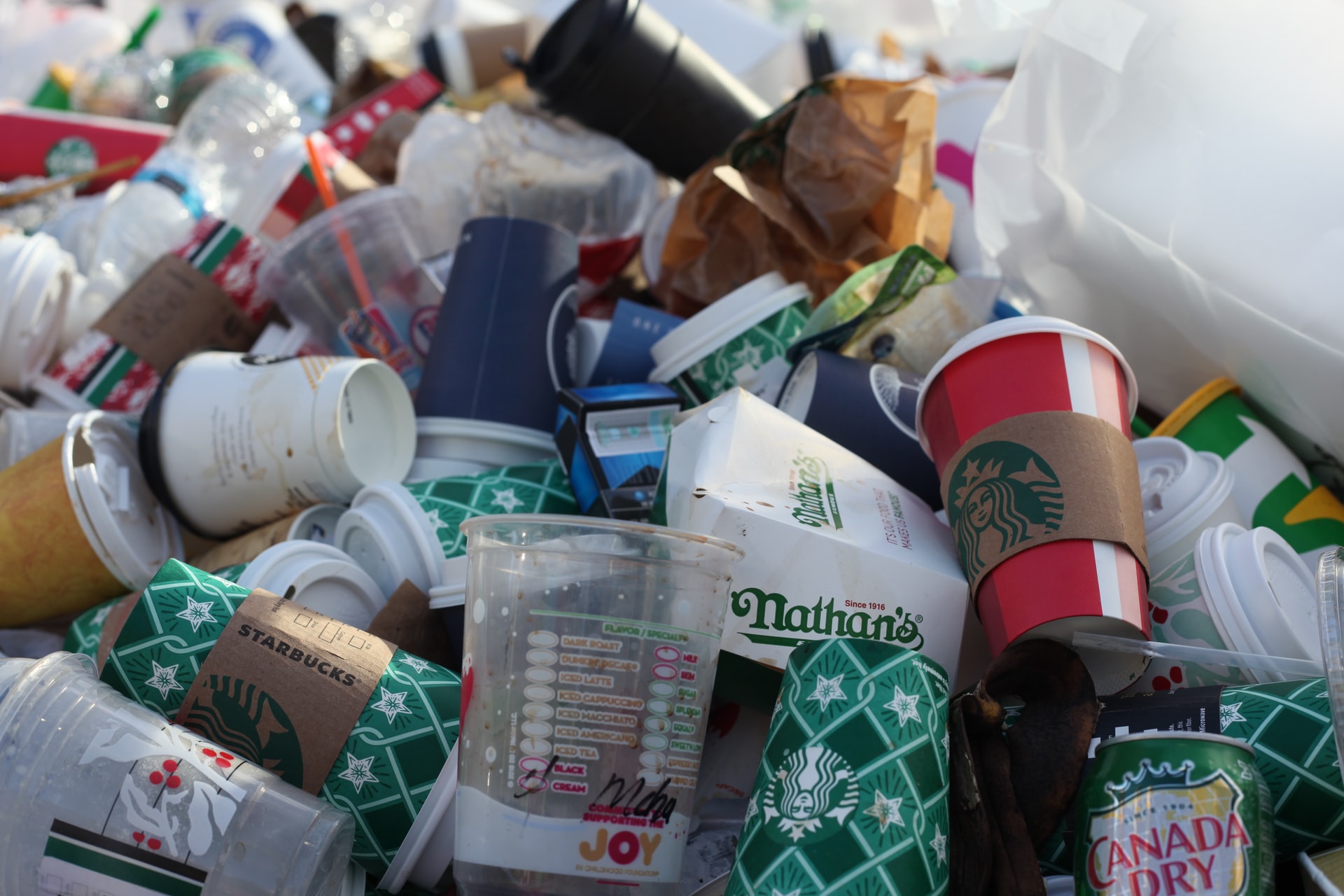
So today I’m going to talk about being wasteful. But in particular how, sometimes, it is okay to be wasteful, and how sometimes being wasteful can even help us.
Now that might sound like a challenging thing to hear! I think a lot of hoarders, myself included, are more conscious of waste the most. And it wouldn’t surprise me if that particular sensitivity to not wasting things contributes to the problems we have.
If I didn’t have such a strong sense that I should save things rather than waste them, I wouldn’t be in anywhere near the problem I’m in now. And even the home I grew up in was not hoarded, it was very neat and tidy. But there was a really strong sense that you couldn’t… shouldn’t… mustn’t… waste anything ever. It was very important and that was instilled in me and it is a principle, as a rule, that we should, as societies, bear in mind, given the state of the world, the state of the climate, the state of plastics in the seas, the state of plastics in our bloodstream, I read the other day.
I will add that link to the show notes, because it is genuinely horrifying. Some blood was tested and I think it was 80% of the people whose blood was tested, microplastics were found in their bloodstream. I know it had already been found in digestive systems and placentas. But yeah, of course, we are living in a world that we, as humans, have damaged massively, and the cultural move to everything being temporary and short term has no doubt played into that.
So I think most responsible citizens want to reduce waste. And I think most hoarders want to reduce waste, but see potential in items that others would immediately see as waste.
So I think we have that additional aspect to what we’re dealing with. Not only do we want to reduce waste, but something that someone else would pick up and say, this is clearly rubbish and put it in the bin, we wouldn’t necessarily.
So that can exacerbate our hoarding. Because if you have two people and they don’t want to waste, for instance, food, and one of them’s a hoarder, and one of them isn’t. And they find, at the back of the fridge, something that went out of date last month, the person who isn’t a hoarder may well throw it away. And the person who is a hoarder may well want to keep it.
Same with… I think I’ve used this example before, but it’s a big one for me, used envelopes. Your average person, once an envelope has been used, will throw it away. And they wouldn’t see that as wasteful, they would just see that as the natural order of things.
I have two issues with throwing away envelopes. One is that you can get – I probably shouldn’t tell people this – but you can get little envelope-size stickers that you can use to reuse an envelope and I used to do that all the time. I stopped doing that because it required a degree of organisation that I didn’t have. But that didn’t necessarily translate to then throwing away envelopes, because something in me knew that they could be reused, and that would be better.
The other reason I have trouble getting rid of used envelopes is because often they have nice squiggly patterns on the inside that I really enjoy. And we’d like to use in arty projects. And I have in the past used them in arty projects, and that reinforces in my disordered brain that they should be kept and cherished and not thrown away.
So, with those as examples, you might be seeing or understanding how hoarders like most people don’t want to waste but that we have almost a different sensitivity to what waste is and what isn’t.
So we might keep things that other people, even people who don’t want to waste things, would throw away without thinking, because they are waste. Out-of-date food has to go, used envelopes have to go. You may have heard my slight disappointment in that second one, but it’s true. I’m working on it.
And so the very understandable desire to not contribute to the worldwide problem of excess waste is a good one. It’s a good principle to hold. But when you are a hoarder, it’s one you have to be particularly careful of, because holding on to that as a principle too strongly, in ways that other people just don’t, is detrimental to the progress we want to make.
If we want to dehoard our homes, if we want clean, tidy, uncluttered homes, we have to keep that in mind when deciding what to do or what not to do about the waste around us.
And what I wanted to talk about in particular today were times when doing something that you might previously have considered wasteful can be helpful in dehoarding and how that can actually be okay. We have to allow ourselves that if we’re going to make any progress at all.
So I have ongoing issues… full stop [laughs]. But in particular, I have ongoing issues with doing the dishes. I hate doing the dishes, I hate doing the dishes so much. I have always hated doing the dishes. It’s a task I put off and put off.
And then because I put it off and put it off, then by the time I get round to it because I have no more dishes to use, every bit of pasta sauce, every bit of gravy, every bit of leftover curry is dried on to the dishes and the pans, making it 100 times worse. And reinforcing to me that washing up is terrible and the worst task in the world.
So it’s a self-perpetuating, vicious cycle. I hate doing the dishes, so I don’t do the dishes. And because I don’t do the dishes, by the time I have to do the dishes then doing the dishes is worse than ever. And recently, I started doing something that I previously wouldn’t have considered, because I would have considered it wasteful. But that actually has changed my life a bit. And that is, when I finish a meal, I use paper towels to wipe the majority of any residue off my plates. So if I have had pasta and vegetables in a nice tomato sauce, and I’ve eaten as much as I’m eating, then I use paper towels to wipe the plate not clean, not clean enough to put away, but to wipe the sauce off the plate. Same with any kind of residue like that.
Now, I didn’t do this for years because I refused to buy paper towels for years. Because they are, I believed they were a waste of paper, when you could just use dish cloths and a tea towel to do any tasks that people use paper towels for.
I didn’t want to waste paper when washable cloths do exactly the same job.
But then for other complicated reasons, I ended up buying a pack of paper towels. And I don’t know why or when I had the idea to start using them to wipe my plates after I’d used them. But it is amazing.
Now you might be listening, thinking, well, you could save the waste of the paper towels by just washing your dishes as soon as you’ve soon as you’ve used them. And yes, of course I could. But the fact is, I am in my 40s and no amount of self-persuasion or strategies or tactics have ever made me wash my dishes as soon as I use them.
I have tried everything, and I can’t, and I don’t and I won’t.
And so if you’re listening critically, because you’re quite good at washing your dishes, then, you know, I’m pleased for you. But this is a thing that I found impossible.
And so now, when I do go to do my dishes, when, you know, necessity strikes, they are so much easier to clean. And they don’t need to be soaked… because that was another thing, you know, I would think I need to soak these now. And then I would just leave them to soak for three days and they’d be gross in different ways.
They don’t need to be soaked, they wash quite quickly. And so washing up, as a task, is not as horrendous as it used to be. So that got me thinking about this topic, because I do still cringe a bit at the waste of paper. But I know that it’s a relatively small environmental impact or wasteful impact on the world. And the difference it is making in my life is dramatic.
That sounds like an over exaggeration. But it isn’t, it’s made such a difference.
And I was thinking about other times I’ve done this and there was a… I put a rule in place a few years ago that if I eat in my house, anywhere other than my kitchen, then I have to use disposable cutlery. And that also might initially sound massively self-indulgent. Or, I don’t even know what that sounds like, but basically, whenever I eat anywhere other than my kitchen, and I would use my regular cutlery, I would basically never see that cutlery again. It would… something would swallow it, I don’t even know, but I was getting through a lot of cutlery. Because whenever I ate somewhere else, I just lost it invariably and never saw it again.
And it was when I was having to rebuy an entire cutlery set because I had so few forks left that I thought “this is ridiculous, I can’t sustain this degree of loss of stuff”. Loss of essentials. I mean, you need forks, that I said “right, if you use if you eat anywhere other than your kitchen, you’re going to use disposable cutlery. That’s now a rule”.
And it felt wasteful but it also made my life easier and if you consider buying disposable cutlery, versus rebuying regular cutlery, I don’t know which has the most waste. But in terms of my own day-to-day life, it made a real difference.
Now there’s something you can do, and I wouldn’t generally recommend using disposable things when you can use non-disposable things, but I think we need also, to give ourselves a break from time to time.
We need to stop holding ourselves to these paradoxically high standards, because they are such high standards that they’re impossible to meet. And also, the paradox is that having those high standards results in what many people would consider to be the extremely low standards of the way we live.
There’s a real paradox there. We don’t want to waste and yet we have homes full of stuff that we never use: that is waste.
There's a real paradox there. We don't want to waste and yet we have homes full of stuff that we never use: that is waste. Share on XAnd while, of course, we should all aim to reduce waste, we should aim to not over buy, whether that’s food, or pens, or cars, whatever your thing is. But also, if there is something that produces a relatively small amount of waste that will have a disproportionately positive effect on our lives, then we need to give that proper consideration.
If you’re listening to this and thinking, I have that exact same issue with washing up, and maybe if I use paper towels to clean my plates, so that when I eventually get around to washing them they’re not as awful, maybe that would really help me. But paper towels are wasteful, blah, blah, blah. Give it a try.
It may not help you in the way it’s helped me. But it has really helped me. Dramatically. It sounds like I’m being overdramatic by calling it dramatic but honestly, honestly such a difference.
But the other thing to think about is whether when being what we might consider to be wasteful, whether we can mitigate that to some degree and make it as positive as possible in the circumstances.
So for instance, I am using paper towels to clean my dishes. But I’m not using plastic wipes or wipes that contain plastic or that don’t biodegrade. For me, that’s a line that I don’t particularly want to cross.
Some people they can’t clean their home unless they use non-biodegradable wipes. If I am cleaning a surface for instance, in the days I had surfaces that were cleanable and not covered in stuff, I wouldn’t ever use disposable wipes for those. I would always use like a spray cleaner and a dish cloth.
But if for you, you have a similar issue that I have with washing up and for some reason, non-biodegradable wipes are best for you, then you know what? Do it. Do it.
But if you’re using non-biodegradable wipes and you could switch to biodegradable ones, or to something eco-friendly from a spray and paper towels, maybe give that some consideration.
And like with the disposable cutlery, my biggest problem with it was the plastic that most disposable cutlery, in the days I started doing this, was plastic. But recently, it’s become so much easier to get wooden or bamboo disposable cutlery and so I am shifting over to those and they’re really fine. They’re great.
And I know that although it’s still wasteful, and I know that although they will still stick around in a landfill for some time, it won’t be anything like the environmental impact of using plastic ones.
So even though we do all have to pay attention, as humans, to reducing our carbon footprint, to reducing waste, hoarders do feel this more than most… or a lot of hoarders feel this more than most… the key is to not let it become a stumbling block.
If something that is slightly wasteful will help you in a big way, consider allowing yourself to do it. And if you are doing things or considering things that some would consider wasteful, just have a think about whether there’s a slightly more environmentally friendly way to do it. Because that will ease your conscience a bit, you won’t feel as bad about putting something in the bin, and we need to give ourselves a break.
This paradox of such high standards leading to such low standards is a real one. And it's something we each need to examine for ourselves and come to our own conclusions. Share on XThis paradox of such high standards leading to such low standards is a real one. And it’s something we each need to examine for ourselves and come to our own conclusions.
In just one second, I’ll give you my top tip of the week. In the meantime, please do subscribe to the podcast, review it (five stars would be amazing!) and share it with your friends or anyone who might be interested, or who might benefit from it. It all really helps.
To find more ways to support the website, the podcast, and my overall dehoarding project, go to overcomecompulsivehoarding.co.uk/support
Now, back to your top tip.
So my top tip this week is to remind yourself of why you want to change. Remind yourself of why you want to live differently. Remind yourself of your original motivation.
What was the thing that made you one day say, “Okay, I just have to sort this out. I’ve had enough. I need to fix this”?
Remind yourself of where your determination to get better came from, because it’s easy to lose sight of that over time, but it’s important and it can be a motivator. So keep that in mind.
Okay, thank you for listening. And I will speak to you next time.
Thank you for listening to the Overcome Compulsive Hoarding podcast. You can find more online at overcomecompulsivehoarding.co.uk
You can find me on Twitter @ThatHoarder. And on Facebook at Overcome Compulsive Hoarding with That Hoarder.
To find out more about how you can support this podcast and the overall project, go to overcomecompulsivehoarding.co.uk/support and do subscribe to this podcast, so you make sure you don’t miss any future episodes.
Image: Jasmin Sessler