Show notes
- Recycle Now
- TerraCycle
- Recycle contact lenses
- Recycle cheese packaging
- Recycle liquid soap containers
- Recycle disposable razors.
- Recycle all of the packaging from Babybel cheese
- Recycle toothbrushes
- Recycle crisp packets
- Podcast ep 89: Trauma, empathy, environmentalism and hoarding with Dr Jan Eppingstall
- Website: Overcome Compulsive Hoarding
- Become a Dehoarding Darling
- Submit a topic for the podcast to cover
- Questions to ask when dehoarding: https://www.overcomecompulsivehoarding.co.uk/podquestions
- Instagram: @thathoarderpodcast
- Twitter: @ThatHoarder
- Mastodon: @ThatHoarder@mastodon.online
- TikTok: @thathoarderoch https://www.tiktok.com/@thathoarderoch
- Facebook: Overcome Compulsive Hoarding with That Hoarder
- Pinterest: That Hoarder
- YouTube: Overcome Compulsive Hoarding with That Hoarder
- Reddit: Overcome Compulsive Hoarding with That Hoarder subreddit
- Help out: Support this project
- Sponsor the podcast
Subscribe to the podcast
Transcript
Welcome to the Overcome Compulsive Hoarding with That Hoarder podcast. I am drowning in stuff and trying to find a way out.
Listen as I explore the issues and delve deep, as somebody profoundly affected by hoarding disorder.
Find out more, including links to subscribe to the podcast and all my social media, at overcomecompulsivehoarding.co.uk.
Finally, I am not a doctor, I’m just a hoarder doing her best, so do seek professional support if and when you need it.
Hey, how are you? I hope you are having a brilliant day. I am okay.
So today I am going to start with a bit of housekeeping and then I am going to talk about wishcycling, which is a very interesting thing, and what it means to people who hoard in particular.
And then there is going to be a top tip.
So I am going to start with a bit of housekeeping, which… I know I have made a joke about that so many times, but it does consistently make me laugh.
So first of all, I have finally created an Instagram account and I would love it if you came over there and followed me. I am at @thathoarderpodcast, come and say hi. Yeah, I will be interested to see how that goes. So that is the first thing.
Second thing, if you are in Canada – and I know that in the last 30 days 809 of you in Canada have downloaded this podcast. So I know there is a few of you – there is an article in the current edition of Elle Canada, which is kind of all about this podcast, which is amazing.
The journalist contacted me ages ago. Things in print magazines all happen way ahead of time.
And I spoke to this journalist and I was a bit worried about how it would turn out. But then she sent me a PDF the other day and it’s actually really nice about the podcast and really nice in terms of how it talks about hoarding, which, as you all know, is really important to me that it’s not this massively either sensationalised or uber-shaming thing. And she didn’t fall into either of those traps.
And it’s actually, you know, for a big, glossy magazine, it’s really, really, really cool that it’s been portrayed in that way.
The article is not online yet. It may never be, but I will keep an eye out for that. But if you’re in Canada, go out and buy Elle. Because how cool is that?
And I also want to mention, if you listen on the Stitcher app, if you listen to your podcasts on an app called Stitcher, it is closing down, I believe in August. So you’re going to need to find an alternative.
Thankfully, there are a lot of podcast apps around. So depending on which kind of device you use, have a look around, try a few and see which feels like a good replacement for you, if that’s how you’re listening.
So, wishcycling. I only heard this term recently and I knew as soon as I read the definition, I was like, I know I’ve done this. I know lots of people do it. And once I learnt how kind of damaging and counterproductive it was, and when I thought about all the implications for hoarders in particular, I thought it was definitely worth dedicating an episode to.
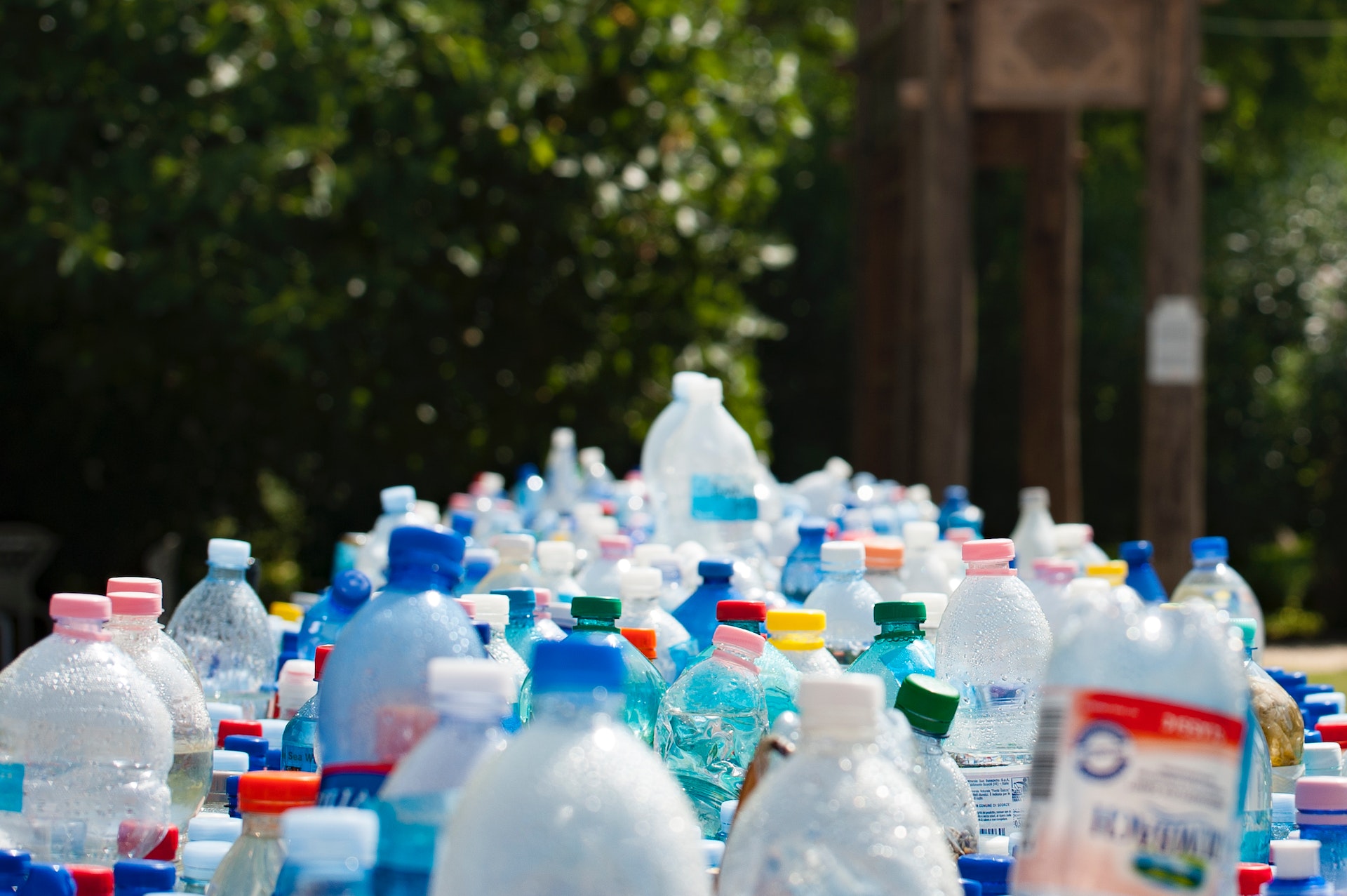
Wishcycling is when you put something in the recycling bin, hoping that it will be recycled, even though it can't be Share on XSo wishcycling is when you put something in the recycling bin, hoping that it will be recycled, even though it can’t be.
It might be unsuitable. It might be contaminated. It might be partly recyclable, but not fully.
And it can be, I wish this was recyclable, so I’ll put it in the recycling bin.
It can be, I don’t know if this is recyclable, so I’ll put it in the recycling bin.
Or it can be that you believe it is, but in fact it isn’t.
So I know I’ve done this before. I don’t think I’ve done it knowingly very much, but I have done it optimistically.
Like, I’m really not sure about this. I’ll put it in just in case.
And I think I assumed there would be somebody at the other end who would spot it if it wasn’t appropriate and take it out and all would be well. And it seems like I was wrong about that.
So I think I was kind of overestimating the capacity of some bloke at the other end spotting it and taking it out.
In researching this episode, I’ve done so much reading about what happens to waste when you put something in the bin or when you put something in the recycling bin. What happens from there? And I’m not massively confident I know, even though I’ve read a gazillion articles about it now.
Because it’s different, certainly within the UK, it’s different from town to town and city to city. So certainly across the world, it’s a different system everywhere.
In some cities in the UK, a lot of waste is incinerated, which is not ideal, obviously pollution wise, but then often the heat created from that is used to heat buildings in the city. And that sounds like it would be good energy wise.
And how much sorting is done at the other end really depends from place to place.
So I’m still not fully clear. I wish there was a really standard process that waste went through so we could really understand what was happening. But it seems that is just not the case.
So wishcycling often has positive motives. People who wishcycle often do it because they want something to be recycled.
However, there are real problems that it can cause if we put something that’s not a recyclable plastic in the plastics bin, for instance.
The big one is that that bit of plastic can contaminate an entire batch of recycling. And when that happens, when that plastic is contaminated, the entire lot may end up having to be sent to a landfill because the recycling plant says, nope, we can’t do that. And because it’s really expensive for them to separate and process everything separately. And also it can damage the equipment if we put something in a recycling bin that is not supposed to be there, then when it gets to the sorting plant, it can cause problems that then cost a lot to fix. And that then makes the services of the recycling plant more expensive, which can then make local authorities more wary of even bothering.
It’s a real cycle of negativity.
So if you know something can’t be recycled, but you wish it could, or if you’re not sure something can be recycled and are putting it in just in case, what feels like just taking a bit of a chance can actually have quite a negative result on the whole process.
Now, a lot of items… I found lists of items that are commonly wishcycled, things that people think should be recyclable, they believe they must be. And that often end up in recycling bins when they cannot actually be recycled.
And again, this varies from town to town and city to city and country to country.
But it will give you a place to start if you commonly put these things in the recycling bin, just to check in your local area whether they can be or should be there.
So plastic bags like carrier bags from shops are generally not able to be recycled in the recycling collections that happen from your home.
And when a plastic bag ends up in that kind of stream of recycling, it can really clog up the machines that sort the plastics and then contaminate other stuff in the same batch.
Another one is what I would call crisp packets. In some other parts of the world, they will be called chip packets, you know the kind of thing. And because of the way those packets are made, it’s a whole kind of mixture of different materials. And that makes them very, very difficult to recycle, especially through general waste programmes.
It’s only really possible, generally speaking, through really specialised programmes.
So that’s something to be careful of.
Styrofoam as well. Positively, I see less and less use of Styrofoam these days. It used to be that if you bought a cup of tea when you were out and about, it would come in a Styrofoam cup, but I don’t often see them now.
But anyway, most home kerbside collections cannot deal with Styrofoam. So if you have Styrofoam, don’t chuck it in the recycling bin without checking really carefully whether you can.
It may be that you can find a specialised recycling programme to deal with them, or it may be that you just have to put them in the bin.
And another one is pizza boxes, that’s the one I kept reading about as well, because we think a pizza box, surely that’s just cardboard. Surely that can go in the recycling.
But because they get oily and they get bits of sweetcorn that stick to the box and all that kind of thing, that makes them really, really problematic in the recycling system.
And so if you have a pizza box, it most likely cannot go in your recycling bin. If it can, you really, really have to make sure that none of the greasy, oily, foodie bits get in there.
So they are just some examples of things that are commonly wishcycled.
But the thing with it is that because recycling provision varies from place to place, the best way to avoid wishcycling… well, one way to avoid wishcycling, I’m going to go into other ways in a bit. But one of the key things you need to know, if you live in a place where your rubbish is collected once a week or once a fortnight, and that includes a recycling collection, check what the rules are for your area.
I know a lot of the recycling bins have stickers on them that says what can go in them and what can’t. So I’ve seen that across the UK.
And so it’s worth just reminding yourself once in a while.
It might be that you’re accidentally wishcycling because you assume something can go in because you’ve put it in so many times.
It’s always worth rechecking your local recycling rules. If that means going on to your local authority website, I’m sure that will have a page dedicated to it.
And once you know what can and can’t be recycled, especially in that kind of kerbside collection from home, then that will help you to avoid that accidental wishcycling.
Another thing to do to avoid wishcycling is to, if you have been like me, occasionally putting things in in the hope that it can be recycled, stop doing that.
Now that I know and now that you know that that’s not a problem-free approach to the world, if you’re unsure, it’s unfortunate. But if you’re unsure and you really can’t get an answer, put it in the regular bin or look up specialist services specifically, because it’s not harmless to just chuck something in the recycling in the hope.
Another thing that’s quite simple, actually, to avoid causing problems with the recycling system down the line is to make sure that stuff is clean when you put it in the bin. And that’s fairly easy to do.
And also things like, I mean, I was saying that you don’t often see Styrofoam cups anymore, but you still see paper cups when you buy a cup of tea, when you’re out and about.
And so having things… I’m not suggesting… because I know some listeners are always keen to have an excuse to buy something. So this is not that. I am not saying go out and buy loads of reusable coffee cups and bags and food containers and all of those kind of things, because this is not that podcast.
However, if you have those things already, make sure you take them with you when you might need them.
If you know that you get a cup of coffee on the way to work every day, take that reusable coffee cup with you and actually use it so that you’re not in a position where a paper coffee cup or a Styrofoam coffee cup has to go in either the bin or wrongly in the recycling.
Now, there are websites where you can put in the thing you’ve got that you want to recycle and roughly where you are, and it will tell you if that can be recycled anywhere near you and where.
One in the UK is called Recycle Now, but I have no doubt that other parts of the world will have their own.
And that can be really good for if you’ve got garden waste or if you’ve got something that you’re just not sure about. You’re not sure if it can go in the bin or you’re not sure if there’s anywhere near you that will take it into recycle.
And this one is UK specific, but is so good that it’s worth sharing. And I really hope that other countries would have similar things.
There is a website called TerraCycle, I will link to it from the website, from the show notes at overcomecompulsivehoarding.co.uk.
And TerraCycle gets companies, manufacturers, to sponsor a recycling programme.
And they’re all a bit different, but the number of things that would otherwise be really difficult to recycle that you can recycle through TerraCycle is honestly a bit mind-blowing.
There are programmes to recycle contact lenses. There are programmes to recycle cheese packaging. There are programmes to recycle liquid soap containers. There are programmes to recycle disposable razors.
I mean, there are so many.
And some of them are brand specific, like any fans of Babybel cheese, there are ways to recycle all of the packaging from Babybel cheese, including the wax.
And some of them are sponsored by a particular company, but will work with the packaging from any. So the disposable razor one is sponsored by Gillette, but will take any disposable razors.
And some of them have drop-off points. Some of them you fill a box at home and send it in.
But honestly, I bet you didn’t know that there were recycling programmes specifically for toothbrushes, did you? It’s really impressive. One of them is for crisp packets as well.
But it’s great and a good way, if you have a lot of stuff that can’t be collected from the bin outside, but you’re very conscious and you don’t want to get rid of otherwise.
Now, I do have to say at this point that if you hoard, the priority has to be dehoarding, getting stuff out.
And so if you end up with one box ready to go with the disposable contact lenses and one box ready to go with your laundry care packaging and one box ready to go with your water filter packaging, then that will guarantee basically an interruption and a diversion from your actual dehoarding.
It will make it really difficult.
There are times when you just have to get stuff out and if it doesn’t get recycled when it might otherwise have been, that’s a shame. But your priority without question has to be having a liveable home.
And so if you have kept every disposable contact lens for the last three years in the hope that there would be a system like this and it would take you five minutes to put them in a box and stick a packaging label on, then sure, go ahead.
But don’t let this become an unworkable, impossible system that will just delay you making progress in your home.
But more important than any of that is not creating as much waste in the first place.
Now, let me explain. I am not saying do not throw things out. I am not saying do not get rid of things from your home.
I am absolutely not saying any of those things.
What we need to do, both as hoarders and as citizens of a world that has far more plastic on it than we can ever deal with, we need to interrupt the process before it gets to something at the end of its life needing recycling.
The three Rs
And there’s a reason that the old three Rs has recycle at the end: reduce, reuse, recycle. Because they are in order of preference.
And the best thing we can do – by far – for the planet is to reduce our consumption in the first place.
And that is for the planet. But as hoarders, the best thing we can do is reduce our consumption in the first place.
This is really, really vital to understand: what we are dealing with in our homes is overwhelm.
We are overwhelmed by the amount of stuff we’ve brought in. That’s what it comes down to.
And by the amount of stuff we haven’t let go.
And so as hoarders, even if you’re not at all concerned about the environment of the Earth, if you’re concerned about your environment in your home, less needs to come in.
Whether you’re buying it new, rescuing it from the street, buying it second-hand, doesn’t matter.
We need to reduce the amount coming in.
The five Rs
But I found there are newer iterations of the three Rs. And there’s a few different variations, but the five Rs made a lot of sense to me.
And that is reduce, reuse, repair, rot, recycle.
Some people add refuse, repurpose, refurbish, reclaim.
But I think reduce, reuse, repair, rot, recycle is really useful. But as people who hoard, we have to hear it differently.
So I’m going to go through each of those in terms of what they mean, and then in terms of what we specifically need to be really careful about when we are thinking about the five Rs.
Reduce
So reduce, I’ve just been talking about that. If you can avoid starting the process that ends in waste, that is the ideal way to do it.
If you can consume less, if you can bring less into your home, then everybody’s winning. Everybody’s winning, including you.
Reuse
And the next one is reuse. So this is if you have something that’s perfectly good, but you no longer need it or want it, then you can give it to somebody who would reuse it.
Or it can be getting something second-hand rather than brand new, reusing something that somebody else has previously used.
And that makes a lot of sense to me. It avoids something else having to be manufactured and shipped around the world and stored in a warehouse and then shipped to a shop and then either brought home by you or shipped to you.
And it avoids all of that. It is more economical.
Again, everybody wins.
But you know when everybody doesn’t win? That’s when you are a person who hoards and you can’t get rid of anything because you are convinced you will reuse it or you are convinced someone else should be able to reuse it.
And some of those things are things that maybe other people could reuse or maybe you could reuse.
Some of those things are things that, in reality, nobody else would want to reuse or that you should not reuse.
So it might be that you have a T-shirt that no longer fits you, but you think somebody else should be able to enjoy this T-shirt.
But in reality, it’s got a stain that will not come out no matter how many times you wash it. And it’s kind of a bit worn and torn.
You might think, I can’t throw this away because somebody could reuse it.
But chances are, in fact, I’m confident, nobody’s going to reuse that.
It no longer fits you. Other people… in these days of fast fashion, you can get another T-shirt for £3, whether that’s new or reused. And there’s no need to wear somebody else’s stained, torn, worn old T-shirt.
And that’s just one example. But just because you think something in principle could or should be reused does not mean that in reality it has any chance of being reused.
Another example of where a hoarder’s thinking might be different on reuse and more problematic is if something is actually not safe to reuse.
It might be that you found an old microwave on the side of the road and you rescued it and brought it home and you think, oh, great, I can reuse that.
And actually, you don’t know how long it was out there. You don’t know if it got rained on. You don’t have the capability of doing an electrical safety check.
You just don’t know.
Similarly with plastic containers, you don’t know what’s been in them before. You don’t know if they’re safe to put food in.
There’s all kinds of things that a hoarder’s brain will go, oh, that could be reused like this.
But actually, it may be a really, really bad idea.
So whereas the principle of reuse is a great one for most people and can be a great one for us, it’s one where we have to be a bit careful that we’re not holding onto something when chances are it will not be reused or should not be reused.
The listener voicemail segment has a monthly theme to help you to think of something to say!
For July, the question to answer is: what’s a lesson you’ve learned recently? Maybe you have learned that avoiding certain shops helps you to keep your acquiring under control, or that the world doesn’t end if you run out of something you thought you needed.
This is your opportunity to share your learnings with us all. Have your say – with your voice!
If you want to record a voice message for me to potentially play on a future podcast episode, go to https://www.overcomecompulsivehoarding.co.uk/voicemail and leave a message. The topic for July is a lesson you’ve learned recently.
Let us know what you’re thinking at https://www.overcomecompulsivehoarding.co.uk/voicemail
Repair
The next one on the five Rs is repair. So rather than throwing something away or sending it to recycling, can it actually be fixed?
So you might have a pair of jeans that are perfectly good, except the seam has worn away in one part and it’s come open.
And it might be that instead of throwing them away or sending them off to textile recycling or something, you can actually just sew the hole and continue wearing them and that would be brilliant.
It might be that you have some garden equipment that feels like it’s not really working so well anymore, but actually it just needs sharpening or it just needs a bit of care and attention.
It might be that you have some kitchen chairs that are really past their best, but in terms of how they look and it’s all quite cosmetic. And so actually kind of upcycling it, or frankly just painting it, it doesn’t always have to be as involved as upcycling, does it? It can just be a coat of paint, can make it feel like a whole new set of kitchen chairs and they are structurally absolutely fine. They were just a bit chipped and old looking.
So they are examples of when repairing can be used to avoid waste and to make things last longer.
As hoarders, we have to be more aware than most people that actually repairing something and intending to repair something are very, very different things. Share on XBut as hoarders, we have to, again, be a bit more aware than most people that actually repairing something and intending to repair something are very, very different things.
It might be that you think, I can repair that. Great, but will you repair it?
You might think, oh, I can repaint that and it will be fine. But will you repaint it and it will be fine?
It might be that you think, oh, I can sew that up and it will be as good as new. But will you sew it up and it will be as good as new?
Something I use for myself is I give myself a two-week deadline to fix something. And if it hasn’t been fixed within two weeks, it has to go.
So a while ago, I tore one of my favourite pairs of trousers and it was a relatively easy thing to sew.
I don’t know how to use a sewing machine or anything like that, but it would be easy to hand sew and I’ve done that a million times.
So I found my needle and thread, but then I gave myself a very strict two-week deadline because it might be that the trousers had sat there with the needle and thread for another five years.
And with the threat of, if I haven’t fixed this by a week on Monday, I have to throw the trousers away. With that deadline and with that threat, I sewed them up and I continued to wear them and I was very happy about that.
If I hadn’t had that deadline, I know for a fact they would still be sitting in the spare room waiting to be fixed.
So one way around any kind of compulsion to keep something so you can fix it is to give yourself a strict deadline and stick with it. That’s just as important as setting the deadline in the first place.
And also the things that I mentioned in the previous section about reusing also apply to repair.
Just because you can repair something, should you?
It might be that you want to repair something and actually you’re not that bothered about it in the first place. And so do you want to put that time and effort in when you could be spending that time and effort actually dehoarding and making your home a really, really nice place to be?
And is it safe to repair it? Some things can be repaired and they are absolutely great. Other things are genuinely past their best and you’ve got to be realistic about that.
Always think about the volume of stuff you’ve got.
If you have some kitchen chairs that could be cheered up with a coat of paint, but they are four of 24 kitchen chairs you’ve got, there is a time and a place when you’re dehoarding to say, I could fix these, but I have so many kitchen chairs that I don’t need to fix these. And actually, I don’t have the time or the energy to take full responsibility for every one of these 24 chairs when I know that I need four and I’m already overwhelmed by stuff.
If repairing becomes either a distraction or an excuse to keep something, that is something we have to be super keenly aware of, as people who hoard.
We can think all kinds of things in order to justify keeping something. I know that. You know that.
We can come up with a justification for anything and if either I’m going to repair it or, well, I have repaired it comes into play, that can be a justification to keep something when in fact it should just go.
And I know it’s hard to let anything go if you feel like it has the chance of a life, has the chance of being used and loved.
But when you’re dealing with the kind of volume of stuff that a hoarder might have in your home, there is definitely an argument for just getting rid of a lot of it.
It would be lovely to be able to take absolutely perfect care of everything.
But the reality is that if you are in a hoarded home, there is too much stuff to do that with.
And you might be able to recycle that one thing. You might be able to repair that other thing. You might be able to give that other thing to a charity shop so it can be reused.
But you’re dealing with volume and you’re dealing with overwhelm and you’re dealing with so much stuff and the priority is you and your home and the people you live with.
That is more important than a broken chair or a damp microwave or a torn pair of jeans.
You're dealing with volume and you're dealing with overwhelm and you're dealing with so much stuff and the priority is you and your home and the people you live with Share on XRot
The fourth R is rot. And that is things like kitchen scraps. It is things like when you’ve mowed the lawn, all those kind of grass clippings, grass cuttings and things that can be turned into compost if you have a compost bin or if there is a compost collection near your home.
And the argument is that that stuff, the potential it has for the good it can do for your garden or for the land in general, is so valuable that it’s a real shame to let it just go into the landfill and rot there.
And especially given how much food a lot of people waste, I can really see this argument. I can really see that organic waste like this is a waste to end up in landfill.
I think it’s a really interesting process, if you start putting your potato peelings and tea bags without plastic into the compost bin, to see it gradually break down. And I know people who’ve got worms in their compost bin that they ordered. You get worms in the post and put them in the compost bin.
And it’s a really fascinating and interesting process and really nice to get those nutrients and things back into the soil.
I think it’s beautiful and I think it’s really valuable.
However, did you guess there was going to be a however? However, again, for hoarders this can be a different matter.
It can be overwhelming to have yet another option for your waste when you’re already dealing with stuff you’re keeping, stuff that’s going in the bin, stuff that’s going in the green recycling bin, stuff that’s going in the blue recycling bin, stuff that’s going in the yellow recycling bin.
And also to have a compost bin and also, now I’ve mentioned sending your single-use contact lenses through the post doing that as well.
It’s laudable to want to but often, if somebody hoards, the choice is not put it in the regular bin and the valuable organic matter will go into landfill. Or put it in the compost bin and it will become compost.
There is a third option for people who hoard and unfortunately it’s really, really easy for this to be what happens.
And that is that that food or that organic waste rots in your home instead of either in landfill or in a compost bin.
And that is not a good situation to be in.
If there is food and stuff rotting in your home, we know that doesn’t smell good. We know that attracts pests. We know that it’s more unpleasant to deal with whenever you do eventually try and deal with it.
And so while having your organic waste rot to become compost is brilliant, if the reality is that that being an extra choice or that just the overwhelming circumstances you’re living in or the quantity of stuff you’re dealing with, meaning that those things are rotting in your home instead, then the priority is to get it out.
And if that’s in the bin, that’s in the bin. I mean the regular bin.
It’s more important that it gets out of your home than it is that it gets out of your home in the best possible way.
So rot is great in theory, but don’t let it be your home that rots. Don’t let it be you that rots in your home.
So as with all of them, take it all with a pinch of salt.
Recycle
And the fifth R, recycle. It is still better according to these guidelines to recycle something than not recycle it.
If you don’t have the option to reduce it or reuse it or repair it or rot it, it’s better to recycle than to put something in the regular bin.
But first of all, the other options are preferable. And secondly, as a hoarder, it hits different, as the young people say.
It’s just like the others. You are dealing with stuff with a different lens on it than most people.
The way you look at the stuff around you is different to the way most people look at the stuff in their home.
And if wanting to recycle everything perfectly is getting in the way and stopping you from dehoarding, stopping you from making progress in your home, stopping you from making your home safe or even just a pleasant place to be, it’s more important that it gets out of the house than it is that it gets put in the right box and goes to a recycling facility.
And let’s face it, goodness knows what happens to it when it’s there.
You hear all kinds of stories, many of which have been verified, about people putting things diligently in the right recycling bin and then they all end up in a landfill in China.
There are far more effective things we can do. The first and most important of which is to cause less stuff to be created in the first place.
And that includes buying less stuff.
And so buying less stuff, even if you think, well I buy everything from the charity shop. Sure, but if you buy the last size 14 jumper in the shop and somebody else really needs a size 14 jumper, then you buying it will mean them having to buy something new.
And I know you can’t take responsibility for what other people do, but every bit of consumption that we do needs to be examined.
Do we really, really need it? And I know that’s a kind of clichéd question in terms of both decluttering and trying to reduce what we acquire, but it’s a clichéd question because it is a genuinely useful question.
When you want to acquire something, this waste issue is one of many reasons that we need to ask ourselves, do we really need it?
Most importantly, is do we really need it because our houses are probably already full.
But if you are concerned about the environment, and if you are, do listen to an episode I did with Jan that I will link to in the show notes about environmentalism and surviving trauma. It’s really, really interesting that people who survive trauma are more likely to be environmentally motivated.
And we talked a lot about what that means for people who hoard.
And you can care passionately about the environment and you can try and do everything you can, and you can want to do more, but your own environment is most important if you’re living in a hoard.
That has to be your priority.
And reducing consumption helps save the world and it helps save you.
But if you do have too much stuff, and let’s face it, a lot of us do, it’s more important that it goes out and is gone than that it goes out and is gone in the perfect way.
It’s more important that that stuff leaves your house than how it leaves it.
It’s just got to go.
Do you want to be a Dehoarding Darling? You can be now at https://www.overcomecompulsivehoarding.co.uk/darling
If you love the podcast and want a bit extra, you can finally sign up to be a Dehoarding Darling.
Members will get an exclusive monthly post with an additional top tip, some podcasts and music recommendations and a personal update from me about how things are going.
Find out the full details at https://www.overcomecompulsivehoarding.co.uk/darling
So my top tip this week is about if you want to acquire something.
A lot of people advise saying one thing in, one thing out. If you buy something, you’ve got to get rid of something.
And that all makes a lot of sense.
Or some people say one thing in, two things out.
So if you buy a new top, you’ve got to get rid of two tops.
And that all makes sense, but I’ve said that to myself and promised that to myself. And then when I’ve got the thing home, I have struggled to get rid of anything.
And recently, I’ve got rid of a lot of mugs. A lot of mugs. And I still have a lot of mugs. Gosh, I have quite a mug situation.
But I saw a mug recently that I really liked.
And I thought, oh, I kind of want to get that mug.
And so I said to myself, as you do, yeah, but if you buy this mug, you’ve got to get rid of another mug.
But then I took it one step further, and this is what did the trick.
What I made myself do, when having that internal conversation with myself, was be specific. OK, if I buy this mug, I have to choose now which specific mug is going to leave my house.
And once I made it specific, I didn’t go, oh, yeah, yeah, I’ll get rid of one if I buy this. Suddenly, because I knew that I’d got rid of a lot of mugs and still have a lot of mugs, but having got rid of a lot means that the ones I’ve still got are ones I really, really like.
Making myself think, OK, which specific mug can go, actually stopped me in my tracks.
And I think there’s something in this. I think if you’re saying to yourself, OK, one in, one out. Or one in, two out. When you’re trying to make a decision about whether to acquire something, whether that’s buying it, taking it off the kerb, looking on Facebook Marketplace for freebies, anything like that, rather than saying, if I buy this T-shirt, I’ve got to get rid of a T-shirt, before you buy it, make yourself decide there and then which specific T-shirt is going to go.
It makes it a lot harder to justify getting something new.
OK, thank you for listening. And I will speak to you next time.
Thank you for listening to the Overcome Compulsive Hoarding with That Hoarder podcast. You can find more online at overcomecompulsivehoarding.co.uk
You can find me on Twitter @ThatHoarder. And on Facebook at Overcome Compulsive Hoarding with That Hoarder.
To find out more about how you can support this podcast and the overall project, go to overcomecompulsivehoarding.co.uk/support and do subscribe to this podcast, so you make sure you don’t miss any future episodes.
There may be links in this podcast that earn me money. This doesn’t come at any extra cost to you if you make a purchase through those links and it helps to support the future of the podcast.
Audio credits
- Intro and outro music: cheesepuff
- Transition whoosh: Vilkas_Sound
- Piano Playing Classical Music: IESP
- Hallelujah chorus: deleted_user_2906614
- Uh oh: stib
- Angels: pycckuu20032003
- Phone: HarryPeeks and Aesterial-Arts
- Yay!: Reitanna
- Fanfare: humanoide9000
- Explosion: Iwiploppenisse
- What? What? What? max_cristos
- Why? Why? Why? Why? Reitanna
- Celebration: Gabriela_Melo
- Not again: xtrgamr
- Atmosphere 17: DaveJf
- Wah wah: SpliceSound
- Giggles: kim.headlee
- Help me: brandonreese
- Please don’t flush: PMBROWNE
- Horror laugh: klankbeeld
- Oohs and aahs: noah0189
- Applause: Sandermotions
- Heartbeat: Tobias Ludwig
- Countdown – female : Tim Kahn
- Game Over – evil: Rocotilos
- Countdown – male: jppi_sstu
- Oh yeah: metrostock99
- Amen: klankbeeld
- Suspense: Warped_Tension
- Ding dong: MatthewWong
- Former intro and outro music: grapelemon
Image: mali maeder