Can you move from a scarcity mindset to an abundance mindset?
Show notes
- The Seven Habits of Highly Effective People by Stephen Covey
- Podcast ep 84: Cognitive dissonance and hoarding with Dr Jan Eppingstall of Stuffology
- Duped: The Dark Side of Online Business
- Podcast ep 53: The Endowment Effect and hoarding – How this cognitive bias makes you feel the need to keep everything
- Podcast ep 59: What OHIO and DOOM have to do with hoarding
- A Content Analysis of A&E’s Hoarders, Samantha J. Redwine
- The Divorce Social podcast
- Dr Jan Eppingstall at Stuffology
- https://www.facebook.com/stuffologyconsulting/
- https://twitter.com/stuff_ology
- https://www.instagram.com/stuff_ology/
- Dr Jan Eppingstall on Pinterest
- Website: Overcome Compulsive Hoarding
- Become a Dehoarding Darling
- Submit a topic for the podcast to cover
- Questions to ask when dehoarding: https://www.overcomecompulsivehoarding.co.uk/podquestions
- Instagram: @thathoarderpodcast
- Twitter: @ThatHoarder
- Mastodon: @ThatHoarder@mastodon.online
- TikTok: @thathoarderoch https://www.tiktok.com/@thathoarderoch
- Facebook: Overcome Compulsive Hoarding with That Hoarder
- Pinterest: That Hoarder
- YouTube: Overcome Compulsive Hoarding with That Hoarder
- Reddit: Overcome Compulsive Hoarding with That Hoarder subreddit
- Help out: Support this project
- Sponsor the podcast
Subscribe to the podcast
Transcript
Welcome to the Overcome Compulsive Hoarding with That Hoarder podcast. I am drowning in stuff and trying to find a way out. Listen as I explore the issues and delve deep, as somebody profoundly affected by hoarding disorder.
Find out more, including links to subscribe to the podcast and all my social media, at overcomecompulsivehoarding.co.uk.
Finally, I am not a doctor, I’m just a hoarder doing her best, so do seek professional support if and when you need it.
That Hoarder: So I am here with Dr. Jan Eppingstall, a counsellor in Australia who specialises in working with people who hoard.
Jan, how are you?
Dr Jan Eppingstall: I’m fabulous. I’m excellent. Thank you.
TH: Glad to hear it.
JE: How about yourself, being famous?
TH: Well, now I’ve been in Elle magazine…
JE: Well, you know, I mean, it’s pretty good.
TH: It is pretty good. Yes, I won’t let… you knew me before I was famous.
JE: Yes, yes.
TH: I won’t let it change me.
JE: You aren’t. Good, good. Excellent to hear.
TH: So today we are talking about scarcity. A series of events earlier this year made me realise that I overcompensate for a sense of something being scarce to a ridiculous degree.
When something feels scarce or out of reach, fear takes over and I get quite single-minded about not just getting that thing, but actually getting more than I need, so that I don’t need to feel that fear again, I guess.
So whereas some things I cover on the podcast are things that are not super relevant to me personally, but I cover them because they are to some other people who hoard, this topic is unashamedly based on self-interest.
But I do know that it’s definitely not just me who reacts this way to scarcity. This is a common response amongst many hoarders, isn’t it?
JE: It certainly is. And once again, we’re dealing with a biological drive that’s normative. And when items are in low supply and there’s high demand, we do tend to give primacy to urgency over deliberative decision making.
'If we perceive - and the key word here is perceive - scarcity, we feel more of a sense of urgency to buy' @stuff_ology Share on XAnd if we perceive, and the key word here is perceive scarcity, we feel more of a sense of urgency to buy.
But it is… we need to recognise that it’s that perception of scarcity. Not necessarily actual scarcity.
TH: Yes. Or even one of the things that led me to my realisation was when you couldn’t get salad items in this country. And I freaked out about tomatoes to a degree I didn’t know it was possible to freak out about a salad item.
But even though tomatoes were scarce in any definition, food was not scarce. I was not going to starve because I couldn’t get tomatoes.
So even, yeah, there’s context.
JE: That’s right.
And scarcity can be environmentally induced like you’re talking about. That’s like the banana scarcity in 2006 when Queensland crops were wiped out by Cyclone Larry. And my oldest son didn’t try bananas until he was four or five. Because they went from like $2 a kilo to $14 a kilo. In some cases, $20 a kilo.
And we just went, no, we’re not buying.
TH: To be fair, bananas are horrible. So that is fine.
JE: Yes, it is. It is a fairly, what’s the word… divisive fruit, I guess you might call it.
TH: If the next shortage is bananas, I’ll be all right.
JE: You’ll be okay. But of course, scarcity can be human induced as well.
So, you know, there can be demand-side scarcity due to high demand from consumers. Like when we had surgical mask scarcity during the early days of the pandemic.
But there can also be supply side scarcity where marketers deliberately try and control the volume of products available, which, yes, is pervasive.
TH: So when I started looking into this a few months ago, I found it hard to find information that was actually relevant.
When you do a basic Google search for scarcity, there are two themes that come up repeatedly.
One is advice for marketers on how to exploit consumers’ fear of scarcity to sell their stuff.
And the other is life coaches talking about the scarcity mindset holding people back.
And those theories are generally based on the book, The Seven Habits of Highly Effective People by Stephen Covey.
And the second one of those sounds like it should fit, but it didn’t fit.
When reading their descriptions of a scarcity mindset versus an abundant mindset, I quickly realised I just didn’t fit in the scarcity camp, if you look at it in the way they do.
I mean, the short versions of it seem quite logical. An abundance mindset is when you believe there are plenty of resources for everyone. A scarcity mindset is when you believe resources are limited.
But when you dig in, which we always do, I didn’t relate to statements like, if someone else has something, you feel like there’s less of that resource available for you.
And real and perceived scarcity can increase jealousy, stress and competition.
Scarcity mentality refers to people seeing life as a finite pie, so that if one person takes a big piece, that leaves less for everyone else.
And for me, it’s not that. I’m very collaborative. I’m all about crediting people, probably to an excessive degree, whereas that’s something they say that people with a scarcity mindset struggle to do.
And in most circumstances, except the most literal, I see one person benefiting as something that benefits the whole. I don’t see life as a finite pie or worry about other people having resources.
So with people who hoard in mind, what is the deal with scarcity? What does that fear tend to be about?
JE: Yeah, it’s been quite an interesting little bit of research. So I’m really glad you asked me to talk about this topic, because I’ve learnt some stuff, which is always great. We always want to learn new things.
Behavioural economics gives us some insight here. We’ve talked about that before.
I will say that some of the usual suspects, like intolerance of uncertainty, anxiety sensitivity and loss aversion are involved.
So all of those things that we know, and the research tells us that hoarders definitely have those vulnerabilities.
Scarcity relates to decision making, of course, which is so complex for people who hoard. That’s really kind of the nub of it.
Hoarding, again, is primarily an anxiety disorder. And fear of making mistakes is kind of central to the maladaptive behaviours of saving and acquiring.
Along with this, the fear of being unprepared or without something when we need it is an additional layer of fear.
And this is kind of quite often illogical, because we’re pretty resourceful creatures. Just think about all those justifications you have for keeping things. I mean, all creative ways you can come up with to reuse saved possessions.
So creativity and being resourceful is not really the problem here.
But anxiety is, of course, worrying about the future. Depression is being stuck in the past. Anxiety is worrying about the future.
So it puts us in a future-oriented mindset, albeit a maladaptive one.
And interestingly, experimental research has demonstrated that those who hoard show no what they call “here and now bias” for money, which I thought was super interesting. They prefer goods now over more cash later when they do these sorts of experiments.
And I guess because anxiety is central to hoarding, when the person who hoards thinks about discarding and acquiring, it could be seen as a specific desire to collect goods as a proxy to kind of control future needs, if you like.
It’s a little bit complicated. I’m not quite sure how I feel about that.
But linking this to future orientation, research in the area highlights the mediating role of anticipated regret in decision-making under scarcity, which makes sense to me.
So at the time, in the store, as we’re interacting with the items, we tend to anticipate the emotions we believe we’re likely to experience in the future.
What we do is we compare the imagined outcome of our kind of gut reaction choice, which for hoarders is usually acquire, like that’s usually our gut reaction, get whatever it is.
And we compare that with the imagined outcome if we’d made a different choice. And so we feel those emotions in the store at the time. And there is that bias towards the gut reaction choices acquire.
So we kind of anticipate the regret if the foregone outcome was better than the actual outcome, and then we rejoice if the foregone outcome was worse.
So we’re looking for the answers that we want to find, you know, like we’re trying to confirm our bias in our mind in the moment in the store.
So the other thing is research has found that if a consumer anticipates their purchase decision may turn out badly, they’re actually more likely to buy an item currently on sale rather than delay the purchase and wait for a possibly better sale.
So they’re thinking, oh gosh, yeah, I might need it. Let me look for one on the shelf that’s on sale.
And then we tend, we’re more likely to buy a well-known or trusted brand, even though it’s more expensive, so that we kind of have that confidence. And we’re buying it, so we’re not regretting missing out. And we’re also buying, even though spending a little more money, we’re buying a trusted brand so that that’s another regret we won’t have later on.
'We tend to make regret-minimising choices rather than risk-minimising choices' - @stuff_ology Share on XBut we tend to make regret-minimising choices rather than risk-minimising choices, interestingly, in the research.
So if I wait, I’ll miss out. But I guess on what?
You know, like often it’s things that we just don’t need. It’s like, what am I missing out on?
So those are the sorts of… this idea around anticipated regret, I think is really important. It’s a key concept that if you’re aware of that, you can make adjustments for that.
TH: That’s really interesting. And a hopefully good sign is that a few times recently, I’ve been in… you know those discount supermarkets that have the middle aisles of dreams, the middle aisles full of all,… It’s proper danger zone territory for me because it’s all cheap. It’s all stuff you go, well, I could use, right?
A couple of times recently, I’ve picked something up from one of those middle aisles in Aldi or Lidl or somewhere. And I’ve anticipated the regret I would feel if I did buy it.
And I’ve thought, you know, this seems like a great idea, but I will feel like I’ve let myself down if I buy this.
So maybe I’m starting to turn this around a bit in that respect.
JE: Yeah, exactly. And that was one of the things that kind of came up for me as I was working through this, going, well, there is a way to flip it on its head, isn’t it?
Let’s look at if there is regret, you know, if I do, because that’s how I feel now. I’m less likely to just buy things because I’ve had to let go of so much stuff lately.
And it’s not easy and it’s not cheap.
TH: Yep. And thanks to a particular listener who I chat with in DMs, once I came out of Aldi with exactly the kind of thing that could have been put there specifically for me.
It was really cheap and it was a plastic box that had compartments in. So storage, cheap, you know, all of this stuff.
And I did buy it. And as soon as I was in the car, I was like, oh, for God’s sake.
Anyway, I was chatting with this listener. Hi there! And between us, we agreed that it must not come into the house. It should go straight in the boot with the rest of the charity shop donations, basically.
And it did. And while that was a waste of £3.50 or whatever it was, it was much better because if it had come in the house, it would be here for 20 years.
JE: Exactly, exactly. And that cutting to the chase and feeling the pain in the moment because you’ve just had that kind of dopamine hit. Hey, this was wonderful. And then you’ve matched that with a bit of regret.
TH: Like the hangover of “Oh no”
JE: And then you’ve made the decision, damn it. I’ll cut my losses right now.
TH: And because I knew about… I can’t think what it’s called, but that thing where once you own something, you value it more than if you didn’t own it.
JE: Endowment effect
TH: Endowment effect, that’s the one. I knew that bringing it in the house would be the end.
And so, yes, it stayed in the car and it’s now in a charity shop. So, yay.
JE: That’s a win.
TH: It is. So what can lead to scarcity being such a powerful motivator for hoarding and acquiring stuff? I know you’ve talked a bit about that.
JE: Yeah. One of the theories mentioned in the consumer behaviour literature is reactance theory, which states that if a person’s freedom is threatened or eliminated, they experience this kind of psychological reactance.
It’s a motivational state, like cognitive dissonance that we’ve discussed before, directed towards behavioural freedom, which interested me as I was reading. I was going OK, tell me more about this. How can this relate?
So a product’s limited availability or perceived scarcity can be taken as a threat or a loss of personal freedom and may trigger this reactance and actually lead to increased attention and attraction to the available goods, ultimately increasing our motivation as consumers to obtain the item that we think, this soon won’t be available. So I need to try and maintain my freedom of making decisions.
It’s illogical. It’s an illogical reaction to perceived shortage to restore lost freedom.
And of course, it triggers that sense of urgency to buy and to hoard because we don’t like to be told we can’t have something.
TH: We’re like children in that respect. As soon as we’re not allowed it, we want it.
JE: We want it. We want it so much and we fear missing out. The FOMO is just off the charts these days, you know, in 2023.
And of course, we’re loss averse and not being able to purchase something to us is a loss: I can’t have that thing. So I feel a sense of loss.
By buying what we perceive is scarce and about to be unavailable, we believe we’re kind of regaining that freedom and control.
TH: Yeah. When I got tomatoes, I felt like I had won a competition.
JE: Competition. Yeah, yeah, exactly.
But of course, at some point our freedom to use our space comfortably in our home or the freedom that money brings to buy necessities or whatever, spending time doing fun things, move to a new house. It’s another aspect of freedom that we miss out on if we are constantly making those decisions, choices that we could reject should we really think through what that decision is going to mean.
But I think one of the things that I was kind of rolling around in my mind… you know, if we feel helpless in areas of our lives where we don’t feel like we can change things, we’re in an unpleasant situation that we find ourselves in and we kind of feel helpless. Perhaps we feel that acquiring and saving are things that are under our control, so we’re likely to be motivated by this reactance to regain our freedom, to choose if we perceive it will be lost or under threat.
You know, like we kind of go, okay, well, this is all I can control.
If that is it, I will do whatever I can to make decisions that I feel encourage my freedom of choice, my freedom to decide.
But again, that’s not necessarily a long-term solution.
The listener voicemail segment has a monthly theme to help you to think of something to say!
For August, the question for you to answer is: what’s tripping you up at the moment? You might be finding it impossible to deal with old photos, or you’ve got an overriding sense of overwhelm, or you just don’t know where to start.
This is your opportunity to share your barriers and obstacles with us all. Have your say – with your voice!
If you want to record a voice message for me to potentially play on a future podcast episode, go to https://www.overcomecompulsivehoarding.co.uk/voicemail and leave a message. The topic for August is what’s tripping you up at the moment.
Let us know what you’re thinking at https://www.overcomecompulsivehoarding.co.uk/voicemail
TH: So for those of us who are susceptible to getting caught up in this fear of scarcity, it’s worth being aware of just how manipulative and unethical marketers can be and how much advertising and marketing is designed to press that scarcity button in our brains to prompt us to buy something, isn’t it?
JE: Oh, I think it’s so important to take a little bit of time to kind of break down the exact tactics used by marketers to get us to part with our cash.
And fast fashion is kind of a great example because it pushes all of the buttons that creates fear of scarcity.
So first is limited-quantity scarcity. Fashion companies are constantly updating new style, new design, new colour, and they use really short renewal cycles.
Sometimes it’ll be weekly, every second week, new products coming into the store.
TH: If you don’t buy it this week, by the time you go next week, there’ll be none.
JE: And the limited stock quantities per style and per size. You know if you’re a particular size, there’s going to be way less of yours. If you’re a small in Australia, hey, shop whenever the hell you want. But if you’re an XL, get there on the day it’s released because you won’t be able to find them.
And not only that, they often have a small amount of stock on display and they rotate the styles around the store daily and actually strategically don’t restock quickly. So they give this illusion that styles are selling fast.
And the second way is limited time scarcity. So that’s the point of the flash sale, you know, to scare people into buying on impulse because the price is heavily discounted, and sale ends Friday, or I love the one that I get in my email, in my inbox. You know, use your buy one, get one free voucher before, you know, it’s usually like three days away.
And I find myself sitting there opening my diary and seeing when, oh, well, let’s see if I could, and I think I don’t even need a new outfit or I don’t even need a new, you know, new diary or whatever it is that they’re trying to sell me.
But online marketers, like that’s the, I’ve fallen into this one. So they’ll set up an email trigger once you purchase something from them.
So you purchase them for the first time, maybe 10 days after your first purchase, you’ll be sent a special deal email with a really deep discount to get you to buy again sooner than you would normally.
And I’ve fallen for this, bought a jacket I don’t need and I’ve never worn it. I got it at an excellent price though, by God. It’s just useless to me.
TH: Yeah, any time you get an email with a discount code that’s only valid today or anything like that.
But even there’s a sofa company in this country that for as long as I can remember, and I’m not exaggerating this, their TV ads tell us that the sale ends on Sunday. Just relentless sale ending on Sunday.
And I would say for at least 20 years, that’s been the case.
And legally that means, you know, there has to be a sale ending Sunday, but presumably they start another one on the Monday.
And yet the fact that they are still doing those ads shows it works. People go, oh, we better get to DFS before Sunday because that’s when the sale ends.
JE: Exactly, it’s unbelievable. And the only reason I kind of, you know, really understood this fully was because, you know, I’m setting up my website, I’m setting up my newsletter that I send out weekly. And there’s all these functionalities for all these emails, how you can set it all up. And I’m going, holy moly, that’s what I’m getting trapped in.
TH: If they open email B, send them email C. And if they don’t open email B, you can send them email E that will prompt them to do this. And then if they do that… the amount of… it is scary.
I’ve done similar with bits of my work.
And the most common thing currently in marketing is the sales funnel. And you think you’re signing up to get a free ebook, but actually you’re starting a process and you will be led through that process unconsciously.
And yeah, it’s quite alarming.
JE: Yeah. And all they, all they want to do is sell you something along the way.
And it’s so hard working in that space where you want to help people and you want to offer things for sale.
TH: Yeah.
JE: But then you kind of, you’ve got the ethical dilemma. Ethically, I can’t funnel people into that dead end sort of thing where, okay, well, this is where you’re heading.
So I find it really difficult. I get why people do it because it works.
TH: Oh, it’s really effective. Really effective.
JE: Really effective. Really effective. Because once you’ve signed up, then there’s that opportunity to start sending all sorts of other things that may or may not be free. They may just be offers of discounts of, you know, oh, the course is free until Monday. As you said, all of those kinds of things come into it.
TH: There’s a podcast called Duped: The Dark Side of Online Business.
JE: Oh, yes.
TH: And it is well worth listening to, whether you’re interested in online business or not, because they take you through all of these sales tactics and exactly how… and they basically don’t want people to be duped by these tactics because they both, I think, work in marketing and they’ve seen the online marketing industry over years and have at times they will say, I used to do this and it’s awful. I don’t do it any more.
But they will also say, I fell for this.
It’s a fascinating listen, whether you have anything to do with marketing or not, because it really highlights these tactics that we are all bombarded with every day.
JE: And the number of emails that I get when I’ve signed up for a course, for example, from reputable therapists who have got online courses and things like that.
And I’m bombarded daily with these course offers. 50% off, 60% off, you know, free for one minute, whatever, you know. And I just think, how is that ethical?
But I suppose I’m the therapist and they’re trying to sell to me and I’m supposedly not the vulnerable one.
But after a while, you start to get very jaded and you just delete everything. You just delete, delete, delete.
And that’s one of my favourite things to do is just delete, delete, delete, delete. Unsubscribe, get the free thing and then immediately unsubscribe.
You know, really, if that’s all you want is that free ebook and you’re vulnerable to this sort of marketing, get the book and then immediately unsubscribe.
There’s nothing wrong with that. And I’m more than happy for people to do that if they don’t want to be receiving my newsletter or whatever like that.
If they just want one thing, please don’t feel bad because I’d much rather that than you start feeling like you’re being forced.
TH: Completely.
JE: Yeah, it makes me feel a bit icky. You know, I feel icky.
So marketers do play fast and loose with the tactics and can combine them by saying, sale on until stock sells out. So you’ve got both.
And websites now show you how many items are available in store and online, particularly for clothes, right?
TH: Yeah, only got 12 left.
JE: And so you get that sense of urgency. It’s like, oh my God.
So it’s limited quantity scarcity on steroids.
But limited time scarcity doesn’t create that competition between consumers. You know, it might be like a life coach offering you a deep discount on a course for seven days, but there’s no limit to the quantity. It’s only the time.
And you’ve got those countdown things that, you know, all the websites you can create. I know I could do it on my system. I was like, oh God, I don’t want to be doing that. That’s a bit much.
But limited-quantity scarcity pits consumer against consumer. And it tends to be more effective at encouraging people to buy.
And it was suggested in the research that that’s like, could be due to the locus of causality. You know, it gives the customer a sense of pride in themselves for saving the money or getting the item or, you know, check these out. They were the last pair in the country and I’ve got them.
It’s an empty win really.
But I actually have a client who said when purchasing gifts in their family, the bargain is part of the gift.
And I kind of took that to mean that, you know, there’s a gift on both sides for the purchaser and the receiver. Or I guess it could be the chance to wow other family members with how canny you are at bargain hunting.
I don’t know, but I thought it was a really interesting way to put it. I’m like, oh, I want to find out more about that.
TH: The thing about competition is interesting. I’m thinking of a t-shirt I bought years ago that I bought because I really liked, but it had a tag on it that said limited edition.
And that wasn’t why I bought it, thankfully, because I have never seen so many people wearing the same t-shirt as me as I did in the weeks and months after I bought that t-shirt.
JE: Thank God you really liked it. Thank God you really, really liked it because that’s false advertising. I mean, come on. Oh, hilarious.
TH: I often think there is a benefit to just being aware of when it’s happening, spotting it when we come across it.
But is there anything else we can do to resist this particular marketing tactic?
JE: Yeah, I think merely being aware of this type of strategy of marketers is really helpful.
And an awareness of how you react to these tactics emotionally and behaviourally can kind of allow you to create that space between stimulus and response, which allows you to choose which way you want to go.
But if the store will let you put an item on hold, do that and go and have a sit down outside and think further about whether it’s a good use of your money. I mean, outside, somewhere away from the bright lights and that sensory delight of the retail environment. Step out of the shopping mall because the whole place is kind of like Disneyland, isn’t it? And the smells and the sounds and the music is all there to entice you to purchase.
But just take a moment. If you still want it and will use it, go and buy it.
But if you take that time out and you go into natural light and away from all that stimulus is a good idea.
But don’t forget that at some stage, probably in your lifetime, there will be a need to part with the item. Before you buy is the best time to think about it.
How will you do that?
You only have a finite amount of space in your home. How do you want to use it?
What can’t you do now? And what will this addition mean that you’re further limited to?
It’s thinking about that at this stage, before it’s being purchased is super, super important because it is so hard. So, so hard. Once you’ve decided to, even once you’ve decided to let go of something, then working out how the heck you will let it go is exceptionally difficult.
TH: It is. I’m a lot better than I was at saying, yes, this can go when I pick something up. But the actual process of getting it out of the house, getting it gone is like a step in itself, isn’t it?
JE: It is. And it’s so complicated. And most of us that are probably listening have got strong environmentalist values around not being wasteful, etc.
Now, you know, we talked about this before and said, if you really need for your mental and physical well-being to move forward and let go of more things, you may need to actually put it in the bin. I know that’s like horrendous to say, but you can have an amnesty and say, no, I’m going to throw things out now. But as soon as I get my house to equilibrium where I feel like I know what I’ve got, I will be back to doing the things that I was doing before.
And I will bring less items in. I will be more strict on what comes in.
TH: Something I’m saying to myself currently is I can let things go, quote unquote, irresponsibly now in order to create conditions that in the future, I can be more conscious of where things are going.
But currently the conditions I’m currently in, that degree of consciousness would really slow me down.
JE: Yeah, exactly. And that is the perfect little slogan to have in your mind. I can, I can do that right now. I can be kind of irresponsible right now, but in the future, I will be behaving in a way that is conscious around disposal of possessions.
TH: And I need to do this now so that I can do that then.
JE: Yeah.
TH: So one approach I’ve been trying to deal with my own panic at the prospect of scarcity is to remind myself of the things I have in abundance.
One approach I've been trying to deal with my own panic at the prospect of scarcity is to remind myself of the things I have in abundance Share on XI think that helps a little with the elements of my scarcity panic that were formed in the period of my life when I did have absolutely nothing and everything was scarce.
Is there a benefit in that approach in reassuring yourself that you will be okay?
JE: Yeah, I do. I think there is definitely benefit in that, especially if you’re about to make a purchase decision that’s a want and not a need.
I mean, recognising and deliberating and deliberately kind of engaging and acknowledging the things that are abundant in your life and kind of expressing gratitude for that abundance could shift your mindset.
It might take some practice. Chances are it won’t always work. There’ll be times when you get home and reassess your purchase like you did. And, you know, you brought it under perceived scarcity. It’s something that you thought would be useful.
You could take it back. You could do what you did and accept that, hey, look, I’ve made a little bit of a mistake there. It’s not the end of the world. Before I bring it in, I’ll make that decision. I’ll pop it in the boot.
And that’s a huge win doing that. I really think that that’s a… I think that you should be very proud that that’s what you did because I know that it can be just virtually… You just feel so tied into that decision that you’ve made in the store.
But you were under so much pressure from all of those things, all of those sensory things, seeing all those cheap things.
Chances are you’re not going to make the right call every time.
TH: Yeah.
JE: You’ve got to give yourself a bit of slack. So, yeah, I think that was pretty well done.
TH: And I think reassuring ourselves that we have some things in abundance is not necessarily about stuff.
We might have love in abundance in our life. We might have nature in abundance on our doorstep.
You know, there’s all kinds of ways of looking at the world and saying, actually, not like everything is fine, but I do have some of the things I need.
JE: Yes, exactly. And it is those things, the intangibles that you can’t buy that you really want to be focusing in on and expressing the gratitude and acknowledging the abundance of love or friendship or just, as you say, like, oh, I’ve got a park right across the street that I can get to in moments and it’s green and beautiful.
Those are the things that are important to acknowledge.
And you might start writing down a couple of them every day. Just when you sit down at the end of the day and you think, oh, everything was really hard today and you go, hang on a minute! But I walked the dog and it was a beautiful day. You know, I smiled at my neighbour and waved or whatever.
And those sorts of things are just so tiny, but they make such a difference in your life.
Things can’t do that. Things can’t smile and wave.
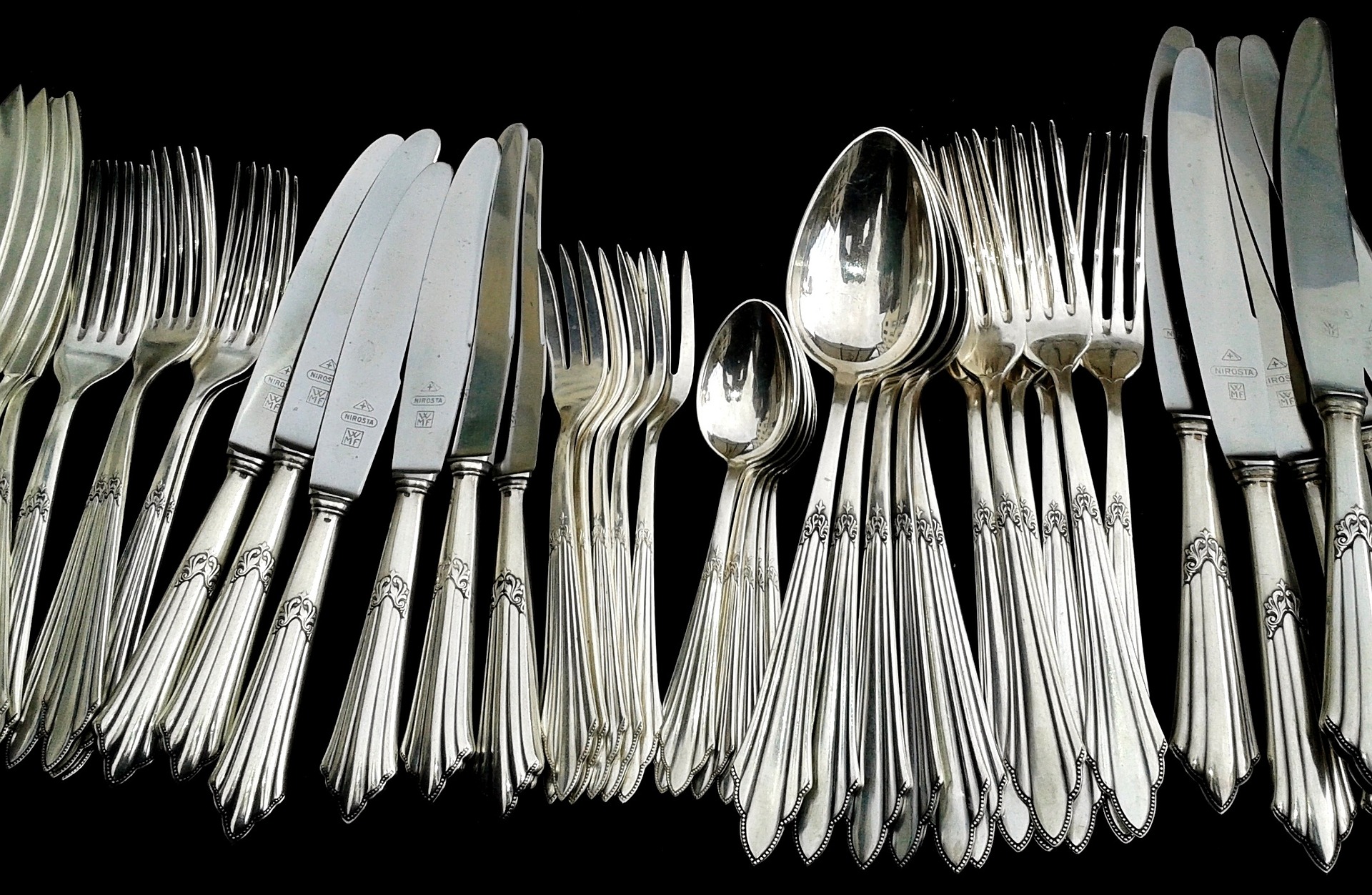
TH: The feeling when I go and see the ocean and feel an abundance of awe compared to the sense of abundance I have when I look at how many pieces of cutlery I’ve got are very different things.
I have abundant cutlery. I have abundant mugs. I have abundant bags.
I have, you know, and valuing that abundance over the abundance of the love of my friends is really skewed.
JE: I know, I know.
And the number of cutlery. Oh, gosh, yes.
TH: I’m really alright for spoons.
JE: And you’re really alright for spoons.
TH: Teaspoons are a tricky one. I’ve always either got a million or none. I don’t know how that happens.
JE: Yeah, I’ve got a lot. I’ve got a lot of them because I feel like that everybody… they just get used, you know, so many get used.
But we really have way more than we need in a lot of areas like that, don’t we?
TH: Yeah.
Let’s talk secrets. I keep my hoarding secret, and I often wonder about the effect that these secrets and this shame has on us and our mental health. To start breaking the taboo, I want to hear your hoarding secrets to discuss anonymously on the podcast.
I’ve created a form to submit your secrets anonymously – I won’t know who sends what.
If you want to tell me your secret for a potential future episode, go to https://www.overcomecompulsivehoarding.co.uk/secret
So through trying to work this out on a personal level over the last few months, I think I’m concluding that by overcompensating for scarcity, I’m trying to fill a hole and that that hole can’t be filled with external things.
I think I need to feel more like I am already a whole sufficient person. Is that something that makes sense to you as a therapist and that might make sense to listeners?
JE: Yeah, it does. I mean, that link between hoarding and insecure attachment, it’s there. And that’s often what we’re attempting to… that’s that compensatory theory of hoarding. We’re missing out on connections so we try and fill it with inanimate objects or animals or things that we know we can interact with without feeling let down, disappointed, betrayed, all of those sorts of things.
I think it’s a way to kind of future-protect yourself from anxiety that you’re kind of convinced you’ll feel.
I need to fill this hole. It’s like an insurance against feeling that pain.
And you get to feel some of that hedonistic pleasure in the moment, that dopamine hit of, wow, that was ace. I love going shopping and bringing all this stuff home.
And I do think it is attempting to kind of compensate for some of the things that maybe you do have. But as you say, you’re not necessarily recognising those things. You’re not acknowledging that they’re there.
And I really do truly believe the idea of just taking that moment to kind of look at the day and think, what am I grateful for?
And I tell you what, some of the things I write down are so random. But, you know…
TH: If it means something to you, it doesn’t matter.
JE: If it means something to me, you know, exactly!
You kind of go, oh, I smiled at that little baby in the pram. It’s like, oh, and you just feel joy, you know. And that’s, I’m grateful for the fact that I can walk up the street and interact with people.
But yeah, they might be just the tiniest things. But those are the things that are actually going to fill you up emotionally. And the other things, they can’t do that. They’re not good at doing that.
TH: And you used a word there that clicked a few things in my brain, which was insurance. Doing it as insurance.
And it immediately made me think, all of this is insurance against being back in that place in my early 20s, when I had no income, where if something broke, it was gone. I couldn’t replace it. I had very little food, I had very little anything.
And the word insurance, when you said it, just really clicked.
This is all an insurance policy.
And it’s a ridiculous, out-of-control insurance policy.
JE: Yeah. And, you’re just propping things up, making sure that everything will be okay, just in case everything collapses and I’m back where I was before.
But it’s not a rational insurance policy, is it? It’s really… because things decay, things that you’ve saved may no longer work or they may be obsolete or all these sorts of things. So it’s, yeah, it’s recognising that it’s not actually an appropriate insurance policy.
TH: Yeah, I did a big load of sorting yesterday and the things I was coming across that I’ve kept, I’m now kind of going through, going, but that Christmas bauble that I kept because somebody gave it to me, even though I don’t decorate for Christmas.
Even if somehow all my income disappears when I’m in that position again, what does that save me from?
JE: Exactly.
I don’t think you’ll be, yeah, I don’t think you’ll be cracking 50p on that. I don’t think you’re going to be able to sell it at a garage sale or whatever.
TH: Does anyone want a dusty Christmas bauble in August?
JE: Yeah, yeah.
TH: In exchange for a potato, please.
JE: Yeah, well.
TH: You never know.
JE: You never know. But a very rare person will want to swap that for a potato.
TH: That one did go in the bin, I can safely report. It didn’t even go in the charity shop bag. I thought, nah, they can do better than that.
JE: Exactly. Do you feel like it’s almost like kind of the onion, like as you’re working on all of your sorting and making decisions that the more you do it, the more… you might sort of feel like it’s churn, it’s a little bit of churn because you’ve already looked at that stuff, but you’ve come back to it a year later and you’re going, and I have not touched that.
TH: 100%.
I am quite susceptible to churn. I do find myself doing that for sure.
JE: Yeah, yeah.
TH: But as you say, there are things that six months ago even, I would have said, oh, maybe I should keep that now I just feel quite quickly like, why is this in my house?
And I think partly it’s… I’m always talking about the dehoarding muscle and that’s why we should start with the really easy stuff, because it lets you start building that muscle with stuff that isn’t… and easy as different for me as it would be for you, as it would be for someone else.
JE: That’s right.
TH: But whatever’s easy for you, if you start there, that you build the muscle so that when you either come back to something or get to a more tricky area, you’ve got that bit more strength and that bit more experience.
JE: And that experience is the word, isn’t it? Because if we keep avoiding it, we don’t actually experience any of those emotions, thoughts, feelings, we push them aside.
And you now know you can handle it. You know, you’re quite confident that you can handle what might pop up.
And if it means keeping that thing, okay, that’s all right. I can cope with that. I can keep it. When you come around again, chances are that layer of the onion will be, oh, for God’s sake.
TH: Yeah, completely. And you know, there are bits that I still am like, I’m not even going to try and tackle that yet. But there’s plenty else I can be doing. So I’m not letting that stop me.
It used to, I would be like, well, I can’t do that. So I’ll stop.
I’m now a lot better at going. I can’t face that just yet. So I’ll turn around and do that bit instead.
JE: Exactly, because there’s often stuff that you just, like seriously…
TH: I mean, there’s always more. Like, I just need to look around.
I often feel like an archaeologist, right?
JE: Yeah, yeah.
TH: Yesterday I was like, oh, I’ve got to 2017 in my layers.
JE: I’m the assistant archaeologist. So I come along and my clients are going, oh, wow, this is from 1990.
And we have quite a good time, you know, kind of talking through what was happening at that time.
And even saying, oh, that’s a DOOM box from 1980 or whatever. And we know, hey, we know what that will open if we open that box.
Let’s focus on this stuff that’s from 2022. That is easier.
But yeah, it is. It’s like being the assistant. Like I’m handing them the trowel and they’re doing dusting away going, oh, look what we found.
It’s actually quite a privilege to be with people who are excavating their life like an archaeological dig. And I do feel privileged to work with the clients I work with.
And they’ve got so much to share. And so, you know, they’re such wonderful people.
TH: And I’ve heard people talk about the kind of really nostalgic stuff. Say you’ve got hundreds of childhood photos, or thousands, let’s face it. And you know, you probably should keep 30 in an album. I’ve heard people say that talking through those photos and the memories associated with somebody creates new memories that then allow them to get rid of the photos because they’ve brought them to life with somebody else.
JE: Exactly. Exactly. And also the idea of how about curating like 10 photographs that tell someone’s story or 10 objects that tell someone’s story is kind of really powerful.
Because when you distil the essence of a person down to those, it’s so much more powerful than everything. Which just doesn’t gel in your memory.
But having that kind of curated physical story, either in photographs or objects or whatever it might be, I think is really powerful.
TH: So if people listening panic when something is scarce, what can they do to help to ease that?
JE: Well, one thing I will say is try hard as you can not to engage in in-store hoarding.
Now, this is when you think something’s scarce and you have that urge to buy it. So you carry it around the store so others can’t take it from you.
And once you’ve touched it and the longer you’ve interacted with it, the more likely you are to feel that psychological ownership of it and find it really difficult not to buy it.
So try not to engage in that in-store hoarding.
And in-store hiding is another thing. People hide things behind so that they can come back and find them, that’s another one.
But scarcity triggers that for sure.
And don’t forget to see if you can put the items on hold and then go outside and have a few minutes because the artificial environment can heighten those hedonistic feelings.
And you don’t have to buy. The experience can just be going in and touching lots of stuff. That can be still a joyful experience without buying.
I do think if you are really triggered by the idea of scarcity, opportunity shops are quite a bit of a tough thing because everything there is unique and scarce and irreplaceable, right? Because it’s got a story or it’s a one-off.
TH: I was just thinking I did a charity shop donation the other day and I had to be so blinkered. I had to go into the shop, go to the donation station, give it and walk out without looking at a thing because everything is unique, as you say, everything is cheap, which ticks another of my boxes.
I have to be so careful.
JE: So careful. Yeah, exactly. And, you know, it will just make your decision more difficult and it will play into that tendency to minimise regret, you know, because as you say, it’s super cheap. Oh, well, it won’t matter.
But then it’s that whole how do I?
TH: And it’s helping a charity. It’s curing cancer if I buy this t-shirt.
JE: Yeah, exactly. Oh, that’s right. But asking yourself some questions like, you know, is this a marketing ploy? Am I reacting to an internal threat of perceived scarcity? Or, you know, is it a real scarcity?
If you want to avoid regret and buy something just in case, ask yourself just in case of what exactly?
Because we think that we go, oh, just in case. We never take it that step further and kind of go, well, just in case of what?
Hmm, I need this new set of bed linen because I’ve only got two sets. And if one of them, you know, is worn out, then I’ll have a third one.
That’s fine.
But if it’s the 10th set of sheets that I bought and I’ve got stored that have never been opened, the ‘just in case’ no longer counts, does it really?
The other thing is just like if I don’t buy it now, what is likely to happen?
Chances are there’ll be a new model next month and I won’t want the old one any more or, I’ll forget about it as soon as I’ve gone home.
And the other thing that I think is really interesting that I read in a couple of articles that I was looking at for this podcast, is it something that I will use? Am I actually going to consume this? And how will I feel when it’s gone?
Because interestingly, people who hoard often don’t use the item that they procure.
TH: Because then they’ll be gone. I am that person.
JE: Yeah. And anecdotally, you know, I’ve heard people go, oh, I’ll avoid spending money on things that are consumed. Like I’ll only buy the cheapest chocolate or the cheap whatever flowers. I’ll never buy flowers because that’s just a waste. Because they’ll have nothing to show after it’s gone.
TH: The number of craft items I have is because I buy craft things intending to use them. And then I daren’t use them because then I won’t have them.
And so I don’t use them so that I buy more craft things to actually definitely use this time. But then once I make the kit, I don’t have the kit. So I can’t make the kit.
JE: Yeah because I kind of knew that, but it really brought it home when I was reading an article. We should put it in the show notes because the article is a little bit iffy in terms of academic rigour. But what they’ve done is they looked at I think the first nine episodes of one of the hoarder shows.
And they looked at the transcript and broken that down.
And that was one of the things that was said a number of times by different individuals. And it kind of clicked because I’ve gone, well, of course, I’ve heard that. But I didn’t really grasp the gravity of that of how that actually… I’d never thought about it before.
So that’s a learning for me. Okay, that’s something I have to have to think about.
TH: Yeah, for sure.
JE: Just yeah, it wasn’t on the radar.
TH: And your question that you suggested about like what will happen if I if I run out of this something I’ve been trying, again in the last few months since realising how much of an issue this was for me is testing running out of things that don’t really matter.
Like I was I was putting rinse aid in the dishwasher and the bottle I have currently is not a see-through bottle, so I can’t see how much is left.
So I thought, oh, I’d better buy some more rinse aid because I don’t know when this is going to run out.
And then I thought, I don’t even really know what rinse aid does. If I run out of dishwasher rinse aid, the world will be fine and I can buy some more, having gone a week with none.
And so if that kind of, “oh, no, what if I run out? Then I won’t have any!” scarcity panic comes up, I think there’s real value in asking, Yeah, but will it be… like running out of dishwasher detergent would probably be a bigger stress. That would interrupt my life. That would be really annoying.
JE: Yeah.
TH: But running out of rinse aid is a safe thing to let myself run out of.
And I think testing with that kind of thing, you probably don’t want to run out of shampoo, but maybe you can run out of conditioner. You know, there’s all kinds of… just see how it goes and invariably realise, oh, my hair’s just not as smooth.
JE: I don’t even use conditioner anymore because I realised that one time when I didn’t have any, I ran out and I went, oh, my hair’s kind of changed as I got older.
TH: Yeah.
JE: Or I’ll add things after the fact, add a leave-in conditioner or something that I’ve got, you know, so you always yeah, it’s worth experimenting with some of these things.
And as you say, do it with something that’s not going to be life-threatening or upsetting or whatever. It’s not like toilet paper. I mean, I get why you’d be worried about. I get keeping a lot of toilet paper. Definitely.
But, you know, rinse aid or fabric softener, for example, those types of things really.
TH: Yeah, you’ll be fine.
JE: You’ll be fine.
TH: So I’ve, as you know, I’m a fan of asking myself strategic questions and I have two new ones that are working really well for me at the moment when I want to buy something.
And the first of those is, am I getting this to solve a temporary problem?
JE: Ah, excellent.
TH: Especially a problem that I can solve by clearing space.
JE: Ah, yes.
TH: And the answer I am finding so often is yes.
And so what happens is I buy something to solve a temporary problem, often caused by lack of space, which obviously then fills up more space.
And my other question is, is this a complete solution to the problem you’ve got?
Because I have a real history of getting something thinking it’ll do. And then needing to get more, either bigger or more expensive or more when actually in the first place, if I’d just bought the proper thing, it would have all been done with.
And I’m finding those two questions are interrupting an embarrassingly high number of my purchases.
JE: Wow, that’s fantastic. But that first one, you know, am I getting this to solve a temporary problem? Could I solve the problem with getting rid of stuff?
It’s just like, my mind’s blown.
TH: Yeah. Yeah, that came from a point where I couldn’t change a light bulb because there was stuff around. And I kept buying any number of lamps to light the space.
And when I eventually cleared the space and changed the light bulb, I then had like four lamps. I was like, what do I do with these? You know, it’s just ridiculous.
JE: That’s so interesting, isn’t it? What we all do in order to avoid the pain of making decisions about our stuff.
We really will turn ourselves into pretzels in order to avoid it. Rather than face it and just go, well, damn it. I’m tough enough to handle this. I can manage a little bit of pain.
Classic. I love it.
TH: So, Jan, if people want to find you online, where can they do so?
JE: Well, they can contact me on Instagram and Twitter, or shall we call it X now?
TH: Oh, please.
JE: At @stuff_ology. Or if you want to catch up with me on Facebook, my handle is at Stuffology Consulting.
Drop us an email, jan@stuffology.com.au. And sign up for the free newsletter.
No sales, salesy stuff involved.
JE: And always offers value. As do you.
You are a fabulous guest, as always. Thank you for coming on.
JE: Thank you for having me.
May we take a moment to reflect on the meaning of place and acknowledge the traditional custodians of the land on which we record and listen to this podcast today.
I’m speaking on the lands of the Boonwurrung people of the Kulin Nation, and I acknowledge their connection to country, both land and sea and culture.
We pay our respects to their elders past and present and extend that respect to Aboriginal and Torres Strait Islander peoples listening today.
Do you want to be a Dehoarding Darling? You can be now at https://www.overcomecompulsivehoarding.co.uk/darling
If you love the podcast and want a bit extra, you can finally sign up to be a Dehoarding Darling.
Members will get an exclusive monthly post with an additional top tip, some podcasts and music recommendations and a personal update from me about how things are going.
Find out the full details at https://www.overcomecompulsivehoarding.co.uk/darling
So my top tip this week is from a podcast called The Divorce Social, which talks to people who are about getting divorced.
And comedian Sarah Millican is giving the host of the podcast some advice on what to do with her wedding ring and wedding dress. Have a listen to this:
I would seriously consider doing something substantial with your rings and spending the money on something you, something fun…
Shoes…
Something is a nice way to… Well exactly if that’s what makes you happy.
And if your wedding dress is taking up too much space, think about what could be in that space…
Shoes, so many shoes…
I don’t believe in hanging on to things for nostalgia reasons if the nostalgia makes you feel crap.
That sounds pretty clear cut to me.
You should get that on a t-shirt.
“Don’t feel crap” – Sarah Millican.
Now obviously, I would not encourage spending the money on shoes, but I think other than that, it’s a great message.
Okay, thank you for listening, and I will speak to you next time.
Thank you for listening to the Overcome Compulsive Hoarding with That Hoarder podcast. You can find more online at overcomecompulsivehoarding.co.uk
You can find me on Twitter @ThatHoarder. And on Facebook at Overcome Compulsive Hoarding with That Hoarder.
To find out more about how you can support this podcast and the overall project, go to overcomecompulsivehoarding.co.uk/support and do subscribe to this podcast, so you make sure you don’t miss any future episodes.
There may be links in this podcast that earn me money. This doesn’t come at any extra cost to you if you make a purchase through those links and it helps to support the future of the podcast.
Image: Pixabay
Audio credits
- Intro and outro music: cheesepuff
- Transition whoosh: Vilkas_Sound
- Piano Playing Classical Music: IESP
- Hallelujah chorus: deleted_user_2906614
- Uh oh: stib
- Angels: pycckuu20032003
- Phone: HarryPeeks and Aesterial-Arts
- Yay!: Reitanna
- Fanfare: humanoide9000
- Explosion: Iwiploppenisse
- What? What? What? max_cristos
- Why? Why? Why? Why? Reitanna
- Celebration: Gabriela_Melo
- Not again: xtrgamr
- Atmosphere 17: DaveJf
- Wah wah: SpliceSound
- Giggles: kim.headlee
- Help me: brandonreese
- Please don’t flush: PMBROWNE
- Horror laugh: klankbeeld
- Oohs and aahs: noah0189
- Applause: Sandermotions
- Heartbeat: Tobias Ludwig
- Countdown – female : Tim Kahn
- Game Over – evil: Rocotilos
- Countdown – male: jppi_sstu
- Oh yeah: metrostock99
- Amen: klankbeeld
- Suspense: Warped_Tension
- Ding dong: MatthewWong
- Former intro and outro music: grapelemon