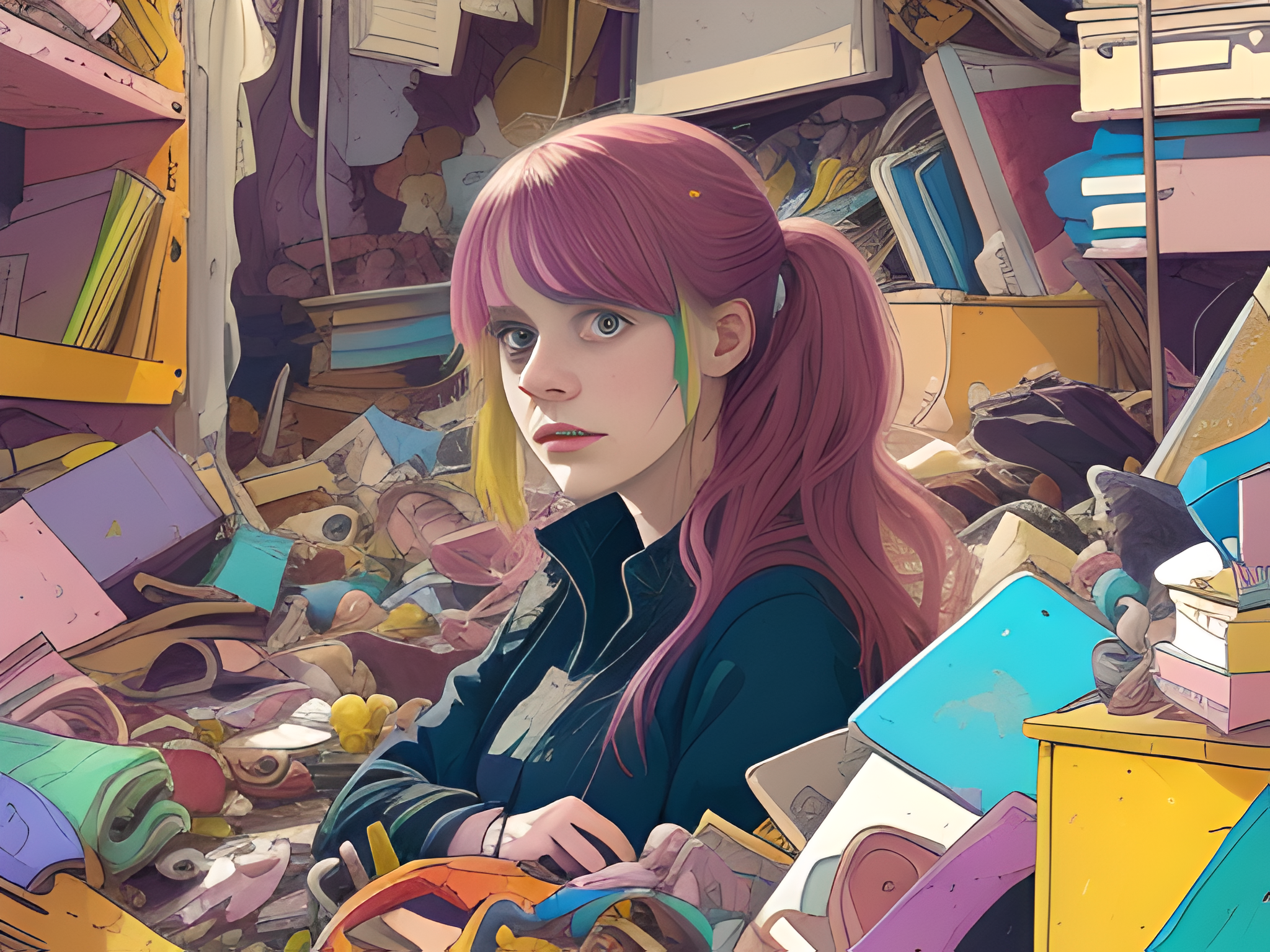
What if dehoarding was liberating rather than threatening?
Show notes
- Olio app
- Being Owned: A Decade in Professional Decluttering by Jasmine Sleigh
- Change Your Space Devon
- Jasmine on Instagram: @changeyourspacedevon
- Jasmine on Facebook
- Curious Freedom podcast
- Website: Overcome Compulsive Hoarding
- Become a Dehoarding Darling
- Submit a topic for the podcast to cover
- Questions to ask when dehoarding: https://www.overcomecompulsivehoarding.co.uk/podquestions
- Instagram: @thathoarderpodcast
- Twitter: @ThatHoarder
- Mastodon: @ThatHoarder@mastodon.online
- TikTok: @thathoarderoch https://www.tiktok.com/@thathoarderoch
- Facebook: Overcome Compulsive Hoarding with That Hoarder
- Pinterest: That Hoarder
- YouTube: Overcome Compulsive Hoarding with That Hoarder
- Reddit: Overcome Compulsive Hoarding with That Hoarder subreddit
- Help out: Support this project
- Sponsor the podcast
Subscribe to the podcast
Transcript
Welcome to the Overcome Compulsive Hoarding with That Hoarder podcast. I am drowning in stuff and trying to find a way out. Listen as I explore the issues and delve deep, as somebody profoundly affected by hoarding disorder.
Find out more, including links to subscribe to the podcast and all my social media, at overcomecompulsivehoarding.co.uk.
Finally, I am not a doctor, I’m just a hoarder doing her best, so do seek professional support if and when you need it.
That Hoarder: So I am here with Jasmine Sleigh. Jasmine has been a professional declutterer since 2013. She runs Change Your Space, which is based in Devon in the UK, and has supported over a thousand people to deal with millions of belongings.
Through her work she has facilitated the donation of tens of thousands of items to local charity shops but more than that, she has helped people to free up their space. And she is the author of Being Owned, a Decade in Professional Decluttering.
Jasmine how are you?
Jasmine Sleigh: Hi I’m well thank you.
TH: So I have read your book and I really enjoyed it first of all.
JS: Bless you. Thank you.
TH: It’s not a how to organise your home decluttering book, it’s a book about your experiences of helping people to make space and it’s looking at your clients’ emotions and reactions to things but also your own emotions and reactions to that careful balance that you have always got to hold when you’re working with people and their stuff.
JS: Yeah absolutely. I’d been thinking about writing a book for quite some time, having been in business now for 10 years working with people but I didn’t want it to be about like you say, you get this bag out in this… I wanted it to be about the clients because what fascinated me the most about what I do, what I have been doing, is the poignant stories that we have.
I suppose there’s two things, the poignant stories of the people and their sort of, I hate to use that cliched word, the journey but you know the way in which they were engaging.
It was partly I wanted to say I am just a person coming in and finding a little dance with the person there, we don’t come with a magic wand.
I think I was honest in the book and said I don’t always get it right, we’re finding our way. But I also wanted it to be not just an honest portrayal of what it was like being in people’s homes but also a celebration of some of the amazing things that people were able to do.
A small aside, I think I mainly wrote it because I got fed up of people saying oh you’re a professional declutterer, can you give us some before and after pictures? Or can you give us your top three tips? And feeling like that had absolutely nothing to do with what I actually spend my time doing and so I think in that frustration I wrote the book.
TH: Yeah absolutely, you talk about kind of how a breakthrough might look like something that just cannot be captured in an Instagram photo.
JS: Exactly right, the things that I walked away with from working with clients are the conversations that we’ve had over something very specific to them, really bespoke stories, really important discussions about their belongings and where they fit in their lives.
And some of the things that we’ve discovered about the person and as we’ve gone along.
It’s not the shock factor things that you see on the television programmes, it was really lovely things that were important to the individual, and that was what really motivated us in our work as a team but also for me what we were really all about as a service.
TH: Now there are a lot of reasons that people might be anxious at the idea of decluttering or dehoarding and a big one especially amongst people who hoard is what if I get rid of something and I regret it, what if it goes and I need it?
But a point you make that really helped me on a personal level is that actually, it’s far more likely that through dehoarding you will find things than you will lose things.
JS: Exactly that, the things that really stuck with me are where people have found things that they thought were lost forever.
I say in the first story of Darren, he knew that there was a piano in there to be fair, we couldn’t see the piano, but what I talk about there is not just the discovering of something, is that he had been quite quiet during the process, he’d been quite fearful, be it that he was, you know I don’t like to use the word compliant but he was fearful but he was just getting on with it with us, bless him, he opened the door to us and it was tricky work he was doing.
But as soon as we discovered that piano and he sat down and played beautifully and we had a little sing-song of Beatles hits, that is what we’re about. He came alive, he as a person was animated and we got to see the real person behind the care plan that was funding our work being there, beyond the stuff that was blocking the way to get in the door, but something really personal to him and his individual identity as a person and that was just so uplifting.
So yeah, finding things that people have lost and re-engaging with their stuff.
So I also say in that tale of Darren, I turned up one day and Rachel was working with him and they were putting on various hats and waistcoats from an old wardrobe and they were having a real giggle about it.
Given the trauma and difficulty that gentleman had been through, hearing his genuine laughter, dusting off stuff when actually he’d found it really difficult to handle his belongings initially, he was very overwhelmed. I knew that that was what we are about as a service, that re-engagement, that enjoyment.
If you’re going to have something, get good use out of it, have a play with it, and I mean actually he did let a load of those hats and waistcoats go, but he got to enjoy them in that moment first and it was his decision.
So yeah, really joyful stories about people finding things.
TH: Yeah, because something I’ve only learnt through doing the podcast is that a characteristic of hoarding is having all this stuff but not engaging with it.
And even just knowing that has made me think more about my stuff and ask myself realistically, if you keep this are you going to use it?
JS: Yeah, I think for us things like crafting for example and hobbies, so some people we meet who’ve got quite, what we would say is quite a full existence compared to, I don’t have any hobbies really, I don’t think, I would read a bit but you might have 15 different interests and all the kit for it but actually when you really get into the detail, they haven’t sat down and done any of the kits for a long time or they haven’t got space to get the sewing machine out.
'I'm not very crafty, but what I love doing is facilitating people to do those things, creating a space that they can actually fix the dress that's been waiting for ages' - Jasmine Sleigh Share on XI’m not very artistic, I’m not very crafty, but what I love doing is facilitating people being able to do those things so creating a space that they can actually finish a kit or be able to fix the dress that’s been waiting for ages.
And when we come back and they say oh you know no pressure from us but I’ve done that thing that I wanted to do, I’ve that painting, that for me is the absolute essence of having things isn’t having spaces, being able to do with it rather than just have it.
I mean what I’d also say is quite interesting from my point of view is that I kind of feel like I fundamentally believe in the usefulness of things as well. People imagine that I’m a minimalist but I quite like things if we’ve got them, I mean it’s very in vogue isn’t it as well in terms of sustainability, if we’ve got resources that they should be in play.
'I fundamentally believe in the usefulness of things' - Jasmine Sleigh Share on XWhat I think is interesting is to ask ourselves, am I going to use it and if I’m not, passing things on and donating them and then being able to say to people… particularly with crafters they worry that fabric won’t be… nope that bundle of fabric went to our local hospice care and an organisation purchased it and they’re going to be making patchwork out of it and so something positive and amazing is going to be done with those things, rather than them having an unanimated life, if you like, in somebody’s home.
So as long as somebody’s using it, whether it’s ourselves or somebody else, I think it’s all good, it’s all good.
TH: And I know since reading the book, if I’ve been faced with a pile, I quite often go oh I’m going to have to get rid of a lot of this. But if I just reframe it as yeah, but what are you going to find?
There is always, like, I wondered where that t-shirt was! There is always something that I thought maybe I’d donated it or maybe I will never find it or maybe it’s wrecked at the bottom of something.
I do find more than I regret getting rid of, it’s an important lesson, I think.
JS: It absolutely is and I think there’s two things you said there that are really important.
One, I think I say in the book, I quite like the idea that we’re adventurers together, voyaging into the unknown, because you have to have that you have to have that Indiana Jones hat on if you like before you sort out. Because you almost have to kid yourself that it’s going to be more fun than it sometimes is. I’ve been doing this for 10 years, I’m not going to dress it up, it can be hard work.
But that idea of at least going into it going oh maybe I’ll find some things that will be of interest today, that is what all of us are propelling ourselves for.
And the second thing I’d say from your observation there is that the more that we feel – this sounds very flippant – but the idea that we feel a bit more positive about what we have in front of us makes us less worried about what’s going out.
Now that’s a very simplistic way of putting it, and I do know that, it’s nothing new. But it does help slightly adjust the mindset when looking at our stuff so that we can be more confident in our decisions. Because we don’t have to feel panicked about what’s going because actually we’re a bit more focused on what we’re gaining from the process.
TH: Yeah. A big focus through your work is not what weird and wonderful things will I find in this house but more how will this person react? What will be important to them? And you have a lot of insight into when you might need to be sensitive, when you might need to encourage a bit.
Did you start out with that kind of insight or was that something you learned as you were going?
JS: Oh that’s a really interesting question. I think I would say honestly I think I’ve always been a little attuned to people, I think that’s a superpower I’ve only started to acknowledge for myself at the grand age of 47, which has really helped me with my work.
I think it would be easy to say that going into professional decluttering, it’s a broad church and some people go into it but with a very officious wanting to fix things for people.
And somebody’s left a business review this week and said a line which really struck me. It was quite a long review but said, “You get a sense that they’re more interested in the people than they are what they’re decluttering” and I thought oh that’s exactly it! That I’m very interested in people, I’m very interested in life being easier for people and home being a sanctuary has always been something that’s very personal to me as a complete anchor for wellbeing, on a personal level and more philosophically.
So I think I went into it like that. But definitely 10 years has matured me, working with lots of people has shaped the way that I tune into things.
And now I’m training new people, hopefully the wisdom is passed on.
I think as well in the book, what I wanted to do and it was really an eye-opener because I made myself read it again knowing that I was going to be on this podcast, is that I do reflect on a couple of situations – of which it won’t be two, will it, because I’ve merged lots of stories together to keep the confidentiality of the clients – but where somebody is not able to go any further on the journey.
And when I read it again, I thought, oh why did I do that? Should I have just kept it packed with heroes’ journeys? A bit like the television programmes you go from beginning to end and they’re out there and it’s all good.
And I thought, it’s just not realistic for people, I think, to know that people go so far and then they can’t go any further. Without judgment, just that that’s where things are and that’s a realistic way of being.
I think I wanted that, not only for everybody to reflect on, but also anyone who’s starting out in professional decluttering, I wanted them to understand that you don’t always get to the other side with people. You can only go as far as they will let you go.
Absolutely. That’s what it’s about.
So I think, in short, dealing with some of those circumstances, that really taught me a lot. If you’re doing enough decluttering you’ll meet enough people who find it so much of a struggle you can only go so far, and to know when not to push it.
And so I think those years have really honed me a little bit more, in terms of being tuned into people.
TH: Yeah if somebody’s not ready, they’re not ready, however skilled the person they’re working with is.
I think there can be bad declutterers but that’s not the same thing.
I think sometimes people are really ready and sometimes they’re just not.
JS: Yeah, absolutely right, and I think one of the absolute joys of the job in one sense is you don’t really know until you’re doing it. I can do consultations with people and I can meet people in advance. But until you’re in handling people’s belongings, you really do have to go in the moment with how things might change and adapt.
You have to have a quite an adaptable mindset to do the job.
You can’t go in and go, Oh, well, we were definitely getting through the whole kitchen today. And they definitely said in the consultation that half of it was to go. When you’re doing it, they might feel differently.
And we’ve definitely had clients where we’ve erred on the side of caution, they can’t move fast enough.
We are more geared for taking things nice and steady with people at all times and being able to see exactly what’s in front of them.
I call it a dance for exactly that reason. The client themselves might not know. This is not a conspiracy or anything, you’re in their home. They don’t know if you touching that belonging sometimes is going to trigger something.
So we all just have to find our way in it as we are there.
So yeah, it’s quite enlivening. But it means you can’t over-prepare.
TH: Yeah, and I’d imagine you might have a session one week that goes amazingly well. And then suddenly the next week, it feels like it’s back to square one.
JS: Yeah, certainly. I think that’s one of the things, as a new declutterer in the business, I think that’s probably the bit that that shocks people, that things can go back.
When people ask, what’s the worst job you’ve ever done? They’re looking for that salacious horror story, like something really unusual in the home.
'When people ask, what's the worst job you've ever done? They’re looking for that salacious horror story' - Jasmine Sleigh Share on XThat’s right. No, the hardest jobs are not to do with volume. It’s got nothing to do with the challenging environment or anything like that.
It’s when you go back the following week and the anxiety is so high that they’ve built up more than was there before of belongings.
It breaks my heart, obviously professionally it’s frustrating, but it’s more that it’s quite sad.
So dealing with those sorts of ups and downs is really, again, you were saying about tuning in. That’s a wisdom that comes with time of doing it. And remembering we’re there for them.
TH: Yep. From the point of view of the client, I can imagine feeling like it’s going well one week, and then getting some anxiety in the week and just overcompensating and kind of digging my heels in, and yeah, building the physical walls up.
And I wouldn’t want to do that. And I think I’d be less likely to do that now than I might have been a few years ago.
But I can definitely see how it could happen.
And I can definitely see how frustrating that must feel from the organiser’s or the declutterer’s point of view.
JS: Yeah, those are frustrating, but also sometimes it’s a good sign that things have to be done differently.
And again, that dance, that the client themselves might be pushing buttons they didn’t know even were there.
We’ve just got to get to know them. And maybe we’ve pushed too far, or this particular area that we were doing with them was more troublesome than others, we can find ways.
And then potentially it may have been somebody else’s idea to do this project, to get social services referrals, and housing referrals. And maybe just they aren’t ready. And I have now and again, we’re trying to stay positive today. But you know, now and again, I have had to say that I think that trying to address the home at the moment is causing them much more distress than actually leaving things as they are for the time being.
But again, that’s a judgement call we have to make on the day.
More often, when it’s people’s idea to have us in, then they’re ready to make a change.
But even then, like you say, they can surprise themselves.
Hopefully, lots of positive surprises. But they can also surprise themselves that things are more triggering than they thought they would be.
And that’s when the whole team needs to be quite empathic and understanding and not go. Yeah, yeah, let’s try and crack on.
Be it that I think it is one of the rare jobs where we are expected to get on with something practically as well. So you know, there’s a real balance to be struck there.
But in order to be invited back again, they’ve got to feel like they’ve had the space to process what they’re doing.
TH: The listener voicemail segment has a monthly theme. To help you think of something to say, for September, the question for you to answer is, what’s the hardest thing for you to get rid of?
For some people, it’s nostalgic items. For others, it’s books or food or clothes.
This is your opportunity to share your hardest things with us all. Have your say with your voice.
If you want to record a voice message for me to potentially play on a future podcast episode, go to overcomecompulsivehoarding.co.uk/voicemail and leave a message.
The topic for September is the hardest thing for you to get rid of. Let us know what you’re thinking at overcomecompulsivehoarding.co.uk/voicemail.
And in the stories, and this matches with my experience and what I hear from listeners, there is a lot of grief and loss and trauma in people’s histories. Do you find that that is almost a given when you start working with someone?
JS: I think that the home environment is often a good manifestation about what’s going on in somebody’s mind. But obviously, there’s a range of reasons why people’s homes can be feeling overwhelming to them.
But yeah, I when I recruit new team members, I say we do see a disproportionate amount of trauma of loss, and the sort of loss of people who’ve lost children and people who’ve lost loved ones in really tragic circumstances.
And I’ve said we’re all here to support each other, that there will be some really difficult stories that people are juggling with. And therefore it’s a wonder they’ve got out of bed in the morning, let alone have the energy to sort out their belongings.
So we do need to be tuned in to the fact that some people have really got an awful lot, I was going to say an awful lot on their plate, but they’ve got an awful lot emotionally on their plate to deal with.
What we try and do is stay focused on the fact that sorting out their stuff is going to give them a little bit of control back, where there’s quite a lot else in our lives that we don’t have control over. And there’s nothing like people who’ve gone through terrible trauma to really know what that means.
So yeah, it is very much a factor in our in our work, not with every situation, but certainly it comes up quite regularly.
TH: There’s one thing I wanted to ask you about, about your process that I found really interesting.
It came up a few times that you prefer to start working with the oldest, the most buried stuff, and leave the top layers or the closest layers of newer stuff til later in the process.
Can you talk a bit about why you find that to be the best approach?
JS: You know, that always comes automatically to me, and only as I was preparing for the book, I realised it doesn’t always come naturally to people, especially if there’s a lot around an armchair, and perhaps somebody is not necessarily sleeping in a bed, they’re sleeping in the armchair. That they would think of sorting out everything around the armchair first.
And actually that’s their headquarters. Everything that is there is to hand and is needed imminently, that’s where the electric key is going to be, where the bus pass is going to be, everything.
So it always was very automatic to me that if we were going to be in that lounge space, we would tray everything up that was immediately with the person that was in that immediate vicinity, and get further away from the chair, to where the cupboards are.
Because the chances are all the everyday things that everyone needs every day, they’re not going to be parting with those. And in fact, they’re quite anxious about losing those. So let’s just take those out of the equation, because we don’t want them losing any control and phoning me up later on because we’ve made life more difficult for them, we absolutely don’t want to do that.
Get those things out the way, we get to those cupboards. A practical reason is because half the time the cupboards can be half empty. And actually, it’s quite a useful way of immediately getting some space back.
But if the cupboards have been blocked for quite some time, those are things that were put away, they’ve not been accessed for a long time. Therefore, they can sometimes be easier decisions.
I mean, sometimes the source of so fantastic finds, of course. I talk about Enid, don’t I, when we when we finally get to the wardrobe and I opened this wardrobe and this big fur coat’s been there for well over a decade. And she has to make a decision about it because it was her late mother’s coat.
But sometimes we have things tucked away there that we’ve entirely forgotten about. And they can either be emotionally more neutral. Or sometimes they can be a real find.
Either way, a half-empty cupboard, a real find or something that’s could easily go is a win win win from a declutterer’s point of view. And from the client’s point of view, it starts things a little less close to home.
And I will say as well, it’s unlikely to be recent purchases, that are a bit more controversial in people’s minds. They need a bit more distance from it before they can perhaps forgive themselves for having a purchase that hasn’t come out of the carrier bag.
TH: Yeah, I was just thinking that if I spent £20 on something and then never wore it five years ago, whereas if I spent £20 on something last week, I would feel like getting rid of something I spent £20 on five years ago wouldn’t feel like too much of a waste of money. Whereas getting rid of something I spent £20 on a week ago, even though it’s the same amount of money, would feel more of a loss.
JS: Absolutely. We open those cupboards and very, very often they’ve got VHS videos in them and nobody’s got a VHS player in the in the home any more. So that might be an easier win.
Or they’ve got tech in there that’s long since expired in terms of usefulness, so it just keeps the decisions a little easier, if I can say that.
But that’s what we want, isn’t it? Start off gently with people.
And the same as we were saying with our Indiana Jones hat. It feels like we’re voyaging together into the unknown, because I say, Do you know what’s in that cupboard? Nope. Oh, we’re both going to find out.
So it gives a little bit of mystery to the project.
TH: I’m getting to various bags and boxes, and I have no idea when I open them what’s going to be in there.
JS: Sometimes you can really get a sense of somebody’s life when you’re working with their belongings.
I mean, there is no other job like it where we’re right in, handling people’s most intimate items and belongings.
But you sometimes you get a sense, hang on, something happened in 2016, because everything is built up from there.
I talk in the book about a lady that we worked with, and I got very clear that something must have happened at Christmas, because the amount of Christmas things that we’re finding, the amount of unopened Christmas presents and things like that, that they might not necessarily offer that information up themselves. Sometimes they do. They’re very open.
But you get a real sense of the story from the actual stuff itself.
But I try and stay focused on the fact that for all the difficult bags there are to go through, inevitably, and reminding people as we leave, that great thing that you found… even yesterday, I caught myself saying… they said I think that’s probably can go, and I said I reckon you can wear that dress. I reckon you could wear that dress! I reckon you can wear that dress this week.
And I think people are expecting me to be so harsh.
And obviously there’s encouragement to let some things go. We’ve got to clear space to enjoy things, all the things you’d expect me to know about having things easier and more simplified in a home.
But I’m definitely going to be the advocate of finding something that if you take any interest in, I’ll be like, yeah, yeah, that’d be great. You know, put that dress on, read that book. Let’s get that sewing machine set up for you.
We are championing your stuff. I know that’s really weird, isn’t it, to say, because people expect us to really strip it all away, but we’re championing your stuff, if the resources are holding your hand in achieving your aims and ambitions for your life.
And if they’re not, then I don’t want them to be there. If they are helping you, let’s get him get them working for you.
This is not about depriving people of their stuff. It's about freeing people from the stuff they don't need or use, or the stuff that makes them feel bad Share on XTH: And that is a theme threaded throughout the stories, is that this is not about depriving people of their stuff. It’s about freeing people from the stuff they don’t need or use, or the stuff that makes them feel bad. And about reframing it so that what might feel to a bereaved or traumatised part of me like comfort is actually more like a prison.
But we’re so caught up in the compulsion to keep it all that we cannot notice how oppressive and limiting it actually is.
JS: Firstly, thank you so much for reading the book and I’m so heartened that what I was hoping would get across does come across. I’m not an actual writer, I’m a doer, obviously.
But I think that’s the thing that I really wanted to hold dear: is that our stuff is not a problem. Things are not a problem. It’s the power dynamic with them.
So meeting somebody for whom letting something go is really painful, you really feel like the inanimate object has all the power in that relationship.
And all I want is for the person to say, what do you really want?
Now, they may really want to keep it. Fine. But to know that they’ve got the say, just because something’s in the home, it feels like once it’s in the home, somehow we feel like it can’t not be in the home.
But apart from being good stewards of resources. And saying, I need to be able to manage the home environment in a very in a way that suits me, it’s, it’s more about that strange power dynamic that really struck me as being quite interesting and varied for people.
So I’ve got family members who haven’t filled their homes to the point where a professional decluttering service would be necessarily required or whatever. But I do see them agonise over what to do with something.
And I don’t have that. And if I let something go, I can forgive myself if I need it a bit down the line. I think I made the right decision with all that I knew at that time.
But it is quite fascinating to me, thankfully fascinating and remains to be fascinating, that dynamic of I can’t possibly have a say over this thing that’s in front of me.
TH: Yeah, there was a bit that really spoke to me, where you talked about how in your own life, not at work, your approach to things is, you might go, Oh, that would look better over there, and you just move it, whereas the people you work with, and I absolutely related to this, can act as if, and believe it’s not just about acting, that on some level, once it’s here, it’s here, and there’s not much choice about it. Or once it lives in a particular spot, that’s where it lives.
And it’s not even just about resisting change, it can be about, it doesn’t occur to me that I can change things sometimes.
JS: And don’t get me wrong it’s only problematic when life becomes impinged because of because of that. So I definitely move things around more than is always that great for people who live with me.
TH: Where’s the kitchen table?!
JS: So I really wanted to get across in the book, I don’t say it from a moral high ground point of view, it’s not self-righteous, I can move my stuff wherever I like.
I just think it’s really interesting. When you go into home where the belongings are starting to really cause the individual a problem, you feel the weight on their shoulders, not just that they’re overwhelmed, where to start, and all that thing.
But exactly, as you said, when things are in a place, the idea that they could be moved, and they could be moved by them, and they can be moved to somewhere else. And maybe it won’t be the right place forever, but it’s a bit better, and they could be moved back. But that’s okay. Move them about, see if it works somewhere else.
But that’s a simplistic view, obviously, there’s all sorts of things going on.
And different categories are difficult for different people. We’ve definitely had clients for whom certain types of items, they can absolutely let go without a problem. And then you go to one other thing, and they’ve surprised themselves, it can’t be touched.
But again, it’s the power that this stuff has.
Because I care about the person while they do the stuff, as the review said, then I feel like it’s oppressive for the individual that I’m looking at the stuff.
There’s the story again of Jane, I think it was, where she’s got this big Father Christmas in the corner of her lounge and she’s hardly got any space to move. And he’s smiling this kind of big, jolly smile. There’s big sack of Christmas. And rather than being a source of joy, I really began to read dislike this Father Christmas. Like, how could you just smile over this situation, this poor woman is getting so impoverished by buying Christmas things and not being able to move and there you are with your big Christmas sack.
So festivities are slightly ruined for me. But I do sometimes feel like the belongings have got a bit of a conspiracy on the on the person.
But, again, we’re the biggest champions when things are going to be joyful, interesting, and helpful for the individual. So that’s not a call we can make. It’s a perception from my point of view.
TH: Yeah. Actually, there was one point where I’m an outlier. I related to a lot of it. But the one thing you said at one point that nearly every one of these homes has boxes of boxes of Christmas stuff, I do not, I have no Christmas stuff. Other than that, everything was like, Yeah, that sounds like me. But no, no Christmas stuff in this house.
But yeah, I’ve had two experiences reasonably around that kind of flexibility and not thinking even about the possibility of changing things.
One was, I got a new toaster a few months ago, and I spent months because it’s slightly weird, thinking, Oh, it’s a real pain that the toaster is here. And it took me months to go, Oh, I could move the toaster! Didn’t occur to me till then, that I just thought the new toaster’s a funny shape, doesn’t quite fit here. That’s a shame.
And then eventually went, Oh, but there is that other space that you could put it on.
But that was a more, I think, kind of just cognitive thing. But then, more kind of hoarding related, I had a particular room and I was like, Oh, I avoid going in that room, because I have to step over that stuff.
And again, took me a while to realise that I could move the stuff.
I think it can feel like these things are like statues. And it’s just, that’s where they are.
JS: Yeah, really interesting. My other superpower. I can say this about myself, it’s taken a long time to do to get there. I don’t know if any of your listeners have seen The Lego Movie, but that they in the Lego Movie, that there’s master builders that kind of look at a vast array of bits and pieces , a vast array of Lego. And imagine it coming together in one particular new invention.
I do have a bit of a part of my brain, I think it’s probably developed over doing this job for a while, problems solved quite quickly about where things can slot into other things.
So we’ve been able to do some amazing, amazing things in people’s homes without much coming out of the home because the space is there. It’s just looking at it in a refreshed way.
TH: Yeah, like Tetris.
JS: With a healthy dose of making sure that things go in an obvious place for the individual and not for me. I don’t live there. And I have to remind all the people who work in the team that it’s that person’s home. So if they want things to be there, rather than over this place, that’s where they will go because it’s about keeping access to the belongings as easy as possible.
And access is all, for people.
And like you say, minimising the stepping over things, making life easier is what we’re all about.
That’s why I think it’s so difficult when people ask about the actual stuff because we don’t really remember the stuff I mean, I say that again. My final blowing my own trumpet about a third superpower is I’ve got almost a like a photographic memory now for the amount of things that we handle. So I’ll know what we’ve handled and what we haven’t.
But it is important that that life is just made easier and things go in a place where the person can access them easily.
Whatever that means for them, we want to leave the space knowing that life is easier for them.
So the actual bits and pieces are of less interest in terms of it’s still their decisions, what staying and what’s going, but have we left the home so that they’re more interested, feel safer, and are able to get to things in a way that’s going to help them with their day-to-day life?
TH: Yeah. First point, keep blowing your own trumpet. As women, and especially as British women, it really goes against everything, doesn’t it?
JS: I feel like I’m going to come off the call and be quite embarrassed.
TH: No, I’m all for it. So keep doing that.
The other thing you were saying about even if the logic of where something lives doesn’t quite work for you, that doesn’t matter, as long as it works for the person.
I always say that about where to start as well.
It might be that everybody thinks surely you want your bed clear, or whatever. But actually, you’re not at all interested in that. What’s more important to you is that you can get to the washing machine again, or something like that. And start in the bits that are annoying you, rather than what other people think you should be doing, because that’s where that’s where you’re motivated.
JS: Absolutely, I think I was reminded of that, sometimes we’ll clear the bed, access to the bed, doesn’t necessarily mean the person is going to be sleeping in the bed. Because there may be many, many other reasons.
And again, this was something when I delivered training to APDO, the Association of Professional Decluttering and Organisers UK, that was quite a surprise to people who are new to the profession, that things that you might take for granted, you’ve made this lovely space for them and they’re not not sleeping in there just to be difficult. There are other reasons.
We’ve got clients with PTSD who feel safer downstairs. You know, we’ve got elderly clients that the room that you’ve just cleared is much colder than their lounge, and they want to stay warm, and they’re not going to put the heating on, or whatever the reason might be.
Some people just feel happiest in the chair.
Sometimes the reason that a space is full, the belongings that are in there is not the issue. The space may have been blocked for other reasons.
It’s a bit of a difficult one unless you’re living with it or in the profession, is that some rooms get cut off and some access points get cut off for other reasons in people’s lives, that they don’t want to use a particular room. It’s got nothing to do with they’ve stockpiled, therefore the stockpile is the issue. You can go through those belongings and declutter all those belongings and they are still not going to want to go in that room.
TH: Yes, and other things. If that stuff isn’t resolved, other things will start replacing the things that have gone to continue blocking that space off or keeping it out of sight out of mind or whatever.
JS: I mean a range of different reasons. But as long as we keep that in mind.
Don’t get me wrong, we’ve definitely had some fantastic moments where people have sat on their sofas for the first time in 10 years and being joyful about it.
I talk about Darren, we found the armchair, his gas fire got reconnected and the first time I went round where he was sat by the fire, absolutely made up with some basic comforts that he deserves. I’m going to well up if I’m not careful, he really deserves that nice space. And I think that’s the thing we need to remember: releasing some of those home comforts for people takes permission. You know, they have to give themselves permission to enjoy the things that are around them, their wonderful homes and their wonderful belongings.
We’re talking in a week where some people have had their homes washed away in Libya. You know, we take so much for granted, we’re so lucky, so lucky.
But you know, for some people, there is a trauma there, where just because those things have been freed up doesn’t mean that they are going to feel right about enjoying those things.
So hopefully, as you said, the joys and the benefits outweigh the emerging and surprising challenges for people. And that’s what we stay hopeful about.
TH: Yeah, because I think if, from your point of view and from the client’s point of view, if both of you can kind of put your heads together to reframe it so it’s not, what are we going to get rid of? It’s, what are we going to make this space, then it turns from something 100% frightening to something with a little bit of hope and a little bit of creativity and a little bit of optimism.
JS: I think it’s one of the most surprising things when I’ve gone in for some consultations, that people are quite fascinated that I really want to know quite a bit about them and what they’re interested in, as much as they’re happy to reveal really about themselves.
Because like I say, it’s their home, we want them to be happier in it.
And if we’re fulfilling a broader goal, if somebody really wants their sister to come and stay, or they’d really like to host something at their home, all those social things about having people cross the threshold.
But if we know that that’s the goal in mind, then the rest of it falls into place.
Rarely, when people contact me for the service, are they specific about the particular things they want addressed. Actually, what they are talking about is, I’ve been stuck for years, this has happened, that’s happened, I don’t know where to start, they’re bogged down with the weight of it.
And if we can coax out of them, where’s the hope? What’s the thing you would like to see different? Then actually dealing with stuff is going to be, dare I say, a piece of cake… it won’t be a piece of cake, but it becomes easier, because like you say, you’ve both got that common goal, and we’re rooting for them for that goal that they have.
TH: Because something I’ve come to realise is that dehoarding is hard, right? It is really hard. But the alternative is not an easy option. So dehoarding is hard. But living in a hoard is hard.
So it’s not like you can choose dehoarding or an easy life.
And so I keep reminding myself of that, so that at least the hard bit I’m going with is hopefully leading to better things.
Whereas opting out would still be hard, but there wouldn’t be the hope of anything at the end of it.
JS: No, it’s exactly that. Nothing will change.
There’s nothing like a carrot, though, is there at the end? And I always say that, especially when we get commissioned in by social services, it’s no good threatening people with eviction, there’s no point saying how bad it is that their electric checks can’t take place, it’s not going to motivate people. Even I’m going to keep social services off your back, that’s not even inspiring.
It has to be: I would like to be able to get to my washing machine and wash my stuff and be able to dry it. That’s what I want. Or I want to be able to… a lady we’re working on at the moment, I want to have a table and chairs so I can sit at a table and have my dinner.
Absolutely, we can achieve that for you.
But that’s come from them and we can achieve that with them.
I always say is bit like being a personal trainer for stuff in a way. We all understand thathaving a goal with say exercise, I say I could run a marathon, I’ve got two legs, I could run a marathon. I never have never will do. All of that’s about small incremental, putting my nose down and doing something every week without fail, come rain or shine.
And it’s just having that mindset to be able to plough on with something and keep the goal in mind.
Like you say the doing nothing will be slightly less immediately painful. But all it will mean is I’ll just get stiffer and more difficult to move around.
I did something the other day and had some joint pain. I huddled up the stairs and said to my son, help your old mum up the stairs. I thought really, I have only one choice I’ve got to keep going, keep my legs going, if that’s what I want. Or I’m going to have more times like this, where it would just be a slow, difficult time all the time.
But all of us can understand, that makes dealing with stuff not about it’s not about motivation, I absolutely get that that’s too glib to say, but we can all understand that it’s easy to be overwhelmed, easy not to do things when the task in front is hard.
And the only way is having good support, good encouragement, and in the right mindset to start that. But no magic wand. There’s no magic wand at all for people.
TH: And for the idea of kind of reframing it as freeing yourself and freeing your space, it also made me think of whenever I drop things off at a charity shop, I leave that shop feeling so many good things.
I feel like a good member of society, because I’ve just helped cure cancer or whatever, whichever shop was lucky that day. I feel proud of myself that that’s one bag less in here. I feel proud that somebody who is broke is going to be able to get some jeans when they couldn’t get some jeans otherwise. And I feel like I have freed that stuff up for a new life rather than being in the bottom of a bag three sizes ago, you know?
JS: It’s absolutely brilliant, I was thinking of that just today, that to my core, I really believe that things are supposed to be used, or at least the component parts. As I said earlier, the idea of them being unanimated in our own homes, whereas they could be being used by somebody else for all the things that you mentioned there.
I love the fact that with decluttering, everyone gains in that process. By and large most of the time, that’s absolutely what happens.
And especially, I think we drop off about 1000 sacks per year to southwest children’s hospice. And I always say to people, buy from charity shops as well. But also donate because especially in a cost-of-living crisis, it’s easy to imagine that we need to hold on to every resource that we’ve got. And I do completely understand that that view.
But the causes that these charities, I love the fact that I walk away, and I feel like I’ve done my bit to cure cancer. That’s brilliant.
Absolutely, we should feel that warm glow. And in fact, it gives so many happy hormones off donating and doing good in that way.
And as I said earlier, we can’t change a great deal, we can’t control much in our lives. But doing that little bit of good is a tangible thing that we can know is helping that make the world a better place.
But yeah, the charities need our quality items, the causes they’re supporting are really hard hit, even more so in a cost-of-living crisis.
So rather than feeling like well, I must hold on to it for myself, I think actually go do some good with it is a positive thing. So I love that, that you feel positive about it.
My clients all feel the same way. They want to know that things are going to be useful.
We’re very lucky in Devon, bagged rubbish gets incinerated for energy. So that’s helpful. We’ve got good recycle rates here as well in terms of what happens to the recycling.
And if you know, not a great deal these days is built for second use, but things that can will. And we’ve got very vibrant, especially in my hometown, very vibrant stores where people who want to be able to buy things for starting out their new homes in a cost-of-living crisis, they can do so.
So we can all feel the warm glow of that. Sure.
TH: Yeah, and especially as somebody who, at times in my life, could only get things from charity shops, and especially knowing from those times that it can be really hard to find plus-size clothes in a charity shop. And so now I can give those, knowing that that’s extra useful. Because those sizes are harder to get in charity shops, but somebody now can.
And also, I interviewed a woman called Tracy McCubbin, whose books you might have come across. She’s a very interesting woman. And she’s got a theory, and I kind of believe it, that basically, when you let something go, it goes where it’s supposed to go. It just does. It just ends up where it’s meant to be.
And I like that philosophy. And I think there’s a lot of truth in it. Whereas if it sits in your garage in a dusty bin bag, nobody’s benefiting. Least of all you.
JS: Yeah, exactly right. It’s blocking up the space, at the very least, space is really useful to have at all times.
But yeah, getting a resource back out in use so we’re not manufacturing more things that don’t need to be made, because they’re already out in use. That absolute lovely sense of community where things are shared. I love the new movement now of the Library of things, and people aren’t necessarily having to own something to be able to use it.
TH: Yeah, I see repair shops, not like formal shops, but just communities saying on a Friday afternoon, come to this cafe. And if you’ve got something broken, we’ll try and fix it. Brilliant.
JS: Yeah. And just getting things shared. So we don’t feel like we have to own something in order to be able to use it.
I think there’s something very wonderful about that, as something that transcends us all, isn’t it, that sense of community? And I definitely feel like that’s something that, with a more challenging economic situation that the country is facing, I do feel like that’s a real positive thing that’s coming out, is that return to sharing resources in a way that’s beneficial for everybody.
TH: Yeah. Do you know the app, Olio?
JS: Yes, I do. Yeah.
TH: I don’t know whether it’s international. But certainly in the UK, you can say, does anyone have a hammer I can borrow? Or I’ve got a grass mower. And I use it once a fortnight. If anyone else on the street needs to mow their grass, just let me know.
And it sets people up to borrow and share stuff that you don’t use all the time and that is quite an investment.
I read a statistic that your average electric drill, in its lifetime, gets 12 minutes use. Right? Which is wild.
But I can also believe it. Because for everyone who uses theirs every weekend, there’s someone who puts up one set of shelves, and that’s it.
JS: Absolutely right. Yeah, it’s quite staggering, isn’t it, to imagine that. Yet we all have to have one.
In my mind, I’ve got this kind of utopian view about us all sharing our resources in a way that will be beneficial for everybody. But it’s really important that we remember that we don’t have to have things in our hands to be able to benefit from them.
But at the very least, like we’ve said right at the start, is if you have got them. Is it useful to me? Or is it useful to somebody else? And having that slight lightness of touch to go, it’s okay if it’s going to be useful for someone else. That is acceptable, and I feel happy that it’s going to go and make somebody else’s life a bit easier and help them.
TH: Yeah, definitely. Something else that you talked about was how it’s freeing to give people the chance to deal with the competing emotions of how an object used to make them feel, how it makes them feel now, and how it will make them feel in the future, which I thought was so interesting.
Can you talk a bit about that?
JS: Yeah, I think particularly the last story with Karen, where she’s looking at belongings but her life has changed quite a lot.
By keeping everything, she’s then now having to curate her own narrative.
And again, we were saying about the elasticity of imagining something moving from one space to another. Again, another thing that’s quite striking is this idea that, every keepsake,, for example has to be kept. If you can remember something about it, if it strikes any memory, if you remember, who gave it to you, suddenly it becomes important.
And actually, we can have a say about whether something makes us feel okay now and how it fits into our narrative as we go forward.
Just because we’ve been given something doesn’t mean, again, that it makes sense in the abbreviated story of our lives.
There’s no point having a loft full of every item that we’ve ever engaged with.
When we want to access our belongings, to remind us who we are, because I always say I’ve got my dementia box on the go. And I say it glibly but you know, being able to get our hands on some special items that remind us who we are to the core, it’s all again about access.
And so again, assessing belongings one by one to say, okay, it might have been special to me then, is it special to me now, how does it fit with my overall picture of how I am.
Particular examples of that of sorting out keepsakes, if people have got children, for example, sorting out babygros, when your kids are two feels very different when they’re 14, I can tell you that because I’ve done that recently, so it feels very different. And again, when the kids are grown up and have left home and you’re in your 60s, it can feel different again.
So it’s okay to be adaptive and pare down those belongings to things that really, really are special. And I’m sure you’ve had people talk about this just because something was special to somebody else. Is it special to me?
TH: Yes! I keep that because my mum loved it. I hate it. She thought it was beautiful. So I feel I should keep… I hear that all the time. Yeah.
JS: Yeah, the story I always have is the one in the book of Enid, where we find that coat. And I’m thinking, wow, this is amazing keepsake. You know, it’s a huge black luxury fur coat. And she paused, and she’s a lady in her 80s, and she said I always hated that bloody coat. I was so shocked!
She was giving permission to let it go.
And it was the only thing in this entire wardrobe. And she had all her clothes that didn’t have space to be in a wardrobe on the floor and on a chair.
And so it’s bringing dignity back to her. But she’s got that permission to say okay, just because it was special to someone else. Now I can say what I want to do with it.
And that does take quite a bit of bravery. And it does take quite a lot of confidence to say that .
And going back to children again, just because somebody’s a kid’s drawn something doesn’t mean it’s special. You know, not everything that they put pen to paper makes it special. It’s the particular things that really show character.
We did a garage the other day, exercise books, school books and they say, Oh, how would you navigate your way?
And I said, well, generally speaking, things that show character. So if it’s lots of rote learnt spellings or languages or maths and science… it’s a difficult one if they’re a maths genius at four, that’s a different thing.
But generally speaking, you want something that shows real particular character and really speaks to you.
And then most of the exercise books could go, and they don’t have to feel like they’re being a terrible parent for letting a lot of the old schoolwork go.
TH: Yeah, because you can’t – I mean, I say this because I’m not a parent, it’s easy for me to say – but you can’t keep everything.
And as you say, not every painting is their masterpiece. Some of it is they were screaming and you wanted to divert them for 10 minutes. And that’s all it is.
JS: Absolutely right. And I’ve worked with people for example when friends have given gifts and they could remember who the friend was who gave the gift. That is lovely. I mean, huge chapters to be said about gifting things.
But the number of people I work with whose friends have gifted them scarfs, you’d think people would learn by now that it’s very difficult to gift a scarf to a friend unless you really, really know if it’s their taste.
But again, it’s being brave and going, well, they gave me that scarf. But I really I am not going to wear it. I’m okay letting it go.
Just because it’s been given in that way. And again, , framing it that it meant something at the time when it was given, it meant something to that person and it meant something to you. Now it’s getting in my way, because it’s another scarf that I don’t wear. And in the future, I’d quite like to donate it, I want it to go and be useful to someone else who’s going to love it.
And just having that conversation, having that conversation with the actual stuff is fine. We talk about having the conversation with the actual belonging, but I’ve actually had conversations with loved ones who have passed in the session. That’s totally fine. Nothing fazes us.
But because sometimes you’ve been used to those decisions being joint decisions, we’ve definitely had people have real stern words with other halfs who are no longer with us, over the stuff that they found of theirs.
And that’s fine, it’s healthy, that dynamic is showing interaction. So it’s fine. That’s definitely allowed.
TH: Yeah, something I have to tell myself with gifts that I either don’t really like or that I liked at one point, but they’re not really me anymore, is that if those things were given with love, then the love is independent of the thing.
And I’ve still got that person’s love. Even if I get rid of the candle when I haven’t burned a candle since I was 21.
There’s something, again, on the theme of freeing, this is a bit of a stretch of the theme, but I’m going to go with it because I like it.
Another area where freedom and freeing came up was something that I am a fan of, and that is shopping your own stuff. And that is yet finding those things that you’d forgotten or that you hadn’t forgotten, but you didn’t know where they were.
And suddenly it’s at your disposal again without you bringing anything new in and it’s free.
JS: Oh, I absolutely every week say hasn’t this been fun? It’s been like free shopping.
So absolutely right. That’s how it feels to people, they have surprised themselves with the things that they can put their hands on and they forgot they had.
So things have come back to them that they weren’t expecting. That’s a real joy, a real bonus from doing the sort out.
Shopping from within one’s own home. It’s absolutely brilliant.
I mean, in a very tangible way we’ve definitely found loads of cash around people’s houses and cash cheques and keepsakes, particularly, we remember, of course we do, more than anything. A treasured necklace that somebody thought had gone forever. In fact, they thought it had been stolen even worse, no! Bottom of a cup. One of the last things we found in it in a sort out, and absolutely so special.
And in that one, small find, the nearly two vans of stuff that had to go, they decided to go, that didn’t mean anything. It wasn’t painful, because they had gained this one thing that actually was super special to them.
But yeah, it’s amazing. You know, and you mentioned about free shopping, of course, a little bit of people kicking themselves because they’ve already got no I’ve just gone out and bought another pair of scissors. Can’t believe that I’ve got three pairs of craft scissors and craft scissors are pricey. But now they’ve got three pairs of crafters or whatever four pairs of crosses, they feel really bonused out by craft scissors ever again. It feels like a real bonus.
TH: That’s amazing. Yes. Or you go okay, I really only need two pairs. And the other two can go. Either way you feel freer than before you knew so yeah, you’re winning all round.
So Jasmine, if people want to find you online or they want to know where to buy your book, how can they go about that?
JS: Yep, so I’ll deal with the book first, it’s a short book, isn’t it? So it’s easy to read in a couple of sittings. And it’s short stories, it makes it nice and accessible. Also makes it a good book to share around with other people because it what it doesn’t say is you need to do something about your home, please read this book, it’s more of a isn’t this quite interesting? These people are really interesting.
It’s called Being Owned: A Decade in Professional Decluttering and is available on Amazon on Kindle. And also Waterstones online and if you’re in the US it’s in pretty much every major online bookshop there.
So yeah, I think it’s a mere fiver on the Kindle. And it’s only about £7 in paperback. As somebody who said the other day, but I’ve got a lot of books, this book is so slim, you won’t even notice it on your bookshelf. So acquire away to that one.
But the book’s a really helpful way of getting an insight to what the process is like.
In terms of myself. My business is called Change Your Space, I would encourage people to come to my website, because there’s loads of free resources on there. I publish all the podcasts and things that I’m on there, but sometimes there’s articles and various things there.
I am on Instagram, as @changeyourspacedevon. Today I posted a picture of a cat that sat in one of our binbags. And that’s probably been the most popular picture for a while! But if social media is your thing, I am on Facebook, and I am on Instagram.
But yeah, it’s been an absolute pleasure to chat to you today. And thank you so much for reminding me of the key things that I was writing about in my book, it feels like a long time ago now but it has only been out a few months. So it’s been an absolute joy to revisit it for sure.
TH: Thank you so much.
If you’ve been wondering how you can support the podcast, there are loads of options that can really help. These include donations. But if that’s not something you’re able to do, you can also help by leaving a review, sharing the podcast on social media, linking to the podcast from your website or following me on social media.
There are loads of possibilities. Find out more at overcomecompulsivehoarding.co.uk/support.
Shout out this week to the Curious Freedom podcast.
This week’s top tip comes from there and it’s some sound advice about when you ask other people for decluttering advice. Have a listen:
Talking to somebody about what it is that you’re trying to achieve. What’s your vision for this space? And what’s the vision for the sentimental items?
And checking in with people as well to go, Am I being crazy? Am I being too sentimental? Am I being not sentimental enough?
But also not relying on their opinions.
Go with your gut.
So you can definitely check in with people. But we’ve, I’ve seen that time and time again when people ask somebody else’s opinion, and it’s not always helpful towards their goals.
So I would always preface checking in with somebody with like, Hey, this is my goal. Do you think that what I want to do with this aligns with my goal. And getting opinion on that.
Otherwise, they’re just going to give you their advice, and they may not be sentimental at all, and just tell you all to check it. And then you might regret those decisions.
Or they could be way more sentimental than you and might make you feel guilt or shame or say some things that elicit guilt and shame from you about your wanting to get rid of it.
But actually, that’s what aligns with you and your values.
So I would always preface a checking in with somebody with Hey, this is my goal. And do you think that this choice that I want to make aligns with that goal?
TH: And that makes sense to me. If you tell them your goal, that will help to focus their mind as well as your mind on giving you appropriate advice.
Okay, thanks for listening, and I will speak to you next time.
Thank you for listening to the Overcome Compulsive Hoarding with That Hoarder podcast. You can find more online at overcomecompulsivehoarding.co.uk
You can find me on Twitter @ThatHoarder. And on Facebook at Overcome Compulsive Hoarding with That Hoarder.
To find out more about how you can support this podcast and the overall project, go to overcomecompulsivehoarding.co.uk/support and do subscribe to this podcast, so you make sure you don’t miss any future episodes.
There may be links in this podcast that earn me money. This doesn’t come at any extra cost to you if you make a purchase through those links and it helps to support the future of the podcast.
Audio credits
- Intro and outro music: cheesepuff
- Transition whoosh: Vilkas_Sound
- Piano Playing Classical Music: IESP
- Hallelujah chorus: deleted_user_2906614
- Uh oh: stib
- Angels: pycckuu20032003
- Phone: HarryPeeks and Aesterial-Arts
- Yay!: Reitanna
- Fanfare: humanoide9000
- Explosion: Iwiploppenisse
- What? What? What? max_cristos
- Why? Why? Why? Why? Reitanna
- Celebration: Gabriela_Melo
- Not again: xtrgamr
- Atmosphere 17: DaveJf
- Wah wah: SpliceSound
- Giggles: kim.headlee
- Help me: brandonreese
- Please don’t flush: PMBROWNE
- Horror laugh: klankbeeld
- Oohs and aahs: noah0189
- Applause: Sandermotions
- Heartbeat: Tobias Ludwig
- Countdown – fema ermo2a