Show notes
- The Seven Laws of Magical Thinking by Matthew Hudson
- Caroline Totah
- Podcast ep 59: What OHIO and DOOM have to do with hoarding
- Dr Jan Eppingstall at Stuffology
- https://www.facebook.com/stuffologyconsulting/
- https://twitter.com/stuff_ology
- https://www.instagram.com/stuff_ology/
- Website: Overcome Compulsive Hoarding
- Questions to ask when dehoarding: https://www.overcomecompulsivehoarding.co.uk/podquestions
- Twitter: @ThatHoarder
- TikTok: @thathoarderoch https://www.tiktok.com/@thathoarderoch
- Facebook: Overcome Compulsive Hoarding with That Hoarder
- Pinterest: That Hoarder
- YouTube: Overcome Compulsive Hoarding with That Hoarder
- Reddit: Overcome Compulsive Hoarding with That Hoarder subreddit
- Help out: Support this project
- Sponsor the podcast
Subscribe
- Apple Podcasts / iTunes
- Google Podcasts
- Spotify
- RSS
- iHeartRadio
- Podcast Addict
- Stitcher
- Amazon Music
- Audible
- Podchaser
- Pandora
- Deezer
- Player FM
- Podcast Index
- TuneIn and Alexa
- Castro
Audio credits
- Intro and outro music: grapelemon
- Ding dong: MatthewWong
- Transition whoosh: Vilkas_Sound
Transcript
Welcome to the Overcome Compulsive Hoarding with That Hoarder podcast. I am drowning in stuff and trying to find a way out. Listen as I explore the issues and delve deep, as somebody profoundly affected by hoarding disorder.
Find out more, including links to subscribe to the podcast and all my social media, at overcomecompulsivehoarding.co.uk. Finally, I am not a doctor, I’m just a hoarder doing her best, so do seek professional support if and when you need it.
That Hoarder: So I am here with Dr. Jan Eppingstall, an Australian therapist who specialises in working with people who hoard. Regular listeners will be very familiar with her dulcet tones.
Jan, how are you?
Jan Eppingstall: Oh, great. And that’s so kind of you to say that about my dulcet tones. I think it’s a complete fabrication. However, it’s very pleasant of you to say.
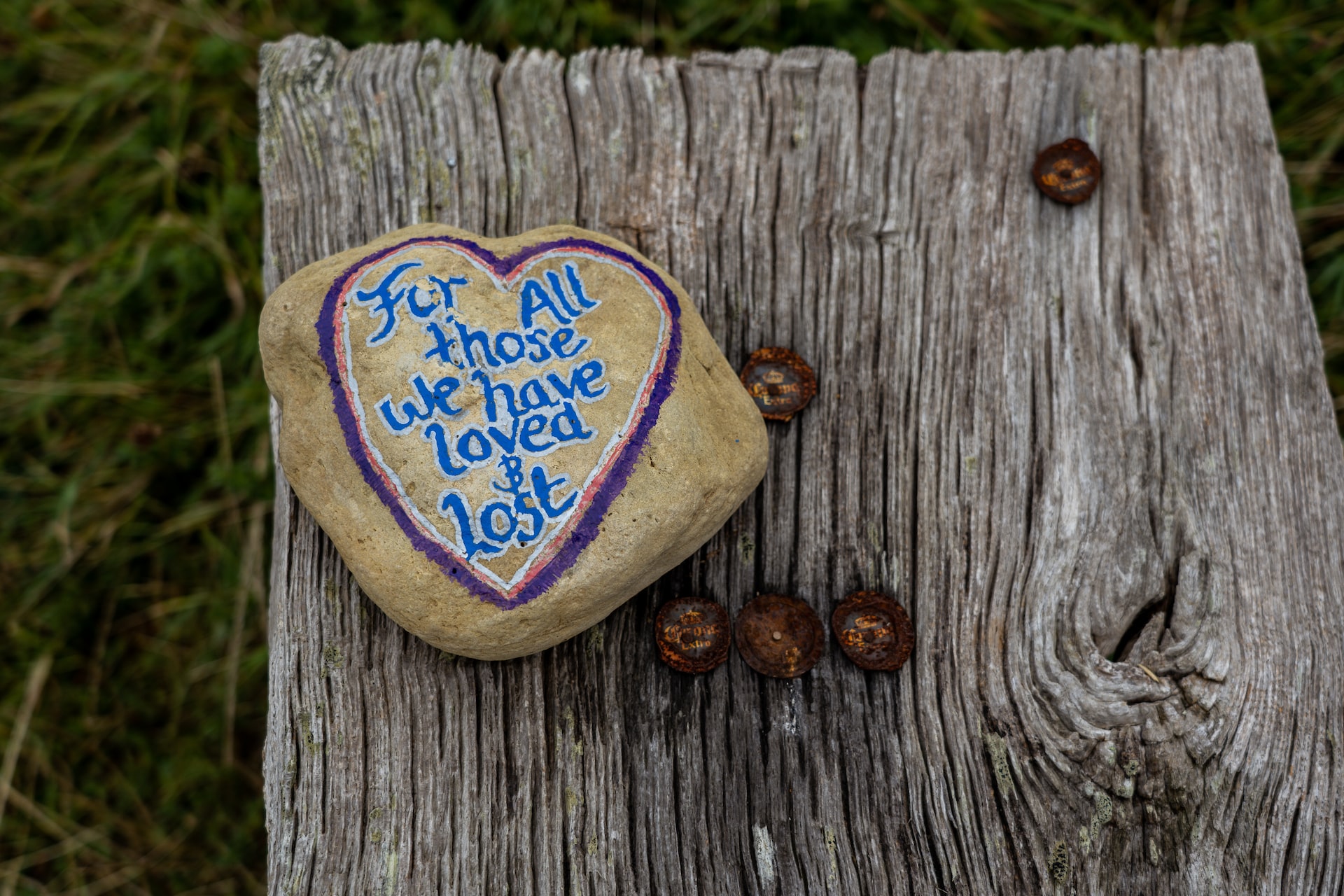
TH: So today, we are going to talk about something that comes up a lot when you hear people talking about hoarding. And that is grief and loss, which are very related. Not every loss is grief, but they are very interconnected.
And it strikes me that there are two ways that grief and loss can intersect with hoarding.
Bereavement or loss can act as one of the types of trauma that could spark or intensify hoarding disorder. Share on XOne is that bereavement or loss can act as one of the types of trauma that could spark or intensify hoarding disorder.
The other is a phenomenon called grief hoarding, where somebody dies and a loved one takes in all of their stuff.
So we’re going to first look at grief and loss as a form of trauma that can exacerbate hoarding. So, a lot of people, when talking about their own hoarding, mention the loss of somebody significant.
How can grief or bereavement lead to somebody hoarding or to somebody’s hoarding worsening?
JE: Yeah, a loss is often raised by clients and people I’ve worked with as a catalyst for the emergence of hoarding behaviour, particularly saving possessions.
'A loss is often raised by clients and people I've worked with as a catalyst for the emergence of hoarding behaviour, particularly saving possessions.' - @stuff_ology Share on XBut equally I hear that clients may have had a number of losses close together and they find their hoarding behaviours intensify. Like they might have lost a parent, then their marriage broke up and a pet dies all in a short span.
And for anyone, these multiple losses would be difficult that would be a difficult reality. But most people struggle, a majority would find their way through the stages of grief and reach acceptance and kind of use adaptive sort of skills, like talking about it or journaling or just allowing time to heal and seeking help kind of if they felt that they were still grieving after 12 months or so.
But people who are vulnerable to hoarding, it’s kind of inevitable that they’ll use saving and acquiring as one way to kind of manage these acute emotions. It’s their go-to coping skill, their coping style.
For people who are vulnerable to hoarding, it's kind of inevitable that they'll use saving and acquiring as one way to kind of manage these acute emotions. It's their go-to coping skill, their coping style. Share on XAnd that’s the case for people who hoard before we even look at the meaning of the possessions and our attachment to them.
Grief is like a normal reaction, when we lose a loved one. It’s kind of like the price of love, isn’t it? It’s we love this entity so much and the depths of that grief is equal to the love.
One of the things that is apparently now a disorder, interestingly: complicated grief. So that occurs when the loss kind of can’t be integrated. And people suffer from like a persistent, disturbing sense of disbelief regarding the death.
And there’s often feelings of bitterness and anger and resentment, and resistance to accepting the painful reality like the person is gone.
But I think it was in the last revision of the DSM5, that they’ve added this complicated grief diagnosis.
So, I mean, unfortunately, things being in the DSM drive funding for studies so at the moment, there isn’t a great deal of research on this kind of complicated grief. But the way the person died, as well, and the involvement of the person in those final moments can kind of lead to a traumatic or complicated grief response.
So it depends a lot on all of these factors.
And of course, it depends on who the person was. Like losing a child is understood to be horrendous. That’s a horrendous loss. No questions asked, right?
But the loss of an attachment figure, regardless of how old you are, or level of contact whether you’re estranged or not, it doesn’t really matter. It’s complicated and conflicting emotions kind of pop up.
So the attachment figure could be a parent, but it could also be an older sibling who acted in a parental role or a spouse,
TH: Or a grandparent.
JE: Or a grandparent! Someone who was that person, that safe person. And that’s really part of what can make it super complicated, particularly with people with vulnerabilities around hoarding.
TH: I lost somebody to suicide, and that is a particular… it felt very much like there was the grief at the loss of a a young person who was… the normal grief. And then there was additional grief at the way in which that person died.
JE: Yes. And that’s, and that is so hard, because it’s like, it’s additional, isn’t it? As you say, it’s like, that person’s life was cut short. And I didn’t have a chance to tell that person how wonderful they were and how much I love them. So it’s an additional, it’s a feeling of it can be an angry-making feeling, you know? That person took their life, but I loved them. And now I no longer have them.
It’s like a really, it is a complicated situation for me. Or if a person died violently or whatever, you know?
TH: I was kind of exasperated at the time, more than angry. I totally get why some people have an angry reaction. I was more like, ah, for goodness sake, this could have been different.
And of course, you go, what did what did I miss? What did I…? There’s all of that.
And, yeah, if somebody dies violently, if somebody dies just criminally young, you know? And they should have had more time, or there’s so many ways it can be.
I remember having one bereavement of somebody I adored, adored, but she was 90 when she died.
And I remember feeling like, this is terribly sad. I am so devastated. But it’s not tragic.
And it was my first death in a while that wasn’t tragic.
And I noticed that much as that person was somebody… genuinely one of my favourite people in the world. It was a simpler grief to get through because there wasn’t additional stuff. Like, she was so young, or she died horribly, or anything like that to deal with.
It was quite straightforward.
JE: Yes. And it’s about who it is, the way in which they’ve passed the way you related to them. All of those things adds into the complication of how you feel about this person’s passing, I think.
And you may or may not know that research indicates that emotional and physical pain are treated the same way in the brain. So we actually feel this visceral reaction when we encounter grief.
It’s almost like a sharp pain in the heart, or it might be like a breathlessness or it really is a physical thing too, and people might feel winded or just completely, as you said, almost exasperated in a way if it’s something that’s feels unfair to you.
They’ve taken their life. And that seems unfair, because you weren’t given the opportunity to try and help or whatever.
But I’ve also had clients explained that before a loss or a series of losses, they were the opposite of a hoarder in inverted commas. They were a person who scrubbed carpets with a toothbrush obsessively, and were clean and ordered and everything and then this major loss came upon them, and they ended up at the opposite end of the spectrum.
But I kind of explain to them that this is another form of control. So one end is keeping everything neat in at an obsessional level and the other end is keeping everything literally, and controlling all.
You just want to avoid feeling the loss of anything. So it’s the flip side of the same coin really.
But I’ve heard that a few times and it interests me and I think it is that it’s the same, just the opposite end of the spectrum.
TH: Yeah, yeah.
JE: The other thing I wanted to mention as well, in relation to hoarding behaviours exacerbating or ramping up when someone passes, it could be simply the lack of the person’s presence in the home can lead to kind of a reduction in pressure. There’s no boundaries, no more direction.
I see it happens often with men, in my experience, like their partner dies, and the grief kind of leads to low mood and loneliness, lack of motivation, and they don’t often have the skills if they’re an older man, they might not have the skills to manage those simple things.
And no one’s there telling them do this now do that now. They probably quite liked having someone there telling them and now that’s no longer there.
And unfortunately, they slip slowly into hoarding and sometimes, unfortunately, squalor because they don’t have those skills. And they can’t reach out to ask for help. Or we all know that men don’t like to ask for help. So if there’s any men out there listening, we’re here. We’re here.
TH: Two things come to mind when you’re talking. One is, before we started recording, Jan and I were talking about glass jars, and keeping glass jars and having somebody in the house saying, why on earth have you got so many glass jars?
And if the person who says that dies, you may think, I could keep all of the glass jars now.
And the other thing is, even just on a very practical level, if you get very depressed in your grief, you just don’t have to get up and go to sort the stuff around you out, do you?
JE: No, you have lost that motivation, that energy. You really are… depressive mood is definitely an element that will play in when you when you’re feeling when you’re feeling grief, and it can get away from you pretty quickly.
It doesn’t take long for things to sort of slip and that can be very demoralising, and then it’s just this downward spiral, I guess.
TH: And then you don’t know where to start. And so you don’t start and it gets worse and worse and worse.
JE: Yeah, exactly. Yeah. And that’s the really heart-wrenching thing because a person might be starting to come out of their grief, but then there, then they look around and realise how much work they’ve got to do in order to be able to function again, and they can slip back down into depression again, because of the state of the home.
So yes, there’s a bit of a combination of things happening there.
TH: Is this similar to the way other forms of trauma can affect hoarding?
JE: This was interesting because I don’t really have a clear answer, purely because there’s little to go on other than anecdotal evidence.
But one of the things we know is that being with others regulates our nervous system. So connecting is like this biologically hardwired state and we’re constantly sending and searching for signals of safety and danger.
So if this person that’s passed away or distanced themselves from us was a safe person who kind of helped us regulate our nervous system, that absence of this person might impact our ability to connect with others. So I guess the same result of fight flight freeze flop might occur because of the absence of the person.
So yes, and no, I guess is my answer on that one, it’s yeah, that that one got me thinking. I was like, is it different or similar? But I can see that not having that safe person that you’re co-regulating with can be extremely difficult on the person’s nervous system, and they might have those traumatic responses.
TH: And also, a lot of people are really bad at dealing with other people’s bereavements. And so if you lose somebody, you might expect that your friends will rush around you and look after you. And it can be quite surprising that some people just avoid you entirely because they don’t know what to say or they don’t want to say the wrong thing.
Which is the last thing you need, but it happens. It’s a real thing.
JE: Yes
TH: And so even if your regular support, people are still around, still alive, they might disappear. out of that awkwardness, or I have a friend whose dad has just died. And I got in touch and kind of said, I’m around, it is awful. I’m not going to pretend it’s not awful, I’m not going to tell you you’ll be fine, because it’s awful.
But I know from my own experiences, people will talk around it, sometimes they won’t say the word died, they will do anything but say the word died.
And so your regular support people might still be alive, but disappear, or they might still be alive, but desperate to not talk about the thing you really, really need to talk about.
There can be all kinds of separation from your usual support, even if it isn’t your support person who’s died.
JE: Exactly. And that whole concept of, you want to talk about it, but you pretend you don’t, yes. You know what I mean? You play that game and you think, Oh, I’ll pretend that I’m really doing well. And then everything will be fine.
So the person gets the impression you’re doing really well. And so they don’t ask, and it’s a self-fulfilling prophecy, then you’ve got no one asking and you haven’t had a chance.
I think also there’s that timeframe where you really are in denial or whatever. And you know, you are, this is not happening, and you’re pretending everything’s okay.
And I think nowadays, things move so fast, people kind of forget pretty quickly about bereavements. And you’re, you’re in it, you’re thinking about it 24/7, but they’re off at work, they’re off doing things, and they’ve forgotten that you’re probably starting to come into some of those more difficult stages.
TH: And the world expects you to rally around and be fine again. This friend whose Dad’s just died, found out at that point, that her work policy was if a parent dies, you get two days of leave. As it is, all it means is she has to go to the doctor and be signed off by the doctor for a few weeks. But if the world does expect you to be quite fine quite quickly, yes, and you’re not.
JE: And it also, I heard the other day someone was saying, I think they said that their sister died or an auntie died. But it was someone who was like their person. And they said, Look, I need to take a few days off. And they said, Oh, well, is it a parent? No. Well, you can have one day.
And then this person said well, I need probably a week because this was like she raised me this woman was my like my mum. Oh, well, you can have any days off.
I was like, we need to be… firstly, we need to talk more about death and grief and all of these things. And be able to have that discussion about our own passing with people that we love, and how that might affect them, and how you know, how all those things might play out.
And also, we need to be aware that the title of whoever that person whose past doesn’t necessarily matter.
If we think people are going to use it nefariously and take time off well, they’re going to do that anyway, that type of person. I mean, like, seriously, they’ll find some other way to get days off. Their grandmother will die 50 times.
But most people are genuine. Most people know that they need a week off or two weeks or three weeks. It’s very disappointing.
TH: I saw I saw a bereavement counsellor years ago after my dad died because it got to 12 months and so many people had said to me, the first year is the worst. That when I hit 12 months and wasn’t fine, I thought I was doing it wrong.
I was like, if the first year is the worst, and the first year is done now, why do I still feel terrible?
And saw a bereavement counsellor for a while, who was brilliant, because also it got to a point where I was one I read that my friends were bored of me being sad about my dad. And of course they weren’t. That was me projecting they… none of them ever gave me a hint of like, oh God, here she goes again.
But having a place where it wasn’t even that I had permission to talk about my dad there, it was that that was literally why I was there. So I could talk about him as much as I needed to.
And I didn’t see her for that long, I saw her for a few months. And it was so helpful. And part of that process was realising that it didn’t matter whether other people were fine in two weeks, or whether the first year was meant to be the worst but actually, the second year was still terrible.
It didn’t matter what society said about grief. What mattered was my experience of it. And it was through bereavement counselling that I could separate off, what do I feel compared to what do I think people think I should feel.
JE: The expectation of how you should react, yeah. It’s always very concerning to me when people are giving you advice about how long things will take and how much how much you should… how bad you should feel, and all those sorts of things. I just think, Oh, God, please stop talking.
TH: Yeah. And then there are people who feel like they’re not sad enough for society’s expectations. That they feel judged because they’re not crying all the time, or they’re not falling apart.
JE: Exactly. We’ve just got so many rules, and none of the rules… they cancel one another out all you too emotional. You’re not emotional enough. Yeah. Too this, too that it’s just, oh, it’s frustrating, I think.
And I think it’s just because we don’t talk about it. We don’t have a broad enough kind of conversation about death and dying. Because it’s part of life. I mean, it’s part of what happens, and we try and just pretend it doesn’t. And pretending it doesn’t mean that you can’t prepare, either, for if you’re losing someone and you know that it’s that it’s happening, you don’t have the opportunity to kind of spend the time with that person just being. You’re too concerned with are what can we do to save their life? Well, chances are, there isn’t anything and that’s the time you need to spend holding their hand or talking to them or whatever it might be.
I think that’s really… yeah, we hide grief, we hide loss and death underneath layers and layers of social norms and how we think other people think we should behave. It’s not healthy.
TH: Yeah. And, of course, those social norms vary from country to country. And so what’s perfectly acceptable in China might not be acceptable in Russia, which might not be acceptable in Ethiopia.
It’s not even that it’s universally accepted. They are completely cultural. And they work for some people and not others.
JE: Exactly. It’s just so incredible that it’s still something that’s just not… no one’s comfortable. No one’s comfortable trying to let people have the have their grief in the way they want to, we want to put all this all these layers on top.
And every culture, as you say, has a completely different way of dealing with it a completely different set of norms. And yeah, it’s quite, quite frustrating, I think.
TH: So what about other forms of loss? Could something like losing a job or a relationship breakup have the same effect?
JE: Yes, I think when it’s related to identity, something that defines us as a person that’s lost and really impact our ability to manage our emotions and function.
So definitely a broken relationship can increase hoarding behaviours for a couple of reasons. I mean, as we talked before, the safe person who we co-regulate with is gone. So we need to find ways to regulate our nervous system.
And again, no one is around to hold us in check. That person that kind of said, What are you doing with all those jars? When are you going to pickle stuff? They’re not there anymore.
And if there’s bitterness around the breakup, or there’s been financial abuse or any form of coercive control, reactionary saving and acquiring might result because there’s no push back anymore. I can go out and I can buy what I want now. And you can’t say anything because we’re now broken up or you know, or you’ve died, I guess.
But losing a job or a life role, is equally destabilising, like empty nesters often find it hard to remain in check, with respect to accumulation of stuff and bedrooms get taken over and become storage rooms and dining rooms become craft rooms, and all that sort of thing.
But even further, I’ve seen those who’ve lost a job and their hoarding becomes their vocation. So finding and collecting becomes that routine in place of work.
So there’s this sense of competence in finding treasures, finding things of value, etc.
So it’s just a different way of being effective as a human. And that can obviously be a problem with increasing volumes of things in the home.
TH: And listening to you there, I’m thinking of people who somebody dies, and they were their carer. So you’re losing doubly there, you’re losing the person, but also the role. If you were your mum’s full-time carer for the last 10 years, and she dies or your you know, your partner’s or your kid’s or you know, whatever, you’re grieving and also you’ve not got a purpose anymore.
JE: Exactly. I had a client exactly like that she’d been at home caring for her mother and the thing they had together was going out and looking at hard rubbish and collecting things that they thought they could do up or fix or whatever.
So that was the thing they did together. Then her mother started to need… she had to go to a hospital because her care levels were just too high.
So her daughter was left in the home with all of this stuff. She had no job. No it was really destabilising, she didn’t really have any reason to get up in the morning.
So again, that layer of depression and lack of motivation and then mum passes, and it’s like, Oh, my God, I was looking after you this was my sole purpose for 10 years.
TH: Yeah.
JE: And now everyone just expected… all of the family members expected her to just pick up and start emptying the house and getting back into life again, but it’s been a 10-year journey with grief and bereavement at the end.
It’s not easy, that is not going to turn around in a matter of months, that’s probably going to be complicated grief and take a long time to sort through. Yeah.
TH: One theme that seems to come up a lot around grief loss and hoarding is self-protection. If you lose somebody you love, you might hold on to all kinds of things even harder. Another is if you lose somebody, you want to keep the specific things that remind you of them. What’s going on with this kind of thinking?
JE: Yeah, I’ll take the first part, the themes self-protection and hoarding on to all kinds of things.
I think you spoke previously about the cognitive bias of the Endowment Effect.
Well, there’s of course another part to that, and that is loss aversion. So that’s where a real or potential loss is perceived as emotionally more severe than an equivalent gain. So, in fact, the pain of losing is twice as powerful as the pleasure of gaining.
So this is relevant to people who hoard, because people who hoard are very sensitive to mistakes, failures and risk.
So they’d rather avoid loss at all costs. And it seems there’s evidence to suggest that this is due to kind of ineffective emotion regulation, because emotions are impacting on our ability to make logical decisions.
So when we’re grieving from a loss, chances are, again, we’ve lost this person we probably co-regulated with, and our emotions might get hijacked by the amygdala and the logical part of the brain is not connected.
So we keep stuff to avoid the loss because it’s the path of least resistance. It’s kind of like, okay, I’m holding on, I actually think that what this is is kind of post rationalisation cognitions. Like, this is where we make up a reason to explain these behaviours that are a reaction to emotions, not a rational choice. So you kind of go, Ah, this, why can’t I let this go? And then we give ourselves a story around well, I’ve just lost someone. So it must mean why I want to avoid loss in this situation.
I think maybe. I mean, I’m not Yeah, I mean, I’m not. I’m not 100%. But I feel like that could be what it is.
But the other point of when you lose someone, you want to keep specific things. This stuff is interesting, this is all about magical thinking. And something I’m pretty fascinated about. So I get to geek out a little bit.
So humans, even those who are sceptical and don’t believe in woo-woo, or that type of kind of spirituality, if you like, they definitely engage in magical thinking.
So anyone who says they don’t believe in that stuff, well, they do. Because we seek order and meaning as humans, that’s what we do.
So there’s a cognitive distortion that suggests that objects carry essence. So authentic objects, that’s objects that are known to be originals, like, say, for example, John Lennon’s piano that he used to compose Imagine: it contains a special essence of John Lennon. And we believe that that object has hidden defining qualities, it’s going to change the world like the song did.
And this is known as psychological essentialism. And it’s based on something called sympathetic magic.
So there’s two types of sympathetic magic. There’s homoeopathic, or the law of similarity where like produces like. For example, voodoo dolls you make the likeness of the human that you want to affect.
And then there’s the law of contagion. So that is, in essence, once in contact, always in contact.
TH: Okay.
JE: So this is the type of sympathetic magic that’s in play with loved ones possessions, and it’s all because of this law of contagion. And it can be positive or negative. So the physical, psychological, moral quality qualities of the owner can kind of be transmitted through contact with the object.
So I guess researchers are kind of thinking that could be due to the idea that contact expresses intimacy.
So you know, when you touch something, there’s an intimate contact. And also touch communicates trust and benevolence and cooperative intention and all that kind of stuff. So you feel like that’s what’s happening.
We all fall prey to this, we all have this thing where we think that you know, something owned by Beyonce, of course, that has magical qualities! I mean, like, why would you even question that? And of course you would pay $200,000 to have one of her nail clippings, because you know, once in contact, always in contact. I now have a piece of Beyonce.
Yeah, so all of this stuff is why we are so obsessed with the possessions of you know, loved ones, etc.
And, in fact, if we lose the sense of essence through an illness, psychiatric illness or brain injury or something, we can actually suffer from a delusion called Capgras, which is where the person thinks that close relatives have been replaced by robots or imposters or whatever, or familiar buildings have been replaced by exact replicas.
Because the emotional recognition circuitry in the brain is impacted, so we’re not making that emotional connection.
So this is kind of all the stuff why we’re so attached to possessions. And particularly possessions that have been owned by someone whose past we feel even more strongly about keeping those, because we can feel like we are with them when we’re touching those things. They are still with us.
TH: And of course, there’s a difference between, I would really like to have my granddad’s glasses, because I associate them with him. I look at them, and I think fondly of him. And it’s a beautiful thing. And my granddad once drank a cup of tea out of that mug, therefore, I must never get rid of it.
JE: Or wash it. For example, yep, yep. Exactly.
TH: I remember a girl at school went on a date with someone that she really fancied. And vowed to keep for the rest of her life the paper napkin that he had used, when they’d gone to like the bowling alley, or wherever we went in the 90s on dates.
JE: Okay, Joanne, can you get in contact with us?
TH: I strongly suspect she just did not have now the paper that became that Simon wiped his mouth with at the bowling alley in 1993.
But that’s the kind of more irrational… and that’s a teenage thing… But that’s not so much a thing now.
But it used to be getting autographs didn’t it? If you saw someone famous, you’d get their autograph as if their signature was a part of them, or you owned a little bit of them. Now it’s selfies, of course. That’s the alternative.
JE: Exactly. You want to get that selfie with that famous person. And I know that in Ireland, they’ll send you a a small vial of soil from the countryside, which means that you’re some sort of a owner of a little tiny piece of Ireland, stuff like that, you know?
And we really, we’re just kind of programmed for that. And we can’t really not be like that.
So I guess it’s something we have to work around we have to accept that. It’s that that’s what’s happening.
And I think you wanted to talk a little bit about grief hoarding.
TH: Yeah. So this idea of holding on to the person by holding on to their things, is very much that isn’t it?
So what I’ve done is I’ve come up with some of the ideas of the thinking that can happen. And then, so if you go through those, and then if you have any others to add at the end of it will be amazing.
So the first one is, if I get rid of this thing, it is disrespectful to the person I’ve lost.
JE: So that’s like that magical law of contagion. The possession is an extension of the owner, right? So yeah, disrespecting object, disrespecting person, it just kind of that’s just how the brain works.
TH: Especially if you are a hoarder and you anthropomorphise things, you already worried that it’s disrespectful to throw something away. It just adds a layer of complexity, doesn’t it?
JE: Exactly. Yep. That is so true.
TH: If I get rid of this thing, I will forget the person I’ve lost.
JE: Classic hoarding thoughts, right? I can’t rely on my memory because I perceive that it’s in deficit of some way, even though testing kind of result results around memory for hoarding… there’s not a fundamental deficit in their memory.
But if I don’t have a visual representation of something connected with this person, then they will be lost to the world. Because they’re not in my visual field and I can’t see that object and that therefore, maybe they don’t exist. You know, maybe they’ve they never existed, almost.
TH: When I was having CBT, we were, well, she that the therapist was, I was going to say, we were discussing the idea of, we weren’t, she was advocating an idea that I was very much resisting, which was trying out throwing away a pile of things without going through them, right?
JE: Oh yes!
TH: And my absolute reasoning for not doing this, or at least the one I was using that particular day, was that somewhere, there is a letter from my grandparents that I really want to find, and I know I still have it. And if I throw away a pile of… it was like a pile of magazines we were talking about, without going through to check the letter wasn’t in there.
And she said, Well what is it about the letter and I told her about there’s a particular thing about this particular letter that makes me feel all these amazing things. I told her about how it made me feel, and the memories it evoked and all of this.
And she said, you have the… you’ve just told me those memories. So you have them with or without the letter. You’re feeling those things and remembering it without the letter in your hand, because you don’t know where the letter is.
So why do you need the letter to remember and feel those things?
And she was right, but I still couldn’t separate… I still couldn’t take the risk.
JE: Yeah, the risk was too high. The loss was stronger. Yes. Exactly.
Rationally you can see…
TH: I can remember that whole thing
JE: That argument, yes
TH: And yet…
JE: That’s very interesting. Yes. That’s very, that demonstrates that exactly.
TH: If the person I loved loved this thing, I should love this thing.
JE: Ah, yeah, that’s kind of the law of similarity, like produces like. Someone loved this hideous vase. And I love that person. And I must love this vase and put it up on my shelf for the rest of my life and stared at it and think how ugly it is. But then remember how much they loved it.
Like produces like.
TH: This thing has already lost… this is very much the anthropomorphising thing… this thing has already lost its first owner, it doesn’t deserve to lose me too.
JE: Yeah, exactly. So we treat something that’s not alive as alive. So that’s animism but then it’s an extension of that is anthropomorphism.
I don’t know if I have you ever done any podcasts around that?
TH: I haven’t. We perhaps should, we should perhaps add it to our list.
JE: That’s a good idea. Yeah. Because it’s giving human-like qualities to non-human entities, of course. And that can be animals and stuff, but people who hoard often anthropomorphise possessions, but we all do it. We all do it.
We all see faces where there are no faces, we all see… We say the weather’s been naughty today or say stuff like that.
TH: You give your car a name, my car has a name.
JE: My car has a name too. Izzy is my car’s name. And I love Izzy. So you give it a name so that you… we just do it because that’s the way we relate to things in our lives. That’s the way we relate to possessions etc.
And it isn’t specific to hoarding. But it is another type of magical thinking.
So unsurprisingly, loneliness and isolation do kind of impact our propensity to anthropomorphise. If we’re lonely or isolated, we’re going to do that a lot more.
And this one also relates people will say to me, oh, there was one card left on the on the on the Christmas display stand, there was just one greeting card left. And I thought I can’t let it sit there alone, I have to buy it and take it home with me so it’s not lonely.
Yeah, I get that I can see how these things come about and then they just continue to kind of grow and grow and grow. And if we let that happen, we can feel less lonely, but it might stop us from letting other people in to fill our lives if we’ve got every toy that we’ve ever bought on the bed, you know?
TH: Someone on Twitter the other day was saying, unrelated to hoarding, but his, I think it was his girlfriend always has to buy, if she’s buying something, the most like battered one on the shelf. Because she worries that if she doesn’t, it will be left there all on its own. Or like, if you’re buying potatoes, she has to get the ugly potatoes or the ugly carrots that she worries will feel sad if all their friends are bought and they’re not.
And if you think about it, if you read to a small child, every item… or like children’s TV, cartoons and stuff. It’s living fridges and microwaves and planes and cars and air. And every animal has like a personality, it might be a train. We start life being taught about these things having little personalities.
JE: Exactly, and we just continue it on. And when we get older and we say it, people look at us weirdly, but really, it’s pretty much in our DNA to make things human like.
I had one I had someone tell me once that when they strain their pasta and one spaghetti goes down the sink on its own, they have to put another piece of spaghetti down the sink so it’s got a friend. And I just thought that is just… I love it. I love that it’s just so gorgeous. And I can see how it comes about. And if you feel like you haven’t been loved or you haven’t been regarded in in this way, you’re offering that up to something, you’re offering it up to everything that you come into contact with.
It’s quite a human. It’s definitely human behaviour, for sure. You know, it’s very, very human.
TH: And if you watch something like a David Attenborough nature documentary, there’s a lot of anthropomorphising going on to tell us a story to make us care about the animals.
So in reality, the tiger is just hungry. But in the story, the tiger is having all these feelings about its babies and about… and we get fully on board, don’t we, when we watch those things?
JE: We do! Meerkat Manor! Meerkat Manor!
TH: Exactly! And I noticed it, because I adore David Attenborough – as everybody should – and I was watching, it was a kind of typical will the lion catch the gazelle story. And I really noticed that it’s all about if we get the story that the lion is about to starve to death, and that gazelle is its last chance at life, then we are willing on the lion.
If instead the story is about the happy gazelle living, and suddenly there’s a nasty lion coming after it, then you’re rooting for the gazelle.
And it’s the exact same situation. But it’s all about how the story is told.
JE: Exactly. Exactly! And our world is just full of all these stories and marketers use all these stories to tell us what we need to buy or how we need to be, what we need to think. And that’s exactly is whatever perspective. It’s amazing.
TH: Are there any other kind of themes that I might have missed there?
JE: I think you did pretty well.
One of the ones I came up with was if I throw any of these things away, it will be as if that person never existed, which is similar to if I get rid of this I’ll forget the person.
TH: it’s a bit different, isn’t it?
JE: It’s a bit different? It’s like possessions are physical evidence that had happened.
You know, it was real, the person was real, the relationship was real.
And you know, as humans we want to put our stamp and our mark on the world don’t we like cave men with their handprints and you know, I’ve definitely carved I was here on the desk at school.
You know, Jan was here. We all want to be significant and be remembered. So we want to kind of leave something of ourselves behind.
TH: Yeah, we have the selfie with the celebrity to prove that we met them. It’s not we can’t just these days say, Oh, I met Tom Cruise in town. You have to have the autograph or the selfie to prove it.
JE: And I just would like to give a shout out to my cousin, who was in London recently having her photograph taken by her husband and Gayle King, Oprah’s best friend, photo bombed in the background. Love it. Love it. Love it.
TH: Amazing.
JE: So exactly. You know, and now I have evidence that my cousin was photo bombed by Gayle King.
TH: Genius. Yeah. Yeah. I mean, there’s like, a social media joke, isn’t there? Pics or it didn’t happen?
JE: Exactly. We seem to be living in that world.
TH: And so similarly, as you say, that kind of stuff or they didn’t exist, it’s the same… Yeah.
JE: Definitely.
TH: Those kinds of thoughts that we’ve just been looking at will land unpleasantly on top of more wide-ranging hoarding thoughts, like, what if I need it, all of the stuff we’ve talked about a lot.
But are there others that could occur with hoarding connected with grief and loss?
JE: Yeah, I think it’s those main ones, it’s the responsibility, control, memory, attachment, they all kind of a part of this but there’s specific ones that are more central to grief and loss.
So really, they are the traditional thoughts, but they just kind of morph a little bit.
And then more powerful, because there’s something underneath that there’s a there’s a real reason.
And then the label can be put on, I’m keeping this because there was this person that I adored, and they’re no longer here, so I have justification for keeping that.
I think that’s really what’s going on. And there’s a lot of magical thinking that we all deal with, doesn’t matter whether we’re hoarders or not. And those things, if we know that’s what’s happening, we can maybe, as you say, change the story. Change the perspective.
TH: I have a friend who is a obsessive football fan. And he lives his life like last time I had a bacon sandwich for breakfast, my team won. So I’ve now got to have a bacon sandwich for breakfast every time there’s a match. But then he’ll have a bacon sandwich, and then get the bus and his team will lose. So he goes Okay, so I can’t get the bus anymore. But I’ve got to carry on with the bacon sandwich because… and he’s like, he’s not as far as I’m aware, a hoarder or any particular mental health stuff. But he takes it to quite an extreme.
But even if it’s not that extreme, a lot of people will wear their lucky pants or whatever. Or, yeah, we have that magical thinking it’s what you’re talking about.
JE: We do exactly. And we want and we do it because we want to control our environment. So these things allow us the sense of control, even though there’s not even though his bacon sandwich is not having any impact on the way the team plays, it feels that way to him and he gets some sense of control from it.
And that is one of the big ones, the superstitious behaviours and trying to make things trying to make things do what we want, just basically through our own actions. Which we all know doesn’t work, but many people live their lives that way. And they’re happy I guess.
TH: I’m not a superstitious person, but I do… I touch wood if I say something that could tempt fate, right? And I know it makes no difference. But what I always think is it’s a small thing to do. And if I didn’t do it, and then things went wrong, I would really regret it. So I will carry on doing it. Even though I know it’s ridiculous, because the risk of something terrible happening is a lot bigger than the hassle of touching a piece of wood.
JE: Yep. And that is what you know, that’s what most people do, they go well, look, I don’t really believe in it. But just in case, I might as well.
And I do exactly that myself. We just think all the risk, what’s the point of letting you know, letting that risk happen? We’ll just do it and then everyone will feel comfortable move on.
It is fascinating, I swear. It is a fascinating topic.
This book, I’ve had it for years, I’ve had it for a long time. The Seven Laws of Magical Thinking, by Matthew Hudson, it’s really good. Love his work.
TH: That sounds good. I will add that to the show notes. And probably to my Kindle!
JE: Put that in the show notes. Yeah, it’s great. It’s great. I read was rereading bits of and I was going I really need to reread this whole book again, because it’s fascinating.
But yeah, he’s just really talking about the fact that they may be irrational, but they’re kind of just part of who we are. And if we don’t have them, in some cases we can have psychiatric problems where we think we’re dead, or we think where we’re our family has been taken over by robots or lizard people.
TH: And also, you might have somebody who touches word if they say something that might tempt fate, but then we’d look at somebody else who salutes a magpie and think they’re ridiculous. When they are also just trying to ward off bad luck in a way that they also know is completely ineffectual. But that’s their thing. And we go exactly, you’re saluting a magpie? How old are you?
JE: Exactly. We all touch wood. It’s so funny. It’s so funny. I love it.
TH: So if somebody is hearing this and thinking, yep, grief sparked this off for me, or grief made this worse for me, or, indeed, if they have a house full of their parents’ stuff, what can they do?
JE: Well, it’s a really hard question. But if we look at the idea of magical thinking, and our sense that possessions carry the essence of the owner, this kind of goes both ways.
So you know, if we were just as an example, given our mother’s hairbrush that’s fine, we’re happy to use it. If we were given a sworn enemy’s brush, even disinfected, we’re often want to toss it out immediately.
So that’s one thing, it can go both ways. So you might be keeping things that when you think about it, you’re not that happy with engaging with the essence of that person.
But if we use that example of John Lennon, so what if John’s piano and fridge were both up for auction, which would be more magical?
TH: Piano, without question.
JE: Without question because it represents what we perceive to be John’s spirit and personality and essence. So if we then can apply that to our own loved ones’ possessions, who was this person, what represents their spirit, their personality, their essence most closely? And actually talking, asking those questions and kind of relating to those questions, you might be able to sort of get more of a sense and get even closer to that person.
Then consider the objects – what will stand the test of time? What, out of all these objects, is in the best condition. We talked about letters that loved ones have written. Keeping every single note the person wrote? Nah. Keeping that letter with their handwriting and you know, I don’t know maybe they’ve kissed it with their red lipstick or whatever, that you know, like, wow, that has all of the things you want to remember about that person.
And is it in the best condition to be a reminder of the person?
So once You’ve kind of gone through that there’ll be a lot of things that you’ll think really is this what mum was really about? Is this what dad was really? Is this what my partner was really all about?
No, there’ll be a handful of things that will really be the core of what describes them as a person.
And then how can I honour those objects? Which includes keeping them in good condition, displaying them so you can kind of interact with them and tell your loved one’s life story in a way.
And how else might I be able to celebrate my loved one without saving everything? Maybe it’s creating a playlist on Spotify with all their favourite music and listening to that, there’s all sorts of other things that we can do that are not possession focused.
The perfume they wore, there’s just so many things that evoke such strong emotional memories.
And we can do it for ourselves as well. Challenge ourselves to find out who we are as a person so that before we pass away, we might be able to get to the point where we’re kind of keeping the things that are the essence of ourselves.
And trying that eulogy activity: what do you want people to say about you when you’re gone? How would you like them to describe you? And then how do your possessions live up to that? How do they support that?
But our other senses, not only touching, necessarily, and sight, etc. But all those other things. Music is amazing, having a awesome playlist buying the flowers weekly that was your mom’s favourite. Things like that, I just think that’s the essence of the person, not maybe the dress that they were wearing the last time you saw them, which had food, dribbled on it, or whatever. You know what I mean? You want to remember them at their very, very best.
And just who they really deeply were. And you might actually find that you’ve learned even more about them by doing that by thinking that way, rather than just focusing on the fact that they’re gone. I think that’s one of the things we do do, we focus on what we don’t have, rather than what we do.
TH: Something that I’ve talked about on the podcast before is reframing the question, as what do I want to keep rather than what do I want to throw away?
And I think that applies to this as well.
So rather than saying, what do I want to get rid of grandmas? Instead, say, what do I want to keep of grandma’s?
JE: Exactly.
TH: I know when my grandparents died. There was a kind of a day when all the family were going to go to the house and take anything they wanted and sort the rest to donate or whatever.
And for practicality reasons I couldn’t go, I didn’t drive in those days, and it was a long way away.
And so I was just asked, Is there anything you want from the house?
And when it was asked in that way, there was one thing I wanted that, for me, summed up my grandparents and that for me, I could look at forever and feel love.
Whereas if I had gone to the house with a view of, we can’t throw away all of my grandparents’ stuff. And had I had a car or a van, let’s face it. I would have come home with a lot of stuff.
And even if… I mean, I was lucky in that I didn’t have to physically go and do it. But even just asking yourself that. What do I want, rather than… before you go in ideally. I want my granddad’s glasses, I want my grandma’s photo album, I want… whatever it is, and be very clear before you start.
JE: Yes.
TH: Then when you get to like your 12th bath towel, or something you really don’t think I need to keep this to honour the memory of my grandparents.
JE: Of my grandparents, yeah.
I mean, I love that. I love that idea of well, what is that one thing if I could have one that would just encompass that person, what would it be? Like my grandmother used to paint rocks. So she made pet rocks.
JE: And they do evoke some pretty strong memories. And even, a friend of mine from Japan that I met when I was eight years old, sent me a picture of a pet rock that I gave her that my gran had made for her. And I was like, Oh my God, you’ve kept it all these years, isn’t that adorable? And that just is I, the pet rocks, just say everything.
You know, she was incredibly artistic, she loved gardening, and she loved painting fairy gardens and stuff on rock. So that is it. You know, that’s it for me.
TH: What you were saying about what kind of encompasses this person’s essence, I was also thinking, it’s not just that. It’s what encompasses this person’s essence to me, which may be entirely different to what encompasses that person’s essence to your partner, or your sister or your child.
You know, obviously, my relationship with my dad was very different to my mum’s relationship with my dad, and what I associate with my dad, I might think of a particular item as like, pure dad. And someone else would look at it and think, oh, did he like that? Like no, no connection at all.
JE: Exactly. We have such a different experience of everyone. Everybody has a different perspective on that person. Exactly. And you can’t all have the same perspective, it’s just not possible. So the essence to you is a definitely, that’s an excellent point.
TH: And practicality. I mean, if you’re trying to clear a house, that’s a big deal for anybody. If you have hoarding tendencies, it’s magnified. But there’s… I know I hear all the time from people who were already hoarding, and now have two of everything because everything from their mum’s house is now in their house.
They have two kitchen tables, they have eight kitchen table seats instead of four. They have two TVs they have two… and so it’s partly the emotional stuff. And it’s partly that overwhelm that kind of what where do I start? What can I do with all of this? I can’t even… I’ve got four sofas now I can’t move.
JE: Exactly. And I’m too depressed, and I’m down and I can’t… how the heck do I take those actions that I don’t want to take because I’m in this place.
Actually had a talk with someone today. And it was a very interesting discussion, Chris, which is not his real name, he contacted me to discuss how to help his dad deal with his grandfather’s deceased estate.
And Chris has been helping his father, I’ll call him John, sort out the grandfather’s hoarded possessions.
And at the funeral, John said his dad said, he was my best friend. And he’s even since then made a couple of slips where he’s referred to his father’s funeral as my funeral… at my funeral… so there’s clear enmeshment there.
And in adulthood, there was an extreme bond that was that grew between John and his dad, because relationships had broken up. And he was living alone and all that sort of stuff.
Now he’s seeing notes that his dad’s put around the place and it feels like his dad’s communicating with him. He’s getting all these messages from him from beyond the grave.
And he’s just not coping with the whole idea that this whole home has to has to either merge into his own or be completely let go.
And it’s taking months, six months and nothing has really moved.
And I totally get it. This is someone that you felt was your best friend who saved everything that ever came within 100 metres and now you are in that position and you are going to have to absorb it or you’re going to have to let it go.
It’s incredibly difficult. It is incredibly difficult.
TH: I think people get caught up in: that sideboard might be worth something, that chair might be worth something, that stool might be worth something. And you can’t… even as a full-time job, you can’t sell every item in the home, you just can’t.
And if you get, say, a house clearance company, they will give you a lot less than things are individually worth, but for the peace of mind.
Or even, some charity shops sell furniture, and will come and collect the lot. You don’t get anything for it monetarily. But my God, it must be a relief.
JE: It’s a relief, it’s a sense of you know, that this stuff has gone somewhere that is not going to end up in landfill. It’s just the scariest thought.
And I totally understand, I’m coming up against that myself with my, with my mum. And I’m like, Wow, imagine what is going to happen with all of these things, what is going to happen? And planning ahead and kind of having that idea, well, okay, what we might do is have a clearance company or an auction house or something come in and take the majority, and then the rest will… so that we’ve got some plan in place.
Because grief will just muddle everything, and you’ve got multiple people’s perspectives on this family member, how they view them, what they think would be important for this person that, so all of that comes into it.
And it’s fraught with arguments. And there’s always going to be someone who’s unhappy with what happens.
And if you’re the last person left, well, then there’s the pressure of what do I save in terms of the family history, and all of that sort of stuff.
TH: I know when I was leaving home at 18, a great aunt had just gone into a care home. And so her house was being cleared. And there was a bit of, oh, you’re going to university, you’ll need stuff. And so I got some stuff that I did genuinely use for years and years and years, all my plates and cutlery and pots and pans and all of that were brilliant.
But there was also stuff that I never used because it was from the 70s and I was a young adult with no interest in whatever it was.
And yet I was a bit like, oh, well, it was Auntie whatever her name was. I’d better keep it. And somebody else thought I should have it, so I should probably have it.
It’s weird the things we attach to it. Whereas had I given those things to a charity shop, somebody would have actually used them who wanted them.
JE: Yeah. It’s just unbelievable, the way we just feel this need to keep things.
And I know there’s things I’ve come across in my home that I’ll look at and I’ll think I remember that from 1990. Okay, I’ve kept it for a long time. Must be a reason!
TH: I get that all the time! I don’t know what it is, but it’s clearly important!
JE: Clearly it’s important because I still have it! And so I think aww, best just be careful, keep it.
You know, it’s like why? Oh my goodness.
TH: I have that a lot with power cables. I go I don’t know what this is meant to plug into. But if I throw it away, I’ll need to plug it in.
JE: I’ll need to plug it in tomorrow and then I’ll be upset. Like a client the other day said, you know how we threw out those that single glove the other day, that single rubber glove? Well, I needed it on the weekend to clear out the gutters.
How incredible is that? I needed that single right glove, and I didn’t have it and we just started laughing. We laughed so hard. Because it’s just a classic hoarding thing. It’s just classic.
But we all do it. I just want everyone to know you are not alone.
TH: It’s not proportionate thing again, isn’t it? But like a while ago, I tested myself by throwing away something that I use reasonably regularly but didn’t particularly like.
It was an old, it was a plastic tub that had had like chocolates in, someone gave me this tub of chocolates. And what I used the tub for was if I opened some pitta bread or some tortilla wraps or something, I would store them in this tub to keep them fresh, the remainder ones.
And so it was useful, but battered and not particularly nice looking and, and I thought, I’m going to test myself and throw this away. If I desperately regret it, I can buy some more chocolates, that’s hardly a punishment. And get another one.
But I want to see what it’s like to throw something away that I know I do use.
So I threw it away. And you know what happened? Next time I opened some pitta breads or some tortilla wraps, I found a different container that would hold them. That was all that happened.
It made me realise that something might have a use, but even that doesn’t mean you have to keep it. Because there are other things.
And I don’t know, it’s hard to explain, like, it went and it was fine. And then I kind of needed it. And I wondered if that would cause regret. And then I looked around and went, that would also do the job is actually a bit prettier. I’d rather keep my bread in that. And all was fine.
And it might be that you have 10 items that you all use for one purpose. And you only need one of them. And you can legitimately say but I use it. But even that isn’t enough if you’ve got plenty of alternatives.
JE: Exactly. I think that is that is a huge realisation because we are very adaptable when we give ourselves the chance. We don’t need one something that we only use for one purpose. We don’t.
TH: We used to have a posh kitchen shop near me and I loved going in it because they had so many items on sale that did one very specific task. And I always found it hilarious. Like, do you need something to get the pit out of a mango? Oh, do you need something… I always I loved it, it was ridiculous. You need a separate? And you just go, you can use a spoon. But no if you’re rich, or and what’s the phrase? More money the sense that you buy a specific thing to get the pit out of the mango? Or to slice your omelette? It’s going to be fine without. And yet, you could see it go, maybe I do need…
JE: Yeah, they make one. That must mean that there’s demand.
TH: Perhaps my current mango method is really inefficient. And I need a better mango method.
JE: Maybe I’m wasting a lot of mango flesh by not using the mango pitter. Well, that would upset a lot of people. They’re like, hang on a minute, I could get extra mango for my buck. Wow.
TH: So yeah, even if it has a purpose, even if your grandma has a perfectly good toaster. You don’t have to… if you don’t like toast, or if you’ve already got a toaster, you don’t have to have that toaster as well.
JE: No, exactly. Exactly.
TH: So, if people want to find you online, where can they do so?
JE: Well, they can come to my website if they’d like, http://www.stuffology.com.au, you they can maybe go to Instagram at @stuff_ology, or Twitter, @stuff_ology.
Where else can they go? Oh Facebook, they could they could go over there that’s where I’m Stuffology Consulting because I tried to change my handle and it wouldn’t let me, Facebook is very annoying.
Or you can just shoot me an email jan@stuffology.com.au
TH: And I always say this but that’s because it’s always good advice, sign up to Jen’s email list. Yesterday… well it’s yesterday as we record, it will be last Sunday’s as this goes out. It was really interesting about whether our perception of objects changes depending on whether the object’s in its usual home, or if we move it and gave me ideas.
So do sign up for the emails because they are always good value.
JE: Excellent. Thank you for having me.
TH: And I say good value as if they cost money and they don’t. I mean they offer value.
JE: Yes. Thank you for having me once again.
TH: Do you have any burning questions you’d love me to answer? I’ll get to the top tip in a second. But my first Q&A episode was really popular so I’m going to be open to questions on a rolling basis and then, when I have enough, I will make another episode answering them.
Contact me on Twitter, Facebook, TikTok, Reddit, YouTube or plain old email – all the links are on my website at https://www.overcomecompulsivehoarding.co.uk/
Ask me anything and I’ll do my best to answer it.
Now, your top tip.
So my top tip this week is a quote from Caroline Totah of carolinetotah.com.
I will add the link to the show notes at https://www.overcomecompulsivehoarding.co.uk/
And Caroline says,
For items that you’re keeping, but don’t yet have a home, create a homeless shelter. Once you’re further along in your decluttering you’ll be able to assign permanent homes to store these items.
I quite like that idea. As long as it doesn’t become a dump place, a DOOM box as I talked about a few weeks ago. But yeah, think about having a homeless shelter for your stuff.
Okay, thank you for listening and I will speak to you next week.
Thank you for listening to the Overcome Compulsive Hoarding podcast. You can find more online at overcomecompulsivehoarding.co.uk
You can find me on Twitter @ThatHoarder. And on Facebook at Overcome Compulsive Hoarding with That Hoarder.
To find out more about how you can support this podcast and the overall project, go to overcomecompulsivehoarding.co.uk/support and do subscribe to this podcast, so you make sure you don’t miss any future episodes.
Image: Nick Fewings